Showing posts with label Georg Christian Knapp. Show all posts

Thursday, January 25, 2024

LutherQuest Offers Pooled Ignorance about Their Darlings -
Objective Justification and Subjective Justification


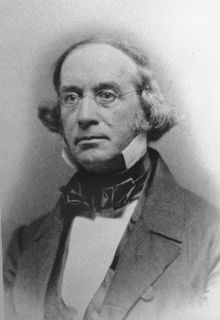
I had to put extra details in this graphic because LCMS-WELS-CLC (sic) babblers write stuff just because they have MS Word. A scholar I know found the Knapp book in English, which was a best-seller among many denominations for many decades. The translator was a Calvinist. The Great Walther arrived in 1839, years after the English translation was printed in America. A WELS essay stated that Walther came to like the terms and the English description carried itself to Germany where it became translated there. WELS is infallible, so that must be true. I own a copy of Knapp and verified that this is an exact explanatory footnote by the Calvinist translator - Woods. One ELS pastor was bent out of shape because I did not put everything in the graphic, so that made me the bad guy.

If fingers need to be waggled, they should be pointed at F. Pieper for cleverly blending Objective Justification, Subjective Justification, and Justification by Faith. I am afraid that the young scholars do not read Knapp or Pieper or a good translation - the King James Version. 

Most people who blindly read the New NIV fail to recognize that Objective Justification is injected into Romans 3. The added "all"

New NIV Romans 3:23 for all have sinned and fall short of the glory of God, 24 and all [<- added all] are justified freely by his grace through the redemption that came by Christ Jesus. 

Paul is quite clear about this, contrary to the New NIV, LCMS, WELS, ELS, CLC (sic)

King James Version Romans 5

1 Therefore being justified by faith, we have peace with God through our Lord Jesus Christ: 2 By whom also we have access by faith into this grace wherein we stand, and rejoice in hope of the glory of God.


Erich Heidenreich (Erich)
Senior Member
Username: Erich

Post Number: 1716
Registered: 12-2004
Posted on Thursday, January 25, 2024 - 10:15 am:   Edit Post Delete Post Print Post

In A Lively Legacy: Essays In Honor Of Robert Preus, Tom Hardt writes on page 65:

quote:

Another expression of considerable repute connected with Walther's theology on Easter and justification is "objective justification" versus "subjective justification." It has been investigated as to when this terminology was first used by Walther or men like him. It seems, as far as the investigations for this article permit us to see, that the terms were made known to Walther through an article in a theological paper in Germany, printed in 1867.


I was able to find this paper by Pastor H. Messerschmidt, Die christliche Lehre von der Rechtfertigung vor Gott in ihrer hohen Bedeutung für das sittliche Leben. (The Christian doctrine of justification before God in its great importance for moral life.)

I thought the entire article might be of interest to some if they can read German better than I can (Pastor Rolf Preus?). On page 66, Messerschmidt writes:

The Great Walther and the Great Valleskey are both heretics.


No wonder ELCA works so well with LCMS-WELS-ELS-CLC (sic) - They are united by the dogma of their Father Below, but don't tell nobody that Knapp was a Pietist, trained at Halle University, and an influential professor there. His dogmatics book in English was popular and circulated in America.


Tuesday, April 11, 2023

ELCA and the LCMS-ELS-WELS-CLC (sic) Confuse Justification and Atonement - Part Four of the Blasphemy Essay

Johann Wilhelm Baier was born in 1647 and died in 1695. He taught at Halle University, the mother ship of Pietism, a fact never mentioned when people say "Oh! Baier! Walther edited him!"

Justification/Atonement - Fourth Part of the Blasphemy Essay

Bishop Martin Stephan's pimp, CFW Walther, began forging the dogmatics leg irons of Missouri with his edition of Wilhelm Baier, a 17th century Pietist dogmatician at Halle University. Baier is now largely forgotten, or ignored, or forgotten-yet-praised because he was blessed by the Great Walther Himself and Francis Pieper Himself. 

Halle's Pietism soon turned into rationalism, the branch now highly praised by ELCA Biblical scholars and CPH (see the elaborate pratfall of their two volume Gospel of Mark commentary).

Nobody ever says, "Oh! Rambach!" - except Jay Webber rose to support this Halle Pietist on 1 Timothy 3:16. See Steadfast (sic) Lutherans.


The Halle gang is protected by the Pietistic and the Rationalistic strands of Lutheran apostasy and blasphemy. Just to be polite - the doctrinal foundation of Walther and Pieper was not the Lutheran Reformation but the Halle Deformation. That is why Jay Webber so gleefully embraces the Pietist Quistorp to prop up his Objective Justification errors. And yes, Walther also liked and quoted Quistorp.

1Johann Quistorp; quoted in C. F. W. Walther, Justification: Subjective and Objective (translated by Kurt E. Marquart) (Fort Wayne, Indiana: Concordia Theological Seminary Press, 1982), p. 21. 3. Cited by Jay Webber.

Lutheran dogmatics are best summarized by their reactions against the constant yowling pack of Calvinists, who were always trying to pick apart Luther, Melanchthon, Chemnitz, and Gerhard (not to be confused with the hymn writer Gerhardt).

Many are waiting for a retraction from David Scaer. The peacock is a symbol used by Luther - the strutting know it all who makes a lot of noise because its feet (foundation) are so ugly.


Just to be concise and not turn into another batch of verbose dogmatics experts, faithful Lutherans can summarize the error of the Objective Justification fanatics as merging Justification by Faith with the Atonement.

Traditional Lutherans believe in Justification by Faith because they have not been brain-damaged by repeat-after-me graduates and professors of Mordor, Ft. Wayne, St. Louis, and the Little Schoolhouse on the Prairie. The OJ cancer is deeply troubled by the Chief Article, because faith is necessarily individual, not universal. 

The ELS is in denial about their favorite dogma being pure hogwash. The Halle DNA mixed with Calvinist Enthusiasm created an eternal truth - the residents in Hell (Hitler, Stalin, Mao) are guilt-free saints.


Heirs of Knapp-Woods confused people into thinking that the entire world was absolved of all sin - that believing this nonsense was Subjective Justification - two justifications without faith! Walther taught making a decision for Objective Justification was just perfect.

The poorly educated leaders of the synods think they can paste sticky notes all through the Bible - OJ and SJ. "For God so loved the world (OJ!) that He gave His only Son (OJ again!) so that whosoever believed (SJ!) in Him might not perish (OJ!) but have everlasting life."

The man who covered up his bishop's syphilitic adultery until the right time to stage a riot and steal gold, land, and books - that Pietist embraced the Objective Justification taught by Martin Stephan, STD.


Their idea of salvation is exactly the same, with a minor concession from LCMS-WELS-ELS-CLC side - an individual must make a decision, agreeing that everyone is already forgiven and saved without faith. 

Is everyone clear on this? The president of WELS' shrinking seminary was an expert on Church Growth and grace without the Means of Grace.


ELCA has reached the obvious conclusion of apostasy - grace means everyone is forgiven and saved, without faith. They say, twisting Romans 4, that it is either grace or faith, and faith is Law.

The whole stack of Lutheran leaders has united around Thrivent loot and quasi-Unitarian dogma - social activism as necessary, faith in Jesus Christ the Son of God, not.

"Our work is done. Pacification is complete. All accept the forgiveness of salvation of all people. Our members are fewer but the dogma is pure.


Wednesday, April 5, 2023

Blasphemy Part Three -
Who Infused the LCMS-WELS-ELS with Objective (Faithless) Justification?
Answer - Pietists and Universalists


 Bishop Martin Stephan, STD and Bishop Randy DeJaynes, LCA.
Parts 1, 2, and 3 here.


Even the most dense can agree that ELCA is the fool's gold standard of Lutherdom today. That  merger of mergers has gathered the LCMS-WELS-ELS under his/her/its wings and laid down the rules for enjoying Thrivent money and programs.

ELCA is the bellweather in declaring that everyone is born forgiven because of God's grace. That comes from two sources - the Pietists and the rationalists.


Rambach was the Halle University hymn writer (see The Lutheran Hymnal, #298) who wrote these words, treasured by Jay Webber, among others. Stephan studied at Halle and was a Pietist.

Walther was a Pietist and his friends followed one Pietist guru, then Stephan after their earlier leader moved away and died. Walther was thrilled with the letter Stephan wrote him and never drifted from that dogma. After losing their earlier guru, they followed Stephan all the way to America, after he was convicted of consorting with young women and misuse of church funds.

Later, Walther was thrilled with the double justification terms used by the Calvinist translator of Knapp, another Halle University theologian, one much admired in America and translated into English, a standard work for over 90 years.

The Reformed-Lutheran union movement enjoyed the peaceful physical and doctrinal merger of the two schools of thought. The Woods translation fostered the use of Objective Justification and Subjective Justification, with OJ dominating.


Rationalism, born at Halle and other places, gravitated toward God's grace acting without means (Word and Sacrament) and saving the entire world back to Adam and Eve.


Saturday, September 2, 2017

From Zorro - And My Dogmatics Professor - Otto Heick - About Knapp

 The ELS pastors want you to know this is Woods'
explanation of Knapp's opaque theology.
But I want you to know that a Calvinist gave America
the terms  of Objective Justification and Subjective Justification.


 Mrs. Ichabod and I knew Dr. Heick quite well.
He took us to dinner, ate at our apartment,
and took us to his wife's grave. Waterloo Lutheran Seminary.
I happened upon this reference in G.C. Knapp in working through Heick's A History of Christian Thought. It occurs in Book Four, The Disintegration of Confessional Theology; chapter seven, German Rationalism; section head, The Theologians of Rationalism. The page reference is 128.


"Frequently all the theologians of this period have been thought of being as one stripe. This is not quite correct. Two main schools of thought can be distinguished among them: the Supernaturalists and the Rationalists proper. The former exerted a kind of restraining influence in the earlier period of the Enlightenment; they marked the transition from Orthodoxy and pietism to rationalism...Relying on Kant's axiom that pure reason cannot establish religious truth, the second group of Supernaturalists emphasized that reason cannot deny the claims of Christianity. Among the proponents of this view were F.V. Reinhard at Wittemberg and Dresden (d. 1812) and G.C. Knapp at Halle (d. 1825). They labored to prove by rational means the possibility, necessity, and reality of the content of supernatural revelation. Truth was to be proved by Scripture. The idea was that Scripture, not reason, was to decide in matter of religion; but reason establishes what the teaching of Scripture is."

The rationalizing tendency sticks close to pietistic outbreaks, most notably in the argument that we can hinder the divine operation of the Holy Spirit working through the Word by our human foibles. From there, it is a quick jump to we are responsible for relative success or failure in the empirical growth of church organizations. Very rational.

Z


Wednesday, June 8, 2016

Please Explain This - I Am Listening.
How Did Luther Anticipate Objective Jstification
300 Years Before Its Articulation by a Calvinist Translating a Pietist?

Calvinist Leonard Woods, Junior, graduated from Andover Seminary.
He explained Knapp's theology with these terms -
Objective Justification and Subjective Justification.

Objective Justification is the Helen of Troy for the Synodical Conference, the dogma that launched a thousand essays. Simply put, OJ states that God declared the entire world forgiven when Christ died - or when Christ rose from the dead. They have not decided on the Moment of Absolution, but the entire unbelieving world was absolved on or about Good Friday - they say. We have not yet heard from the Holy Spirit where this dogma is revealed, but in a world where John Lawrenz debates with the Holy Spirit and almost wins, anything goes.

A related matter is the salvation of the entire unbelieving world. That is often claimed by OJ Enthusiasts, who say, "I was saved 2,000 years ago!" That gets awkward, dating their salvation from the approximate time Jesus was in the Temple. The more astute among the false teachers say, "I was saved at Calvary." Redeemed, yes, but not saved.


Objective Justification and its overlooked partner, Subjective Justification, were articulated by a Calvinist, Leonard Woods Junior, the super-star son of Leonard Woods, Senior, the first theology professor of Andover Seminary - also a Calvinist.

But Subjective Justification is not Justification by Faith, as some might assume, just as OJ is not the atonement, in their own words. Subjective Justification means accepting the dogma of Objective Justification.

These two terms - OJ and SJ -  came from a Calvinist translator of the Halle University professor's Pietistic lectures on theology - George Christian Knapp. His German doctrinal book was published in 1827 and translated by the Calvinist Woods in 1831.


Explain this - how did Luther teach Objective Justification 300 years before the term was articulated by a Calvinist, Woods, translating a German Pietist, Knapp?

The quotation above, from the commentary commended by the Formula of Concord editors to explain justification, repudiates the claim solemnly declared by Jay Webber, ELS pastor with an STM from an ELCA online seminary.

Where did Walther obtain his special revelation about universal absolution without faith? The scholars have shown, and Walther admitted, that he learned his OJ from Bishop Martin Stephan, who studied at Halle but never graduated from any university.

Now we begin to smell the pot-roast, as Luther said. The concept of OJ came to Protestants through Pietism.


An Even Bigger Question
Lutherans are about to celebrate the 500th anniversary of the Reformation. But they dodge this question with the greatest of ease.


  • WELS claims twice in their precious Essay File that OJ is the Chief Article of the Christian religion
  • The ELS and LCMS are itching to work with WELS on the basis of OJ
  • ELCA teaches exactly the same false doctrine, because their various segments all came from Pietism too. 
When Benjamin Mayes announced his call to Concordia Seminary, Ft. Wayne, he mentioned his work editing Luther's works at CPH. I had to ask -


Gregory L. Jackson Did Luther teach justification by faith? If so, why is Missouri working with WELS?
Jordan Cooper This was a very relevant comment to the above post.
Gregory L. Jackson I thought so, for an editor of Luther.

Mayes holds a B.A. in Liberal Arts from Concordia University Nebraska (1997), a M.Div. from CTSFW (2003) and a Ph.D. in Historical Theology from Calvin Theological Seminary, Grand Rapids, Michigan (2009). While working on his doctorate he served as assistant pastor of Our Savior Lutheran Church, Grand Rapids. He has taught as an adjunct professor at CTSFW since 2011. Most recently, he has worked as an editor for Concordia Publishing House (CPH), St. Louis, Missouri. He will continue to serve CPH as managing editor and co-general editor of Luther’s Works: American Edition. He and his wife, Rebecca, have two sons, Caleb and Jonathan.

Will 2017 be one giant con-job, with Lutheran leaders letting everyone think they teach Justification by Faith?


Wednesday, October 7, 2015

UOJ - Steve Flo and Others Defend Halle Pietism's UOJ


Luther on Matthew 22:37-39; "You shall love your neighbor as yourself."
"Therefore, what will happen on Judgment Day is that many a maidservant who did not know whether she had done anything good all her life will be preferred before a Carthusian monk who has the appearance of great holiness and yet has loved neither God nor his neighbor. There God will pronounce this sentence: 'This maid has served her mistress in harmony with my commandment, has looked after the house, and so forth; since she has done this in faith, she shall be saved; but the Carthusian, you did what you wanted to do, serving no one but yourself and your own idol; therefore, you are damned.' That will be the verdict on Judgment Day. And it serves the world right." [The House Postils, Vol. 3, p.76]


  • Comments

    • Keith Shedron How can the monk's situation, described by Luther, be reconciled with UOJ? The monk has been declared sinless, a saint, and yet God, according to Luther, condemns him of idolatry during his life. Wasnt that sin already forgiven and removed "as far as the east is from the west"? How can God now condemn him for his idols?
      • Hide 32 Replies
      • Steven Flo How is it possible for the wealthiest father in the world to legally bequeath his entire estate to his son, but his son remains poor? Easy! The son merely has to refuse what is his. Legally he is rich, but practically speaking he is poor. You could say...See More
        LikeReply1October 2 at 8:21amEdited
      • Keith Shedron But God has not "legally bequeathed" forgiveness to the monk, else he would not be guilty of idolatry, so the illustration really does not work. Does God condemn the monk for a sin that God has forgiven? No, unless God is a liar. What sin can possibly condemn a person that God has declared to be free of sin? UOJ insists that all sins have already been forgiven, which necessarily includes the sin of unbelief. There is no such thing as an unforgivable sin when UOJ is embraced, though Scripture is very clear that such is not the case.
      • Steven Flo Your premise is wrong. You presume it is impossible for God to declare the world forgiven and at the same time condemn those who "refuse" it. But that is precisely what God does. Jesus proves this at the cross when He prays, "Father, forgive them, t...See More
      • Keith Shedron What sin does God condemn a non-believer for?
      • Steven Flo What sin does God not condemn a non-believer for? 

        Again, You presume it is impossible for God to declare the world forgiven and at the same time condemn those who "refuse" it. Again...
        ...See More

      • Keith Shedron You understand the cited verses very differently than I do, I suppose this is due to my use of reason? So, my reason tells me, when I read Scripture, that justification is by faith, extends only to believers and does not pertain to the entire world. U...See More
      • Steven Flo Yes, the bible says we are justified by faith. But faith in what?
        1) A God who says, "I have reconciled you and the world. Believe it." ...Or... 
        2) A God who says, "I will reconcile you IF you believe it." 
        ...See More

      • Keith Shedron Faith in the promises of God. " "Believe on the Lord Jesus Christ and thou shalt be save..." UOJ removes the necessity of faith and states that salvation pertains to the entire world, without faith, so that even those in hell are saved, such as Judas. But doesn't justification extend to believers only and not to the whole world? Isn't that what Scripture states? Isn't that what the Lutheran church used to teach?
      • Steven Flo What could be more Lutheran than Luther?

        Luther says, "Even he who does not believe that he is free and his sins forgiven shall also learn, in due time, how assuredly his sins were forgiven, even though he did not believe it ... He who does not accept
        ...See More

      • Steven Flo I'm saying the same thing as Luther when I say, 
        "How is it possible for the wealthiest father in the world to legally bequeath his entire estate to his son, but his son remains poor? Easy! The son merely has to refuse what is his. Legally he is rich,
        ...See More

      • Keith Shedron Great quote from Luther.Unfortunately, it does not apply to the question at hand. The efficacy of the Keys is not in question. If a person rejects absolution, they reject what God gives, through MEANS. God only deals with us through means, a point whic...See More
      • Steven Flo You digress. Luther's main point does not center on the word "efficacy". It centers on the word "forgiveness"...whether the Gospel is the declaration of "forgiveness before faith" or not. Luther says "before faith". See how clear he is: 

        "Even he wh
        ...See More

      • Steven Flo Now regarding the Aegidius Hunnius quote from 1594, I have not read the book. From the summary I'm reading here:http://www.amazon.com/dp/B00BFGFMV0/ref=rdr_kindle_ext_tmb it appears Hunnius is right in correcting Samuel Huber for over reaching o...See More
      • Keith Shedron I will send a copy, I think you will find it interesting. Hunnius: "We interpret those things that the Scripture contains regarding the redemption and reconciliation of the world (or of the human race) concerning the benefit gained and acquired through...See More
        LikeReply19 hrsEdited
      • Keith Shedron Book sent. Should be delivered by October 9
        LikeReply20 hrs
      • Keith Shedron UOJ adherents do indeed state that God works through means, They simply deny that he works through the Word and Sacraments exclusively, so that a person is forgiven, absolved and pronounced a Saint without the need of the Word, the Sacraments, or faith...See More
        LikeReply19 hrs
      • Steven Flo Does the Bible speak of a "general reconciliation" of the world in the Bible ... and ... a "personal reconciliation" for a person only after they receive it? Yes! Look at how clear Romans 5:10-11 speaks of this "both/and" reality:

        10 For if when we
        ...See More

        LikeReply2 hrsEdited
      • Keith Shedron I understand your argument, but at this point, it must be clear that your argument was not upheld by early Lutherans, such as Hunnius, who claims that the argument is not supported by Scripture or the Confessions. And, fortunately, it does not enjoy universal acceptance by Lutherans today, even in the LCMS.
        LikeReply2 hrs
      • Steven Flo And so, is there a general use of the word "Justification" for the whole world...as well as for the individual when he personally receives it by faith? Yes! Look at this "general use" in Romans 5:18 "Therefore, as through one man’s offense judgment came to all men, resulting in condemnation, even so through one Man’s righteous act the free gift came to all men, resulting in justification of life."
        LikeReply2 hrs
      • Steven Flo Hunnius was so right in attacking Huber for teaching a "universal election" which neither the Scriptures nor Luther supported. But how sad Hunnius over reached and attacked the "general justification and general reconciliation of the world" that both...See More
        LikeReply2 hrsEdited
      • Keith Shedron You disagree with Lutheran orthodoxy. Hunnius refutes your understanding of Romans, but, given that you disagree with Hunnius, one author of the Saxon Visitation Articles, I will not include a quote. Note that Huber left the University at Wittenberg because the faculty disagreed with him, not simply Hunnius, so, the staff would disagree with the current manifestation of Huber's error. Fortunately, I have talked to a couple of current LCMS pastors that rejected UOJ outright, one giving thanks to God that a red flag went up when we heard about it and the other apologizing that such a doctrine would be present in an LCMS church. I pray you find opportunity to read the book I have sent. Pax
        LikeReply2 hrs
      • Steven Flo Keith, as a pastor, I'm not able to live in the world of theoretical ivory tower theology. I have to hold the hand of those who are dying. Let me ask you, what would you say to one who was dying and said, "I know I have to have 'faith' to get to heaven. I'm just not sure I have enough faith to get me there."? 

        Those that deny UOJ and insist one must have "faith" before Jesus can declare them forgiven and saved would offer no hope.

        But I was able to give this man (my father) great hope by saying, "Dad, I have Good News for you. Jesus doesn't say, 'I forgive you only IF you have faith.' No, He says, 'I forgave you before you were born! I forgave the whole world! I applied this salvation to you, personally, in Holy Baptism. Believe what's already been done and given!' " 

        My father died in peace with faith not in his faith, but faith in Christ who declared him forgiven and saved BEFORE he believed it.

        That's why this general justification or reconciliation is so important. It means hope when you die.

        LikeReply1 hrEdited
      • Steven Flo Who could be more orthodox according to Lutheran Orthodoxy than Luther Himself. Again, I'll quote (below) his teaching that the world is forgiven before they believe it and, at the same time, most go to hell because they do not believe this fact that ...See More
        LikeReply1 hr
      • Steven Flo Keith, is it true you are aligning yourself to a small group of pastors and congregations , maybe 6 or 7, that used to be a in a larger group of 15 or so? And that group of 15 or so broke in half because your group denied Universal Objective Justifica...See More
        LikeReply1 hrEdited
      • Brenda Shedron Pastor Flo, not sure where you are going with "aligning yourself to a small group".
        I have been taught the same thing all of my life, but to clarify that I hadn't forgotten something that I don't see in scripture, I sought clarification from a current 
        ...See More

        LikeReply1 hr
      • Brenda Shedron "Now, since it is necessary to believe this, and it cannot be otherwise acquired or apprehended by any work, law, or merit, it is clear and certain that this faith alone justifies us as St. Paul says, Rom. 3:28: For we conclude that a man is justified by faith, without the deeds of the Law. Likewise 3:26: That He might be just, and the Justifier of him which believeth in Christ."
        Smalcald Articles Part II Article 1:4

        LikeReply57 mins
      • David Jay Webber It all depends, of course, on what someone means by "UOJ." There have been some clumsy and imbalanced ways of explaining this doctrine in the past which no one should defend today. But the various ways in which Luther explained and taught it do not have "significant error." In fact, they do not have error at all. There are lots of examples of how Luther explained and proclaimed these things in this paper, if anyone is interested:http://www.redeemerscottsdale.org/.../WebberEmmausConfere...
        LikeReply55 mins
      • David Jay Webber "Now, since it is necessary to believe this, and it cannot be otherwise acquired or apprehended by any work, law, or merit, it is clear and certain that this faith alone justifies us..." Exactly true. But this begs the question. Objective justification is about the "this" that is necessary to believe. It is not an alternative to the believing.
        LikeReply54 mins
      • Keith Shedron Stunning. I wonder if some sort of mass insanity is the cause? Whatever the cause, it is obvious that UOJ is an idol for a select group, one that they will not give it up under any circumstance. I would call that a "hardening". It saddens me a great deal that this abomination has crept into the Church and that it is being taught to people. Lord have mercy on your church.
        LikeReply47 mins
      • David Jay Webber Calling the completed gospel that is presented in the means of grace to be believed by penitent sinners, "an abomination," is really stunning.
        LikeReply38 mins
      • Gregory L. Jackson I agree with Dr. Luther and Dr. Robert Preus. Webber and Flo - you have no grasp of Lutheran doctrine, the work of the Holy Spirit in the Word, or the key passages. You impose the Rambach-Stephan-Walther nonsense on the Word of God. You are blinded, hardened false prophets.
        LikeReply1 min


      • David Jay Webber But other than that, we are still nice guys


  • Steven Flo Jay, no doubt we'll wrestle another day on a different topic, but today....we are on the same team. The paper you sent (above) dealing with UOJ is excellent. 

    You said: "We cannot use passages that treat objective justification to prove or disprove
     subjective justification, and we cannot use passages that treat subjective justification to prove or disprove objective justification. We cannot become one- dimensional in our teaching, so that we ignore either the objective or the subjective side of the whole doctrine of justification."

    Theology is the art of making distinctions. You have done a wonderful job on this topic! There is a clear biblical distinction between general justification that is declared to the world and the personal justification that is received by faith. Greg doesn't (or won't?) see it so he has fallen into this one-dimensional thinking and brought Keith down with him...so that Keith is now uttering stunning statements. How heart breaking and sad.

    LikeReply1 hrEdited
  • Steven Flo And I talked to Robert Preus about Objective Justification when I was at Fort Wayne and He fully supported it. The Preus quote that Greg placed above is merely a quote affirming personal justification when a person receives it by faith. Who doesn't agree with that?
    LikeReply56 minsEdited
  • Steven Flo How sad to take one biblical truth (i.e. justification by faith) which speaks of personally receiving the Gospel... and... using that truth to destroy the Gospel (i.e. that God has justified or reconciled the world to Himself through Christ). Dear Lord, take away the blindness.
    LikeReply54 minsEdited
  • Gregory L. Jackson So you think UOJ is the Chief Article? And agree with the Pietists Rambach, Webber, and Knapp?
    LikeReply48 mins
  • Steven Flo Greg, in one sentence, what is the Gospel to you?
    LikeReply45 mins
  • Gregory L. Jackson You didn't answer, Steve. Do you agree with the Pietists about UOJ?
    LikeReply44 mins
  • Steven Flo Ok, I'll answer your question. Then please answer mine.

    I don't know Ramback or Knapp. I do know Jay Webber and what he says on UOJ...and he is right. He is right in line with the Word, Luther, and the Confessions.

    LikeReply42 mins
  • Steven Flo So Greg, what is the Gospel to you...in a sentence.
    LikeReply42 mins
  • Gregory L. Jackson Rambach - Halle Pietist.
    LikeReply40 mins

  • Gregory L. Jackson Knapp - Halle Pietist.

    LikeReply40 mins

  • Gregory L. Jackson Walther's UOJ - which he learned from Stephan, who studied at Halle.
    LikeReply39 mins
  • Steven Flo Thank you for the info. So what is the Gospel to you in a sentence? How would you speak it to a dying man who said, "I know you have to have faith to get to heaven. I'm just not sure I have enough to get there."
    LikeReply38 mins
  • Gregory L. Jackson Do you agree with Rambach and Knapp?
    LikeReply38 mins
  • Keith Shedron So, wasn't Walther saying that the first "general justification" was not complete and needed the addition of a decision by me?
    LikeReply38 mins
  • Gregory L. Jackson General and Objective are the same. General in German does not mean the Atonement but universal, each and everyone is justified. As Ed Preuss said, the Hottentotts and the Hindu too.
    LikeReply36 mins
  • Keith Shedron Steven Flo I certainly have been reading material from sources other than the LCMS as much of the LCMS is obviously in error about justification. That said, the church we currently have membership with is LCMS, which we do not attend. The pastor teache...See More
    LikeReply31 mins
  • Ron Pederson A question for those who deny UOJ would be: So God has not forgiven my sins but if I believe He has, then they are forgiven?
    LikeReply9 mins
  • Steven Flo I agree with the statements by Knapp, Ramback, Walther, Webber's paper, Luther whom I've quoted, the Scriptures which have guided all of them to agree with the fact that the entire world is reconciled (2Cor5:19) or Justified (Rom. 5:18). I don't care if the devil said it or even you Greg, I'd agree with it because it is true according to the Word.
    LikeReply19 mins
  • Steven Flo Now Greg, I answered your question. Will you answer mine. What is the Gospel to you in one sentence. More specifically, how would you speak the Gospel to man who was dying and who said, "I know you have to have faith to get to heaven, I just don't know if I have enough faith to get me there."
    LikeReply8 minsEdited
  • Steven Flo Good question Ron. Your question hits the nail on the head. I appears they are teaching the Gospel to be: "I believe that if I believe then I'll be forgiven."
    LikeReply14 mins
  • Keith Shedron I have never heard anyone make such a claim except yourself. Silliness.
    LikeReply1 min
  • Gregory L. Jackson Funny how UOJists admire each other's talking points from seminary, but you do not know the Scriptures at all. Romans 4 is a chapter on justification by faith, just as Romans 3 is. Christ died for the sins of the world and we are counted righteous IF WE BELIEVE in Him who raised Him from the dead.
    LikeReply1 min
  • Steven Flo Then Keith, tell me what your Gospel is? What would you say to he dying man who said, "I know you have to have faith to get to heaven. I just don't now if I have enough to get me there."

  • Steven Flo So Greg, what is the Gospel to you in a sentence? How would you speak it to a dying man who said, "I know I have to have faith to get to heaven. I just don't know if I have enough faith to get me there." ?
  • Gregory L. Jackson I made that clear above, Steve. You really need to study Romans 3-5 and the Formula of Concord, Article III, The Righteousness of Faith. You and Webber disagree with Chemnitz and agree with Rambach. Shame on you. The Apology's section on justification by faith would also help you, unless you continue to hide behind classroom quips from the 1980s. Here is Luther's answers to the charge of being a faithian.

    LikeReply1 min
  • Gregory L. Jackson Too bad so many of you listened to Scaer.

    LikeReplyJust now

  • Keith Shedron What is the Gospel? We have played this game in our email exchange. You asked and I supplied a rather in depth answer, along with the following, yet you responded by asking me what the gospel was, indicating that you did not recognize it when you saw it. The Gospel is "I baptize you, in the name of the Father, the Son, and the Holy Spirit." "Take and eat, this is my body; take and drink, this is my blood." The Gospel is that, through His appointed means, God has taken away all of our sins and declared us to be saints while giving us faith to grasp that loving action. John 3:16 "For God so loved the world, that he gave his only begotten Son, that whosoever believeth on him should not perish, but have eternal life.? Notice that "believeth" thing...
  • Steven Flo The Gospel is "For God so loved the world, that He gave His only begotten Son." That is the general or objective Gospel = God loving and reconciling the world to Himself through Christ. That Gospel goes forward through the Word and Sacrament and crea...See More
    LikeReply21 mins
  • Keith Shedron No, I don't see that at all. You make "believe it" a mandate. Are you seriously saying that you could not point a dying person to their baptism?????
    LikeReply18 mins
  • Keith Shedron You put the burden of "believing" on the dying person and then call it the gospel???? The world is turned upside down!
    LikeReply18 mins
  • Keith Shedron What gives faith to a dying person is God's Word and Sacraments! You seriously don't believe that?
    LikeReply17 mins
  • Steven Flo The "it" they are to believe is: the world is forgiven. Not what you are saying Keith, "The world can be forgiven if they believe it."
    LikeReply16 mins
  • Steven Flo The Word that gives faith through Word and Sacrament is, "You and the entire world are forgiven". That Word creates faith. You Keith and Greg, on the other hand, have a gospel that says, "You and the world can be forgiven if you believe it." You make "faith" a requirement before God can say that He forgives you. That is the error!
    LikeReply13 mins
  • Keith Shedron Faith is created by God, through his appointed means, and in no other way. Telling someone to "have faith" is a blatant sin. You deny this and I cannot express the sadness that I have over that.
    LikeReply12 minsEdited
  • Steven Flo His means declare something! They declare, "You and the whole world are forgiven! Believe it so you may receive it." You and Greg, on the other hand, have a different gospel which says, "You and the others can be forgiven if you believe it." Your Gospel is conditional. The real Gospel is not.
    LikeReply10 mins
  • Gregory L. Jackson For the Pietists of Halle, the Gospel was Universal Absolution, and that is also the message of ELCA. That is why LCMS and WELS and ELCA can have a joint ministry conference this month, arranged by WELS Pastor Mark Jeske. Every time Steve Flo mentions the Gospel, it is not the Atonement but Universal Absolution.
    LikeReply10 mins
  • Gregory L. Jackson The Atonement and Justification by Faith are distinct. The preaching of the Atonement is the action of the Holy Spirit in the Word creating and sustaining faith.
    LikeReply9 mins
  • Gregory L. Jackson Don't ask me, ask the Confessors.

    LikeReply18 mins
  • Steven Flo For God to reconcile the entire world to Himself is the same as saying God has made atonement for the world world. God is "at-one-ment" with the world through Christ. So now you, be at-one-ment with Him. Or...the same is said when the Scriptures tells us that God is reconciled with the world (objective)...so now you be reconciled to Him (subjective).
    LikeReply5 mins
  • Gregory L. Jackson No Steve, the Book of Concord and the Scriptures are clear. No one declared the entire world forgiven and you have not one hint of it in the Scriptures, only in Huber, Rambach, and the Calvinist translator of Knapp. Knapp said it in German too. But OJ and SJ came from the Calvinist translator. Luther's treasure analogy is very good.

  • Steven Flo I'm sorry you think this way Greg. We are not going to agree and I'm going to have to mark and warn people about your false theology. This discussion is pretty much over.

    I am interested, however, in a book I head about that you have written. It has something to do with Jesus having faith for us. Can you give me the web address for it. I want to explore that.

    LikeReply4 mins
  • Gregory L. Jackson It will be in print soon. Much of the work is on the blog now. You disagree with Paul, Luther, the Concordists, and Gerhard. I agree with them. You simply avoid dealing with justification by faith except for cute sayings from seminary days.

    LikeReply1 min


  • Gregory L. Jackson Formula of Concord.


  • Steven Flo LOL. Greg you silly man. Away with you and the devil now with your spitting and hissing. You remind me of a sassy little kitten. I'll hope for better in your new book.
    LikeReply4 mins
  • Gregory L. Jackson The Confessors make you angry, and Luther makes you act up.
    LikeReply1 min
Steven Flo LOL! You really insist on having the final word don't you! It's so silly! (Let's see how far we can go with this).