Showing posts with label Romans 4. Show all posts

Wednesday, February 26, 2020

Reverse Engineering Romans 10


Romans 10 
KJV and Stephanus Greek NT

Romans 10:17 So then faith cometh by hearing, and hearing by the Word of God.

17 αρα η πιστις εξ ακοης η δε ακοη δια ρηματος θεου

Some call Romans 10 the Means of Grace chapter, like Isaiah 55. 

The ακοη is translated as hearing, and acoustics come from the Greek word. But does it simply mean hearing?

16 But they have not all obeyed the gospel. For Esaias saith, Lord, who hath believed our report?

16 αλλ ου παντες υπηκουσαν τω ευαγγελιω ησαιας γαρ λεγει κυριε τις επιστευσεν τη ακοη ημων

If we expand the meaning of ακοη, we could say 
"hearing the Report," or
"hearing the Gospel sermon," or
"hearing the Atonement taught."


The Report verse opens Isaiah 53 -


Isaiah 53 Who hath believed our report? and to whom is the arm of the Lord revealed?
ΚΥΡΙΕ, τίς ἐπίστευσε τῇ ἀκοῇ ἡμῶν...LXX - Greek Old Testament
2 For he shall grow up before him as a tender plant, and as a root out of a dry ground: he hath no form nor comeliness; and when we shall see him, there is no beauty that we should desire him.

Reading Isaiah 53 and the verses just before that chapter, we can see that this is the Gospel of the Old Testament, a precise description of the death of Jesus and the reason for that death.

Since Paul is quoting Isaiah 53, the word for hearing is really meant to include that chapter as the Report. In fact, the New Testament reproduces most of Isaiah 53 if all the quotations are collected. Isaiah 53 is central to NT doctrine and serves as the bedrock foundation of evangelism - it was all revealed centuries before. 

This is why serious students need basic NT Greek, because ακοη is translated variously as:
  • News, Matthew 4:24
  • Hearing, Matthew 13:14
  • Fame, Matthew 14:1
  • Rumor, Matthew 24:6
  • Hearing, Luke 7:1
  • Report, Romans 10:16
  • Hearing, Romans 10:17

Romans 10:15 And how shall they preach, except they be sent? as it is written, How beautiful are the feet of them that preach the gospel of peace, and bring glad tidings of good things!

Sent is a key verb in the Gospel of John, describing Jesus as sent from the Father. Jesus sending the disciples is directly related to the Father sending the Son.

The Gospel of Peace is not unilateral disarmament, but the righteousness of faith, forgiveness, which gives peace to those who believe the Report.

13 For whosoever shall call upon the name of the Lord shall be saved.
14 How then shall they call on him in whom they have not believed? and how shall they believe in him of whom they have not heard? and how shall they hear without a preacher?


Salvation comes from calling on the Lord, the result of believing the Report. The word for hearing is the verb form that forms the climax of the argument - ακοη.

Believing is not the work of man, but the gift of God. Those who constantly, foolishly talk about faith as a work of man are ignorant of Jesus' teaching in John -

John 6:28 Then said they unto him, What shall we do, that we might work the works of God?
29 Jesus answered and said unto them, This is the work of God, that ye believe on Him whom He hath sent.

Note that Jesus defined the Holy Spirit revealing sin as not believing on Him. John 16:8ff.

John 16:8 And when He [GJ - the Holy Spirit, preaching through the Word] is come, He will reprove the world of sin, and of righteousness, and of judgment:9 Of sin, because they believe not on He;

There is no shame in believing the Gospel of Christ

Romans 10: 11 For the Scripture saith, Whosoever believeth on Him shall not be ashamed.
12 For there is no difference between the Jew and the Greek: for the same Lord over all is rich unto all that call upon Him.

As taught in the Reformation, the righteousness of works - which Paul described so eloquently - must be replaced by the righteousness of faith.

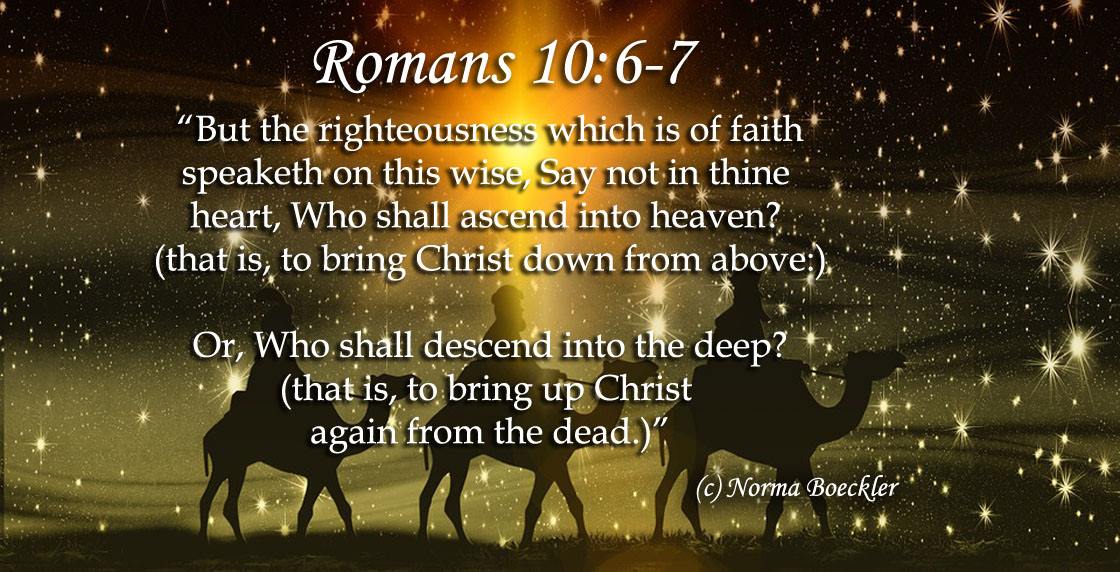
Romans 10:8 But what saith it? The Word is nigh thee, even in thy mouth, and in thy heart: that is, the Word of faith, which we preach;
9 That if thou shalt confess with thy mouth the Lord Jesus, and shalt believe in thine heart that God hath raised Him from the dead, thou shalt be saved.

Paul preached the Word of faith, a fact never disclosed by the rabid Objective Justification faction. Everything afterwards in Romans 10 is perfectly in harmony with these two verses.
Nothing in Paul's inspired writing leads the reader to imagine that the world was justified, declared righteous, absolved of all sin - when Jesus rose from the dead. 

Citing Romans 4:25 for their Objective Justification (Stephan/Walther/Rambach) is proof that the 1932 LCMS convention was a parliament of idiots. The continued abuse of Romans 4:25 proves that nothing is too dumb for false teachers to promote.


Monday, June 3, 2019

LudicrousQuest - Afraid of the Scriptures

 LQ junk-yard dog is afraid of the Scriptures and will not touch that topic at all - so revealing for the Quia Marias. Norma normans? Their ruling norm is Calvin or Spener, depending on their mood. They read Ichabod every day, which only hardens and blinds them.

I knew it.

I repeatedly challenged the LutherQueasies to deal with Genesis 15:6 and all of Romans 4. 

They can include Romans 5:1-2, which summarizes Romans 4 - "Therefore* being justified by faith, we have peace with God through our Lord Jesus Christ: 2 By whom also we have access by faith into this grace wherein we stand, and rejoice in hope of the glory of God.

*[GJ - transition word, which ties Romans 4 argument to what follows in Romans 5] 

I am finishing The Path to Understanding Justification this week.

Due to neglect, this brick path to the house disappeared completely under a layer of organic matter and grass. No one knew the path was there, not even the postman, nor the neighbors for the last 25 years. The new owner got out his shovel and began digging.

Thursday, April 25, 2019

Romans 4 - The Path To Understanding Justification


Romans 4 – Abraham as the Example of Justification by Faith


Romans 4:1-3

What shall we say then that Abraham our father, as pertaining to the flesh, hath found? 2 For if Abraham were justified by works, he hath whereof to glory; but not before God. 3 For what saith the scripture? Abraham believed God, and it was counted unto him for righteousness.
4 τι ουν ερουμεν αβρααμ τον πατερα ημων ευρηκεναι κατα σαρκα
2 ει γαρ αβρααμ εξ εργων εδικαιωθη εχει καυχημα αλλ ου προς τον θεον
3 τι γαρ η γραφη λεγει επιστευσεν δε αβρααμ τω θεω και ελογισθη αυτω εις δικαιοσυνην
Repetition is a form of emphasis - Paul declared Justification by Faith at the end of chapter 3. He opened chapter 4 by connecting Abraham with Justification by Faith and quoting the passage from Genesis 15:6.

Romans 4:4-5 Now to him that worketh is the reward not reckoned of grace, but of debt. 5 But to him that worketh not, but believeth on him that justifieth the ungodly, his faith is counted for righteousness.


5 τω δε μη εργαζομενω πιστευοντι δε επι τον δικαιουντα τον ασεβη λογιζεται η πιστις αυτου εις δικαιοσυνην
Isolating part of a verse will satisfy those who cannot see Justification by Faith in these two verses, this chapter, this Pauline book, these unified and harmonious Scriptures. “He justifies the ungodly! Romans 4:5” has been used repeatedly, as if fencing off a few words will reveal the essence of the verse. The entire verse should be kept in mind and repeated to those who imagine a mere segment of Romans 4:5 means the entire world was absolved of all sin and declared righteous –
1.     at the death of Christ, or alternatively,
2.     when Jesus rose from the dead.
Clearly, the last half of the verse repeats the teaching of Justification by Faith –

5 But to him that worketh not, but believeth on him that justifieth the ungodly, his faith is counted for righteousness.


λογιζεται η πιστις αυτου εις δικαιοσυνην (the bolded part of Romans 4:5).

Γένεσις 15:6 καὶ ἐπίστευσεν ῞Αβραμ τῷ Θεῷ, καὶ ἐλογίσθη αὐτῷ εἰς δικαιοσύνην.


Those who knew Greek and the Greek Old Testament would have recognized the same terms used for Abraham – faith or believing, counted/reckoned, and righteousness – in Romans 4:5.

Romans 4:6-7

6 Even as David also describeth the blessedness of the man, unto whom God imputeth righteousness without works,[1] 7 Saying, Blessed are they whose iniquities are forgiven, and whose sins are covered. 8 Blessed is the man to whom the Lord will not impute sin.

6 καθαπερ και δαβιδ λεγει τον μακαρισμον του ανθρωπου ω ο θεος λογιζεται δικαιοσυνην χωρις εργων 7 μακαριοι ων αφεθησαν αι ανομιαι και ων επεκαλυφθησαν αι αμαρτιαι 8 μακαριος ανηρ ω ου μη λογισηται κυριος αμαρτιαν

This chapter is a continuous emphasis on the words – counted (imputed, reckoned) righteous/righteousness, and faith/believing. Unlike the Greek, which uses the same basic letters for these words, English varies. The English-only reader (typical of ministers and many professors) do not see or feel the majesty of the same words repeated and used over again, like Bach’s baroque counterpoint music. Paul’s three-fold beatitudes in this section, supporting the opening.

Romans 4:9-10

9 Cometh this blessedness then upon the circumcision only, or upon the uncircumcision also? for we say that faith was reckoned to Abraham for righteousness. 10 How was it then reckoned? when he was in circumcision, or in uncircumcision? Not in circumcision, but in uncircumcision.
9 ο μακαρισμος ουν ουτος επι την περιτομην η και επι την ακροβυστιαν λεγομεν γαρ οτι ελογισθη τω αβρααμ η πιστις εις δικαιοσυνην
10 πως ουν ελογισθη εν περιτομη οντι η εν ακροβυστια ουκ εν περιτομη αλλ εν ακροβυστια
Abraham’s circumcision (Genesis 17:10ff.) was much later than his justification by faith (Genesis 15:6), making the patriarch the father of all who would believe in the Messiah, whether Jewish or not.

Romans 4:11-12 – who walk in the steps of that faith of our father Abraham

11 And he received the sign of circumcision, a seal of the righteousness of the faith which he had yet being uncircumcised: that he might be the father of all them that believe, though they be not circumcised; that righteousness might be imputed unto them also: 12 And the father of circumcision to them who are not of the circumcision only, but who also walk in the steps of that faith of our father Abraham, which he had being yet uncircumcised.
11 και σημειον ελαβεν περιτομης σφραγιδα της δικαιοσυνης της πιστεως της εν τη ακροβυστια εις το ειναι αυτον πατερα παντων των πιστευοντων δι ακροβυστιας εις το λογισθηναι και αυτοις την δικαιοσυνην
12 και πατερα περιτομης τοις ουκ εκ περιτομης μονον αλλα και τοις στοιχουσιν τοις ιχνεσιν της εν τη ακροβυστια πιστεως του πατρος ημων αβρααμ
The great issue was whether circumcision was the true sign of blessedness. This is already answered in Genesis – Abraham believed, and it was counted as righteousness. Thus Abraham is the example of all who believe, the example of blessedness, righteousness, and forgiveness.

Romans 4:13-15 – But through the righteousness of faith

13 For the promise, that he should be the heir of the world, was not to Abraham, or to his seed, through the law, but through the righteousness of faith. 14 For if they which are of the law be heirs, faith is made void, and the promise made of none effect: 15 Because the law worketh wrath: for where no law is, there is no transgression.
13 ου γαρ δια νομου η επαγγελια τω αβρααμ η τω σπερματι αυτου το κληρονομον αυτον ειναι του κοσμου αλλα δια δικαιοσυνης πιστεως
14 ει γαρ οι εκ νομου κληρονομοι κεκενωται η πιστις και κατηργηται η επαγγελια
15 ο γαρ νομος οργην κατεργαζεται ου γαρ ουκ εστιν νομος ουδε παραβασις
The argument may be clearer in the original Greek word order, emphasizing not through the Law:
Not through the Law was the promise made to Abraham or his seed – the he is heir of the world – but through the righteousness of faith. (Jackson Literal)

Romans 4:16-17 – Of faith, by grace

16 Therefore it is of faith, that it might be by grace; to the end the promise might be sure to all the seed; not to that only which is of the law, but to that also which is of the faith of Abraham; who is the father of us all, 17 (As it is written, I have made thee a father of many nations,) before him whom he believed, even God, who quickeneth the dead, and calleth those things which be not as though they were.
16 δια τουτο εκ πιστεως ινα κατα χαριν εις το ειναι βεβαιαν την επαγγελιαν παντι τω σπερματι ου τω εκ του νομου μονον αλλα και τω εκ πιστεως αβρααμ ος εστιν πατηρ παντων ημων
17 καθως γεγραπται οτι πατερα πολλων εθνων τεθεικα σε κατεναντι ου επιστευσεν θεου του ζωοποιουντος τους νεκρους και καλουντος τα μη οντα ως οντα
To counter Justification by Faith, some fanatics have tried to make faith a work and to pit grace against faith, as if one cannot exist with the other. Quite the contrary is true in Paul’s exposition. If righteousness is of faith, then it is also by grace.

Romans 4:18-21 – against hope, believed in hope, not weak in faith

18 Who against hope believed in hope, that he might become the father of many nations, according to that which was spoken, So shall thy seed be. 19 And being not weak in faith, he considered not his own body now dead, when he was about an hundred years old, neither yet the deadness of Sarah's womb: 20 He staggered not at the promise of God through unbelief; but was strong in faith, giving glory to God; 21 And being fully persuaded that, what he had promised, he was able also to perform.

18 ος παρ ελπιδα επ ελπιδι επιστευσεν εις το γενεσθαι αυτον πατερα πολλων εθνων κατα το ειρημενον ουτως εσται το σπερμα σου
19 και μη ασθενησας τη πιστει ου κατενοησεν το εαυτου σωμα ηδη νενεκρωμενον εκατονταετης που υπαρχων και την νεκρωσιν της μητρας σαρρας
20 εις δε την επαγγελιαν του θεου ου διεκριθη τη απιστια αλλ ενεδυναμωθη τη πιστει δους δοξαν τω θεω
21 και πληροφορηθεις οτι ο επηγγελται δυνατος εστιν και ποιησαι


[1] Psalm 32:1-2

Tuesday, April 23, 2019

The Path To Understanding Justification - Psalm 22 and Isaiah


Psalm 22 Portrays the Crucifixion 

My Old Testament graduate students are stunned by Isaiah 53 and the clear prediction of the crucifixion in Psalm 22.
Jesus’ cry from the cross – 
Psalm 22:1 My God, my God, why hast thou forsaken me? why art thou so far from helping me, and from the words of my roaring?
The mockery of the crowd around the cross – 
Psalm 22: 6 But I am a worm, and no man; a reproach of men, and despised of the people. 7 All they that see me laugh me to scorn: they shoot out the lip, they shake the head, saying, 8 He trusted on the Lord that he would deliver him: let him deliver him, seeing he delighted in him.
The hostility of everyone, the crowd, religious and Roman officials, abandonment –
Psalm 22:11 Be not far from me; for trouble is near; for there is none to help. 12 Many bulls have compassed me: strong bulls of Bashan have beset me round. 13 They gaped upon me with their mouths, as a ravening and a roaring lion.
The effect of flogging, beating, and crucifixion –
Psalm 22:14 I am poured out like water, and all my bones are out of joint: my heart is like wax; it is melted in the midst of my bowels. 15 My strength is dried up like a potsherd; and my tongue cleaveth to my jaws; and thou hast brought me into the dust of death.
Details of the crucifixion, being nailed to the cross –
Psalm 22: 16 For dogs have compassed me: the assembly of the wicked have inclosed me: they pierced my hands and my feet.
The division of Jesus’ clothes, but rolling dice for the seamless garment –
Psalm 22: 18 They part my garments among them, and cast lots upon my vesture. Jesus’ ministry was declaring the glory of the Father and being obedient to Him –
Psalm 22: 22 I will declare thy name unto my brethren: in the midst of the congregation will I praise thee.
Justification by faith in His righteousness will follow –
Psalm 22:31 They shall come, and shall declare his righteousness unto a people that shall be born, that he hath done this.

20

This is only a sample of what can be taught from Psalm 22, so the student of the Bible can see what a powerful foundation was built for Justification in Jewish study of the Law, Prophets, and Writings – another name for the Old Testament – and in their worship services. One can encapsulate some of this foundational teaching in the Virgin Birth of Isaiah 7:14, His divine nature and roles in Isaiah 9:6-7, His atoning death in Isaiah 53, and the divine power of the Holy Spirit in the Word in Isaiah 55:8-11.
Nothing in the New Testament is contrary to the Old Testament, so the Justification so clearly taught in Genesis 15:6 onward is revealed in the glory of God’s grace in the Gospels, articulated with great clarity in Paul’s letters.


Wednesday, November 7, 2018

Background for Reverends Hategood, Fauxdoktor, and Wolfszähne

These passages if read you will,
peace find you will.

Background for Reverends Hategood, Fauxdoktor, and Wolfszähne

Brothers, colleagues, members of the clergy:

A conflict has broken out in a small corner of Lutherdom. Someone is insisting on Justification by Faith, which must be addressed at once. You have commissioned yourselves to take on this task, out of duty and love for Universal Objective Justification.

Since you are Scriptures-alone pastors, I have listed some passages for you to study. Hammer this thick-headed fellow with the truth, but only from the Word of God, lest your arguments go astray. You know the passages or can look them up, so I will simply outline the easy yoke for you to bear;

Genesis 3:15 - God promised the Savior, so what was His intent, in giving Adam, Eve, and humanity this hope?

Genesis 15:5-6 - God promised an ever-growing and everlasting kingdom through Abraham's line, through the Savior. Abraham believed this Messianic Promise, and it was counted as ______?

Why are Jews called children of Abraham, not children of Moses?
Luke 13:16, 19:9).

Lazarus went to the bosom of Abraham in Luke. Why is Abraham the figure in heaven? Luke 16:19ff.

Why is Abraham an example in Hebrews 11 and in James?


Romans 4 KJV
Romans is the major doctrinal epistle of the New Testament, so unless y'all argue for contradictions in the Bible, Romans speaks for the Holy Spirit and all verses of the Bible agree with it. Have I lost anyone? Good.

4:1-3. One is either justified, declared forgiven, by works or by faith. There are no alternatives.

4:5-8. If by works, no grace - verse 5. If by faith, then it is by grace - verse 5. So it is a blessing, writes David, to be forgiven without works - that is - by faith - verses 6-7. Forgiving means not imputing, not counting sin - verse 8.

4:9-12.   The issue is not circumcision or lack of circumcision, but faith, the conclusion of his previous argument about Jews versus Gentiles - verse 9. Abraham was Justified by Faith without circumcision - verse 10. Circumcision was much later given as a seal of his Justification by Faith, which happened without circumcision - verse 11. This made Abraham "the father of all who believe" so they are also Justified by Faith - verse 11. And made him the father of Jewish believers - verse 12.

4:13-14.  The Promise is through the righteousness of faith - verse 13. If by law or inheritance, the Promise has no effect - verse 14.

4:15-17.   The Law works wrath, so the absence of Law means no transgression - verse 15. Therefore the Promise and forgiveness are through faith and grace. Faith does not exclude grace - verse 16. Abraham is the father of many nations through faith - verse 17. God even raises the dead through the Word - verse 17.

4:18 Abraham believed in God's Promise of a son leading to the Messianic Kingdom - verse 18. Almost dead in body, both Abraham and Sarah, he believed - verse 19 In faith, Abraham glorified God and trusted in His Promise - verse 20. He did not give up in doubt but believed - verse 21.

4:22   Therefore, his faith was counted or imputed as righteousness - verse 22.

How This Applies To Us
4:23 This was not written just for Abraham that faith was counted for him - verse 23. But it was written for us too, and righteousness will also be counted or imputed if we believe in Him Who raised Jesus our Lord from the dead - verse 24. Who was delivered for our offenses and raised for our justification - verse 25.


Abraham's Example - Conclusion and Transition from Chapter 4
5:1-2 Because we are justified by faith, we have peace with God through our Lord Jesus Christ - verse 1.  By whom also we have access by faith into this grace wherein we stand, and rejoice in hope of the glory of God.


The Gospel of John - Ask Jesus

John 6:28 Then said they unto him, What shall we do, that we might work the works of God?

29 Jesus answered and said unto them, This is the work of God, that ye believe on him whom he hath sent.


Tuesday, June 12, 2018

Gideon's Response to the Post about Romans 4 - 5:2


Gideon's Response to -

Abraham, Father of Faith. Romans 4 through 5:2 Exposition - from June 10, 2018.
Romans 4, Especially Romans 4:5 and 4:24 - All Crush UOJ


--

Pastor Jackson,

I really thought today's post was especially well written not only for it's scope, but it addressed, for me what I think is very important to the discussion of JBFA vs. UOJ-OJ/SJ.

"Note that Justification without Faith fanatics support Antinomianism - no Law, everything is already forgiven, and everyone is already saved." 

 JP Meyer was so confused that he had the entire world, for all time, forgiven and saved. He was president of Mordor, so he could not possibly be wrong.

"The Justification of the World"

If these guys really believe what they say and what they claim it's really no wonder that the Law got very little run in my old church.  I went round and round with the pastor, and he'd box me into a corner as being legalistic.  

But that just isn't so.

How can the Gospel be possibly efficacious unless we need saving?  If the world is justified already, why do we sit there with this empty feeling?  This OJ/SJ sounds great on paper (I guess) except that they treat SJ as academic (as a given, minimized...).  We certainly don't want to talk to much about faith for fear of works righteousness.  God forbid.  Real faith is no sin.  Belief is NOT a choice.  It's a GIFT.

I understand the importance of underlining Jesus redemptive work, leaving no doubt about a complete atonement for all sin, that no sin is to great, but what of the Holy Spirit?  And the law?  Without the law our consciences cry inwardly because we must be honest with ourselves.  The Gospel must be personal.  Faith is that KNOWING that your sins are forgiven.  This faith can only be given by the Holy Spirit through the means of grace.  And, we need the law to remind us how desperately we need the Gospel every minute spend this side of heaven.  Remain in the vine....and Lord knows we need the pruning.

And where are the works-righteous?

"The term "virtue signaling" is a clever one, because it portrays the modern works-saint so well. The signal is far more important than the works, because that kind of virtue is hard to maintain."

"This Justification by Faith makes enemies and causes hatred, because it denies the righteousness of works. "

This is true.  This is what happens when we try to justify ourselves.  Real works righteousness.  Many will try to hide behind outward piety, but they are proud.  Very proud.

This post wasn't hard to understand with the references to Abraham, Lazarus, and Paul....especially when you don't read the book of Romans with "tunnel vision"


Monday, June 11, 2018

Abraham, Father of Faith. Romans 4 through 5:2 Exposition - from June 10, 2018.
Romans 4, Especially Romans 4:5 and 4:24 - All Crush UOJ

 According to Jay Webber, John-Boy Buchholz, F. Bivens, D. Valleskey, plus the consecrated and consecrating leaders of ELCA-WELS-ELS-LCMS-CLC,
1. Luther; 2. Melanchthon; and 3. the editors of the Book of Concord were wrong. O happy day! when all the Synodocrats, yea even ELCA, are united in one confession. Not answered - why are all the synods shrinking faster than cheap socks in a hot wash?
 Why was Father Abraham named - when the angels took Lazarus to heaven?


Scripture teaches that God has already declared the whole world to be righteous in Christ, Rom. 5:19; 2 Cor. 5:18-21; Rom. 4:25;
LCMS Brief Statement, Justification

GJ - People approved this in 1932 and made it canonical ever since. Yes, the Stephan-Walther-Pieper cult is that ignorant, that Biblically illiterate, that willing to trade the Treasure of the Gospel for a bowl of lentil soup.


Abraham Father of Faith


Romans 4 King James Version (KJV)

4 What shall we say then that Abraham our father, as pertaining to the flesh, hath found?
2 For if Abraham were justified by works, he hath whereof to glory; but not before God.
3 For what saith the scripture? Abraham believed God, and it was counted unto him for righteousness.
4 Now to him that worketh is the reward not reckoned of grace, but of debt.
5 But to him that worketh not, but believeth on him that justifieth the ungodly, his faith is counted for righteousness.
6 Even as David also describeth the blessedness of the man, unto whom God imputeth righteousness without works,
7 Saying, Blessed are they whose iniquities are forgiven, and whose sins are covered.
8 Blessed is the man to whom the Lord will not impute sin.
9 Cometh this blessedness then upon the circumcision only, or upon the uncircumcision also? for we say that faith was reckoned to Abraham for righteousness.
10 How was it then reckoned? when he was in circumcision, or in uncircumcision? Not in circumcision, but in uncircumcision.
11 And he received the sign of circumcision, a seal of the righteousness of the faith which he had yet being uncircumcised: that he might be the father of all them that believe, though they be not circumcised; that righteousness might be imputed unto them also:
12 And the father of circumcision to them who are not of the circumcision only, but who also walk in the steps of that faith of our father Abraham, which he had being yet uncircumcised.
13 For the promise, that he should be the heir of the world, was not to Abraham, or to his seed, through the law, but through the righteousness of faith.
14 For if they which are of the law be heirs, faith is made void, and the promise made of none effect:
15 Because the law worketh wrath: for where no law is, there is no transgression.
16 Therefore it is of faith, that it might be by grace; to the end the promise might be sure to all the seed; not to that only which is of the law, but to that also which is of the faith of Abraham; who is the father of us all,
17 (As it is written, I have made thee a father of many nations,) before him whom he believed, even God, who quickeneth the dead, and calleth those things which be not as though they were.
18 Who against hope believed in hope, that he might become the father of many nations, according to that which was spoken, So shall thy seed be.
19 And being not weak in faith, he considered not his own body now dead, when he was about an hundred years old, neither yet the deadness of Sarah's womb:
20 He staggered not at the promise of God through unbelief; but was strong in faith, giving glory to God;
21 And being fully persuaded that, what he had promised, he was able also to perform.
22 And therefore it was imputed to him for righteousness.
23 Now it was not written for his sake alone, that it was imputed to him;
24 But for us also, to whom it shall be imputed, if we believe on him that raised up Jesus our Lord from the dead;
25 Who was delivered for our offences, and was raised again for our justification.

5 Therefore being justified by faith, we have peace with God through our Lord Jesus Christ:

2 By whom also we have access by faith into this grace wherein we stand, and rejoice in hope of the glory of God.

Background
Many would say that Moses is the key figure in the Old Testament, but Abraham is the key figure from the Old Testament in the New Testament. Briefly -
The binding of Isaac is a foreshadowing of the Father giving His Only Son, portraying this in human terms, so those who knew this very unusual episode would see the meaning behind it - Christ, the substitute sacrificed on the cross.


  • Genesis 15 - Abraham justified by faith
  • Matthew 1:1; Matthew 8:11
  • John 8 - Before Abraham was, I AM. 
  • Luke 1:73 - The oath sworn to Abraham
  • Luke 16 - Lazarus - In the bosom of Abraham
  • Acts 3:25 - "It is you who are the sons of the prophets and of the covenant which God made with your fathers, saying to Abraham, 'AND IN YOUR SEED ALL THE FAMILIES OF THE EARTH SHALL BE BLESSED.'
  • Galatians - Abraham as the example, Justification by Faith
  • Hebrews 11:8 - By faith...
  • James 2:21 - Abraham justified
Paul made it clear in many ways that someone is either justified by works, which is utterly wrong, or by faith.


Justification by Faith - Reason for Hate

Romans 4 What shall we say then that Abraham our father, as pertaining to the flesh, hath found?
2 For if Abraham were justified by works, he hath whereof to glory; but not before God.

3 For what saith the scripture? Abraham believed God, and it was counted unto him for righteousness.

The Epistle lesson on brotherly love reminded me of Luther's great insight about the persecution of Jesus. Most are content to wonder about Jesus being kind, generous, gracious, and working miracles - so why was He hated and put to death.

The answer is before us - He taught Justification by Faith in Him, the righteousness of faith. Therefore, He opposed the popular notion of righteousness through works, which the Pharisees represented so well. And don't we have them in droves today?
  1. I refuse to eat meat - carrying a leather purse.
  2. I only stay at hotels where I can open the window. 
  3. He mentioned infant baptism and I walked out of the room.

The term "virtue signaling" is a clever one, because it portrays the modern works-saint so well. The signal is far more important than the works, because that kind of virtue is hard to maintain.

We get the same virtue signaling among the synodocrats, who say
  • I am the fifth generation in this denomination...
  • My father is...
  • The Holy Spirit appointed me as circuit pastor...
Those who deny Justification by Faith necessarily rely on Justification by Works, and their language betrays them.

Abraham was a great leader, the head of a vast enterprise, and a brave man. These are boasts before men, but not before God. The Scripture says that Abraham believed the Promise that he would be the start of a line that led to the Savior of the World, and that faith was counted as righteousness. He was justified by faith in the Christ who was coming many centuries in the future.

This Justification by Faith makes enemies and causes hatred, because it denies the righteousness of works. This is the core Christian teaching. One may boast about Christ or boast about his own greatness. Ask someone about the solution to human problems. If it is the Gospel of faith in Jesus, then they are in harmony with Christ. If they have clever, wise solutions, based on surveys and studies, they are relying on the wisdom of man.

People may reject Genesis 15, but that means they are rejecting the Scriptures when they do. More importantly, they are shunning the entire New Testament, because Abraham's faith is the message which connects the Old Testament to the New Testament. 

Why do Lutherans bicker about the common cup versus individual glasses; the Christian flag in the chancel; church and ministry; etc. etc. etc. etc. etc? Answer - because they cannot deal with the Gospel, the Chief Article.

Nothing is unclear in the opening to Romans 4,  a chapter which builds upon Romans 3. Romans 1-3 is mostly concerned with condemning all forms of works-righteousness, but 3 transitions into Justification by Faith, including the often ignored Justification by Faith of Jesus (also in Galatians and Philippians). 

Note too that Paul did not write verses or chapters, he wrote formal epistles, which we would call essays today. He observed the basic rules of rhetoric in arguing his points and supporting his arguments. Citing verses alone or even phrases is a sign of literary ignorance and Scriptural rebellion. The Bible is one unified truth, not a collection of sayings to be used creatively or dishonestly.

The Bible is the first hyper-text linked document, long before the computer age. Every verse is connected to all the others. Some of the great Biblical expositors saw this, Luther most of all. But that has been largely forgotten in the fever to make a case for one sect or another. Jesus did not die for the capital fund campaign of a college, and Paul did not raise money for the budget. Paul collected the money for others, for the poor. Synodocrats gather money for themselves, keep it mostly for their salary and benefits (I meant "mission") and impoverish their students for the rest of their lives, with student loans and peevish removals from the teaching or preaching office. "Let us pray," the seminaries say. When the students open their eyes, they have $50,000 to $100,000 in debt, banishment from their calls - and the Synodocrats have the money and benefits.


Romans 4:4 Now to him that worketh is the reward not reckoned of grace, but of debt.
5 But to him that worketh not, but believeth on him that justifieth the ungodly, his faith is counted for righteousness.
6 Even as David also describeth the blessedness of the man, unto whom God imputeth righteousness without works,
7 Saying, Blessed are they whose iniquities are forgiven, and whose sins are covered.
8 Blessed is the man to whom the Lord will not impute sin.

I hate to admit this, but fellow Lutheran pastors argue for the entire world being forgiven and saved, saying "He justifies the ungodly."

Paul speaks of working for pay, for a reward, but that is not true justification. Forgiveness comes to him (the individual) who believes in God - who justifies the ungodly. That individual alone is counted righteous...and that is without works.

Paul does not speak of the entire world being forgiven and saved. What better moment to bring that up! Yet seminary professors like John Sparky Brenner write about "The Justification of the World," and professors like David Scaer openly mock Justification by Faith. Did Walther and JP Meyer write the Bible, or did the Holy Spirit?

Note that auto anti-freeze tastes sweet, but remains a deadly poison. If it splashes on the mouth, no one says, "Oh ack! Yuk. Water! Burning bitter, horrid." No, it tastes sweet and was even used illegally to sweeten one brand of wine.

In this little section quoted, once again, forgiveness or righteous belongs to those who believe in God, and Jesus is the Face and Voice of God. The fullness of the Godhead dwells bodily in Him (Colossians).

The sentences that are 6 and 8 emphasize the justification of the individual who believes - verse 7 all those who believe.

9 Cometh this blessedness then upon the circumcision only, or upon the uncircumcision also? for we say that faith was reckoned to Abraham for righteousness.
10 How was it then reckoned? when he was in circumcision, or in uncircumcision? Not in circumcision, but in uncircumcision.
11 And he received the sign of circumcision, a seal of the righteousness of the faith which he had yet being uncircumcised: that he might be the father of all them that believe, though they be not circumcised; that righteousness might be imputed unto them also:
12 And the father of circumcision to them who are not of the circumcision only, but who also walk in the steps of that faith of our father Abraham, which he had being yet uncircumcised.
13 For the promise, that he should be the heir of the world, was not to Abraham, or to his seed, through the law, but through the righteousness of faith.

How blind someone must be to cite Romans 4 about Justification without Faith when the Apostle teaches Justification by Faith repeatedly in the same chapter.

Paul, as the Apostle to the Gentiles, was anxious to emphasize the Old Testament anchor of the Gospel, but also importance of faith over ritual law. Abraham was justified without circumcision, which should be taught, not justified without faith, as certain clowns and wolves do.

Long before anyone imagined it, this made the Gospel universal, because it did not demand ritual obedience, which is at the heart of all religions - except Christianity.
Abraham became the Father of Many Nations because justification by faith, even though God chose to keep His people together through kosher and ritual law.

As Paul said in conclusion of Romans 3, faith does not destroy the Law but establishes it. Our sinfulness is easily shown in the perfect mirror of the Law.

Note that Justification without Faith fanatics support Antinomianism - no Law, everything is already forgiven, and everyone is already saved. This is the heart and soul of mainline apostasy. To study where this is going, read about the Unitarians, what they teach, and what they advocate - R to X rated.

14 For if they which are of the law be heirs, faith is made void, and the promise made of none effect:
15 Because the law worketh wrath: for where no law is, there is no transgression.
16 Therefore it is of faith, that it might be by grace; to the end the promise might be sure to all the seed; not to that only which is of the law, but to that also which is of the faith of Abraham; who is the father of us all,
17 (As it is written, I have made thee a father of many nations,) before him whom he believed, even God, who quickeneth the dead, and calleth those things which be not as though they were.

The Promise was not based upon the Law but faith. This can be translated easily, without kosher. Many base their righteousness on their earnings, or their relatives. One DP said, "My grandfather was..." I was not sure how that made him a better person, but that is one of those strange assumptions, that the institutional church is maintained in its greatness by the descendants of founders, aka Names. We can see where basing the Promise on the Law (of descendants) has gotten the Lutherans. Other denominations are similar. The descendants can do nothing wrong, so the wreckage they cause is excused. "His grandfather was..." spoken in reverend awe and wonder.

18 Who against hope believed in hope, that he might become the father of many nations, according to that which was spoken, So shall thy seed be.
19 And being not weak in faith, he considered not his own body now dead, when he was about an hundred years old, neither yet the deadness of Sarah's womb:
20 He staggered not at the promise of God through unbelief; but was strong in faith, giving glory to God;
21 And being fully persuaded that, what he had promised, he was able also to perform.
22 And therefore it was imputed [counted as] to him for righteousness.


Abraham's faith was also demonstrated in the way he obeyed God in the binding of Isaac. (I see a parallel in letting Lazarus die, because Jesus knew that raising his friend would precipitate His own torture and execution.) What Abraham did was for generations to come - to demonstrate what it means to give one's beloved son, and secondly to know the Son is our substitute, a complex lesson.

Abraham believed he could be a father, and even stranger, that Sarah could be a mother. (Does this shed light on the Six Day Creation? Of course. God's will through the Word is instantaneous, as required.)

Remember Isaac had the nickname of Chuckles because Sarah laughed at the idea. Isaac is close to the Hebrew word for chuckle. "I did not laugh." Angel - "But you did."

The righteousness of God is counted because of faith in the Savior. The blowhards mock this, because they have blinded themselves to the Word - such is the efficacy of the Word for those who obstinately reject it.


Two More Segments of This Argument
I. Romans 4:23-25
23 Now it was not written for his sake alone, that it was imputed to him;
24 But for us also, to whom it shall be imputed, if we believe on him that raised up Jesus our Lord from the dead;
25 Who was delivered for our offences, and was raised again for our justification.

Genesis does not record Abraham's righteousness by faith merely for Abraham, that he was counted forgiven. 

But it was also written for us. We are counted forgiven IF we believe on Him who raised Jesus our Lord from the dead. Jesus was betrayed into the crucifixion by Judas, to pay for our sins (Isaiah 53). He was raised from the dead to strengthen our faith in Him, by whom we are counted as innocent, forgiven, saved for eternal life.


Summary of Romans 4
                             II Romans 5:1-2
5 Therefore being justified by faith, we have peace with God through our Lord Jesus Christ:

2 By whom also we have access by faith into this grace wherein we stand, and rejoice in hope of the glory of God.

Paul did not use chapters and verses, so we can clearly see that the opening of Romans 5 is the conclusion-transition of Romans 4.

The Greatest Effect of Justification by Faith
As Luther said, this Chief Article is slippery because of our human failings. That is our tendency to blame, accuse, hold grudges, and punish in various ways. So we must practice this article daily, setting aside past wrong, real or imagined. 
The perfect mirror of the Law shows us that we are just as fallible as anyone else, so we should not be counting wrongs but counting blessings.
This forgiving does not include destructive behavior, which we have to avoid and/or admonish. I enjoyed working with one fellow, but I had to tell him that he had wrecked his life with alcoholism, which was the root cause of his money problems. The sad facts are - it got even worse for him.
And forgiveness does not apply to persistent teaching of false doctrine. There is no love or patience for that, as Luther wrote.
But the greatest call for forgiveness is among those who are closest to us. There we should rejoice in the Gospel and its healing power. 

 Norma A. Boeckler