Showing posts with label Attracting Beneficial Bugs to Your Garden. Show all posts

Wednesday, October 18, 2017

Lasagna Gardening - Grumpy Gardeners Say - "Tain't New!"

Lasagna is so much more intriguing than sheet mulching,
which is - of course - sheet composting.

 Shewell-Cooper is my favorite British gardening guru:
he showed that compost left on top of the soil
will be pulled down by worms.


I kept getting emails about Lasagna Gardening, originating from the Rodale Organic Gardening people.


One person responded to someone who complained - this was not new but old - from Ruth Stout of mulching fame -

3/7/2009 4:50:37 PM
This article was reprinted, largely without change (including graphics) and absolutely without attribution at: http://ourgardengang.tripod.com/lasagna_gardening.htm

bill in detroit
3/7/2009 4:46:42 PM
And Ruth Stout was preceded by the Irish who were preceded by ... who were preceded by ... your point is? This information isn't, obviously, passed down through some sort of 'cosmic consciousness'. Many who have never heard of Ruth Stout will learn about this technique from Patricia Lanza ... and whoever follows her. @Stacey ... read the article again. The process uses several layers and is based on decomposition, not soil, for its success. But be encouraged, you only need to continue the process for it to be effective. The higher the stack is in the fall, the better the garden is in the summer.

Here is another Lasagna Gardening article from The Spruce.

Feeling like I discovered the Lost Dutchman's Goldmine, I wanted to lay a claim too - for Creation Gardening.

 Creation Gardening: By Him Were All Things Made


But as calmer gardeners will admit - using organic matter to improve the soil is as old as the ancient Egyptians, who made harming an earthworm a capital offense. They realized what pulled organic matter into their soil.

I am glad they are promoting Lasagna Gardening, because it is another way to describe no-till methods based purely on building up the soil instead of whirling it around like a tossed salad.

Our entire front yard was developed this way. The first layers were cardboard and newspapers, topped by shredded cyprus mulch. The rich clay soil was improved with leaves, the roots of all the new plants, and Uncle Jim's red wiggler earthworms.

I discovered, as one Lasagna gardener did, that good plants left alone and swarmed by weeds would still produce. I had roses that bloomed well when surrounded by weeds. However, that was not my favorite setting for them.

I also discovered that divided forces do not work well. I planted a second rose garden, and that divided my efforts all the time.


Lessons that developed from experience, reading, and YouTube are:

  • Compost is good, but heavy, so why not compost on the spot?
  • Sod makes the best compost, so why not plant in it and mulch the surrounding grass into compost?
  • A large rose garden mulched with shredded wood will produce great roses and incredible grassy weeds - thus groundcovers are needed.
  • Fungus and bacteria are really the foundations of great soil, so all life above them depend on those perfectly created, engineered, and managed life forms. If you make a point not to kick out the computer network plug, how much careful should you be to keep the fungus network in place?
  • The Carbon Cowboys/Covercrop farmers taught me how valuable deep roots are for improving the soil
  • Jessica Walliser wrote the classic on beneficial bugs, a concept my mother taught all of us kids long ago in Moline. 
  • Birds and bugs go well together, but birds should be fed near the most used windows. Squirrels add to the entertainment.
  • The Jackson EZ Bird Swing is easily assembled and great fun for birds and squirrels.
  • There is no such thing as a squirrel-proof bird-feeder, so just get over it. Given enough feeding stations, everyone will be happy.
  • Generous amounts of water are good for birds and also encourage such pest-predators as toads. 
  • Never haul organics out of the yard. Carry them into the yard and recycle garden trash after the winter is over.


 Those Days on the Farm

Saturday, May 27, 2017

Rescues and Roses in the Creation Garden

This year has improved the start of the John Paul II roses,
which were aphid magnets last year.

I was overly optimistic about the rain forecast, pouring out the stored rainwater in all my barrels. Checking on two Crepe Myrtle twigs, I decided they needed more rainwater, if I could find some. I gathered all the rain from the latest, stingy precipitation in one five-gallon pail. Both myrtle twigs were growing, snuggled in a thick blanket of peat humus, cut clover and grass. The peat mixture absorbed all the rainwater.

 Cinco de Mayo rose


Mrs. Ichabod needed some roses for her cancer support group, which votes on who gets them each time. The winner was an 89 year-old who was having a surgical procedure. Her roses were Cinco de Mayo and Easy Does It.

 Mr. Lincoln has the most powerful fragrance
of all the roses we grow.

Our Army Ranger neighbor was admiring our Veterans Honor and John Paul II roses, so I gave him a vase to take to the cemetery. He said, "You grow beautiful roses." He received a Mr. Lincoln, two Veterans Honor, and two JP IIs in one vase. The red-white contrast was impressive, and the collective fragrance from all five was powerful.

 Veterans Honor glows red in the garden,
lasts forever in the vase, and is fragrant as well.

Diversity in the Garden Attracts More Beneficial Insects
Last year I let the aphids attack the John Paul and Peace roses on the first bloom. Beneficial insects are attracted to battle-zones, where they lay their eggs on, in, or near the pests. Ideally, beneficial insects will grow up on a diet of pests and stick around for pollen and nectar, repeating the babies' pest-eating cycle, only faster, the next time.

Here are the pollinator plants, as they are called, which support the beneficial insect adults and also attract bees, butterflies, and some hummingbirds:

  • Cat Mint looks like lavender and blooms early.
  • Mountain Mint has an intense aroma when crushed.
  • Monarda blooms purple.
  • Spirea is a low growing border plant with many compound flowers.
  • Buckwheat is sown throughout, for weed suppression and pollinators.
  • Dandelions mine calcium and improve the soil.
  • Butterfly Weed hosts the Monarchs.
  • Borage provides a constant supply of fllowers and seed, known for increasing the overall numbers of beneficial insects.
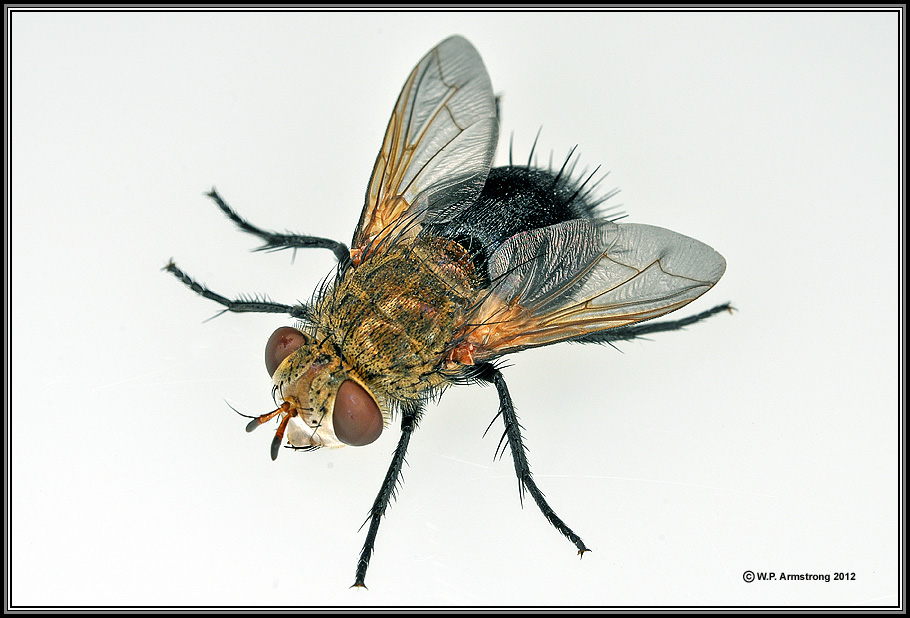
  • Shasta Daisies are attractive to humans and beneficial insects. As soon as I planted them, in bloom, Tachinid flies were feasting on the flowers. Their eggs hatch into pest-eaters.
 Tachinid Fly


Adult tachinids feed on pollen, nectar, and honeydew and are important pollinators. They are very active fliers and are often seen alighting on flowers, fences, rocks, and people. All species of tachinids are parasitoids that use various insects as larval hosts. Most species use caterpillars (cabbage loopers, corn borers, gypsy moths, cutworms, fall armyworms, coddling moth larvae, leaf rollers, bollworms, and many, many others) as hosts while other species parasitize adult and larval beetles, and even various true bugs and sawfly larvae. Tachinids can be generalists that use assorted species as larval hosts or specialists relying on only one species to feed their developing young.

Walliser, Jessica. Attracting Beneficial Bugs to Your Garden: A Natural Approach to Pest Control (Kindle Locations 862-867). Timber Press. Kindle Edition. 


Saturday, August 6, 2016

Coreopsis Jungle at Almost Eden. "Be Still and Know That I AM God."

This Coreopsis meadow photo was taken by someone else.
I am going to take my camera on the next walk to Almost Eden.

Yesterday, Sassy and I took our evening walk toward Almost Eden. The rain clouds were threatening and a cool breeze was making the walk easy. We usually see the Almost Eden Nursery owner with his dog, Opie, in the mornings.

We came upon Almost Eden's Coreopsis garden in full bloom. The area is at least 12 feet long and 4 feet wide.


Coreopsis species coreopsis, tickseed, calliopsis FAMILY Asteraceae (aster) 
• perennial, USDA zones 3–8; some species variation • North American natives • blooms midsummer to fall • 1–6 feet (0.3–1.8 m) high, 1–3 feet (0.3–1 m) wide Called tickseed for their buggy-looking seeds, these North American natives may already have a home in your garden. Several dozen species of coreopsis exist, and quite a few of them are common garden perennials. They have become so popular because of their ease of growth, long flowering period, drought tolerance, deer resistance, and all-around good looks. Nearly all coreopsis are attractive to good bugs of all sorts, including minute pirate bugs, parasitic wasps, soldier beetles, syrphid flies, lacewings, and spiders. I’d like to share with you a handful of my favorite species.


Walliser, Jessica. Attracting Beneficial Bugs to Your Garden: A Natural Approach to Pest Control (Kindle Locations 2067-2079). Timber Press. Kindle Edition. 

Sassy's interest's were at nose level. She loves the ability to pursue olfactory research around the berm and gardens. I walked up eye level to the tall plants and began looking through the forest of blooms for beneficial insects. Everywhere I looked, various types of bees were working the flowers. Tachinid flies were looking for pollen. Some tiny creatures darted around the stems.

I doubt whether any movie or animation could match the calm, industrious parade of creatures enjoying the yellow and orange flowers. Soon enough the flowers will turn into tickseed, and birds would harvest and spread them. Everyone writes about the superstar sunflower seeds, but Sharon Lovejoy points out that all the flowers produce seed that the birds love to harvest in the late summer.
Rosehips (rose seed pods) are harvested by birds before they become Rosehip Tea or Vitamin C tablets.


Psalm 46:10King James Version (KJV)

10 Be still, and know that I am God: I will be exalted among the heathen, I will be exalted in the earth.

One of the most calming and inspiring sights is a garden full of flowers and free of toxins, on a still and sunny day, gathering the insects with nectar, pollen, and fruits.
Instead of visiting famous gardens, which we appreciate, we tour our own ever-changing parade of plants and creatures. Rain-barrels have trapped four squirrels, who either fall in or climb in for water (which is everywhere else in the back and front yard). I came in and took off my Tilley hat, placing it over my chest, out of respect.
"What's wrong?"
I said, "We lost Chestnut."
Mrs. Ichabod asked, "How many squirrels have died now?"
I said, "Four:
  1. Filbert
  2. Walnut
  3. Peanut, and now...
  4. Chestnut."
One would never know that I buried four squirrels. There is a enviable supply of rabbits and squirrels in the yard, matching the abundance of food, shelter, and fresh water. To make sure Sassy and others have fresh, clean water, I leave a garbage can lid, upside-down, near the outside faucet. When I water, the spray from the leaky connections fills and cleans the shallow containers nearby. Shallow clay dishes are there to hydrate toads and other small creatures
My plants are nowhere near this size -
Chaste Tree is another beneficial insect host.

Rain was threatening this morning, after our walk, so I began to empty the rain-barrels. I was pleased to find the transplanted Chaste Tree (a small bush at the moment) was leafed out. The Chaste Tree needed more sun and less water. Checking the Net, I saw the plant also enjoys pruning and does well when pruned. I cut all the drooping branches back and all are greened up. I could smell its medicinal aroma from a few feet away.

The roses got most of the rainwater - liquid, gentle fertilizer - and Hostas got the rest. Several are in bloom already, and I wanted them doing well for the hummingbirds.

Rosehips are fruits full of seed.


Monday, August 1, 2016

Avoiding the Monoculture with Interplanting - Mints and Borage


I posted the Jessica Walliser list of flowers that host beneficial insects,

When a lot of roses are planted, some will fail to come out of dormancy and others will die later. I have had empty spots from roses never leafing out, from Rose Rosette disease (where weird growth signals the disorder), and from sudden death in KnockOut roses.

In each case, the loss means a hole in the garden and in the soil. I fill holes with composted cow manure or mushroom compost. Both will help clay soil mix with the organic material, thanks to soil creatures always at work.

I have two farm teams in the back, the fence roses and the last free ones that came to replace the ones that never grew. However, I am going to use the openings to plant more beneficial plants - mints and borage.

Borage is an easy beneficial insect plant. Bees love it, so the plant is also called Bee Bread. The herb drops seed and keeps starting new plants. Last summer, when I bought a huge packet of Borage, I had the plant all along Mrs. Wright's fence and also just off the front patio, where Mrs. I could pick the flowers every day - they taste a bit like cucumbers. The point of beneficial insect plants is to attract a whole series of good insects, and borage is definitely a game-changer.

Three Well-Behaved Mints: Mountain Mint, Horse Mint, and Catmint
Mints are known for taking over, and caution is urged when planting certain kinds, such as planting them in the soil in pots, to contain the invasive growth. Or just leaving the pots on top of the ground.

But some mints are clumping rather than stoloniferous (invasive underground through their stolons, like grass and violets). Bamboo can be clumping or stoloniferous - but I suggest using bamboo only for a small, well placed forest.

I like the well-behaved mints because they flower easily and attract many beneficial insects, including butterflies.

Mountain Mint attracted this butterfly.


Bee Balm is also called Horse Mint.
This variety is called Monarda and makes
a big, clumping clump.


Catmint is a substitute for Lavender,
but Almost Eden said,
"I like Lavender."
Their plant is 25 years old.

Jessica Walliser's List of Plants That Support Beneficial Insects


From Jessical Walliser's blog post:


  • Achillea millefolium – yarrow
  • Ammi majus – laceflower
  • Anethum graveolens – dill
  • Angelica species – angelica
  • Baccharis species – baccharis
  • Boltonia asteroides – boltonia
  • Coreopsis species – tickseed
  • Cosmos bipinnatus – cosmos
  • Eriogonum species – native buckwheat
  • Eupatorium perfoliatum – common boneset
  • Helianthus annuus – sunflower
  • Leucanthemum x superbum – shasta daisy
  • Labularia maritima – sweet alyssum
  • Phacelia tanacetifolia – lacy phacelia
  • Pycnanthemum species – mountain mint
  • Ratibida pinnata – praire coneflower
  • Rudbeckia species – black-eyed Susans
  • Solidago species – goldenrod
  • Spirea alba – meadowsweet
  • Symphyotrichum species – hardy aster
  • Veronicastrum virginicum – Culver’s root
  • Zizia aurea – golden Alexanders
  • Zizia aptera – heartleaf Alexanders
In addition to planting these plants, always allow your garden to stand through the winter months so beneficial insects have a place to overwinter. Check out this post for more reasons why you shouldn’t clean up your garden in the fall.
***
Toads do no like poisons either,
but they love to eat insects and slugs.

GJ - Only 1% of all insect species are considered pests. The remaining 99% are neutral or beneficial. If we use insecticide in the garden, we knock out everything, including the spiders - but the pests come back quickly enough.

Harry Butte - the Tachinid Fly
lays eggs that produce aphid eating maggots.

Friday, July 1, 2016

Beneficial Insects Dress Like the Costumed Cops of Disneyland
To Protect the Roses While Feeding Their Young

Tachinid Fly


Long ago Team Jackson went to Disneyland. We got to see our favorite characters in giant costumes.

As many people know, the underground passages allow the characters to emerge seemingly like magic.

We heard that many of them are actually involved in security, so they keep an eye on everything in their casual, friendly, appealing costumes.

Once I read about Tachinid Flies, I wondered when I would see them. Unbidden, they came to our garden to do their work. I see them all over the garden.

Tachinid flies FAMILY Tachinidae 
NORTH AMERICAN SPECIES 1300+ 

You may not think a fly to be all that interesting, but I can assure you that this large and diverse family of parasitoids participates in some of the most fascinating interactions in the insect world. Tachinids are among my favorite of all natural enemies, and it surely isn’t for their good looks. It is instead for the intriguing lives of these humble-looking creatures. 

Tachinid flies are highly variable in their physical appearance. Measuring primarily 0.12–0.55 inch (3–14 mm), with a few larger and smaller species, they most resemble plain old houseflies. Tachinids can be gray, black, or darkly striped and have distinctive hairy bristles protruding from their abdomens. Some species have four black longitudinal stripes on their thorax (the part of the body between the head and the abdomen). The presence of only three stripes indicates it is instead a flesh fly—you know, the ones that eat carrion and poop. A few species of tachinids are bright orange or even metallic blue or green, but most are just plain drab. If you really want to discern them from a housefly, look for a pronounced subscutellum, best described as a distinct rounded ridge on their posterior. I, for one, am not all that interested in examining a fly’s posterior, so I rely more on the presence of the abdominal bristles for identification.

Tachinid flies, parasitoids that resemble bristly houseflies, feed on pollen, nectar, and honeydew and are highly variable in appearance and size. Most are dark in color, though a few brightly colored species exist. 

Adult tachinids feed on pollen, nectar, and honeydew and are important pollinators. They are very active fliers and are often seen alighting on flowers, fences, rocks, and people. All species of tachinids are parasitoids that use various insects as larval hosts. Most species use caterpillars (cabbage loopers, corn borers, gypsy moths, cutworms, fall armyworms, coddling moth larvae, leaf rollers, bollworms, and many, many others) as hosts while other species parasitize adult and larval beetles, and even various true bugs and sawfly larvae. Tachinids can be generalists that use assorted species as larval hosts or specialists relying on only one species to feed their developing young. 

Egg-laying techniques are variable and incredibly intriguing. Some species deposit one or more eggs onto the host insect’s exterior or (rarely) inject the egg inside the host. Others lay an egg near a leaf-munching pest; when the egg hatches a few hours later, it is ingested right along with the plant tissue. Still other species deposit live larvae into the host. For those species that lay eggs on their hosts externally, the 0.04 inch (1 mm) white elongated eggs are easy to spot, particularly when clinging to caterpillars and host insects like Japanese beetles, squash bugs, and stink bugs. Once hatched, the larval maggot begins to consume the host’s internal tissues and completes its feeding in four to fourteen days. In most cases, the larva then emerges from the dying host and pupates independently.

Walliser, Jessica. Attracting Beneficial Bugs to Your Garden: A Natural Approach to Pest Control (Kindle Locations 846-859). Timber Press. Kindle Edition. 

When I see flies in the garden, they are Tachinids, either gathering pollen as adults or laying eggs that will hatch into maggots that live on aphids.

The first bloom of roses provided food for the adults and a pleasant nursery for their young. Just like last year, the white and Peace roses were drained by aphids. I did not panic. No toxic sprays were used. Instead, I waited for beneficial creatures to come to the rescue.

This miniature bee is just fooling -
he is a Flower Fly or Hover Fly - Syrphid.

Dressed as

  • Spiders, 
  • Tiny wasps (Ichneumons), 
  • Miniature bees (Flower Flies),  and 
  • Houseflies (Tachinids) -

these beneficial creatures turned the rose garden into a food court, The aphids needed food, but they only created a banquet for the beneficial creatures, which multiplied to feed on the feeders. Not one, but many beneficials came to the rescue. All the roses can bloom for the rest of the summer without much damage at all. If a few blooms are damaged, it is only to keep the food cycle going.


Saturday, June 25, 2016

Heard from Three Gardening Gurus at Once -
Mulch Is Modular and Fun To Use.
Saving Planet Earth So You Don't Have To


Yesterday I heard from my favorite gardening gurus at the same time. The three are:

  • Jessica Walliser - Attracting Beneficial Bugs to Your Garden
  • Jeff Lowenfels - Teaming with Microbes - Soil
  • Sharon Lovejoy - A Blessing of Toads - The Big Picture

Sharon Lovejoy seemed surprised that I discovered her Blessing of Toads at  Cracker Barrel. All three chimed in with a like or a comment.

As I wrote before, these three books are essential for a Creation Garden, with far less work and cost, far more enjoyment and production. We had a brief spell where all the roses were waiting to bloom or just finished. 

For the KnockOuts, I pruned 50% of the bush. For the rest, I looked for dead wood, crossed canes, and unhealthy looking canes. The Jackson Rose Farm looked like a vast mulch display with little color. With some rain and watering, the roses took off again.The KOs are bursting with buds and blooms. The rest of the roses are either in full bloom, looking for some pruning, or ready to bloom he first time.

Strangely enough for some readers, the Maple Tree Rose Garden, which merged with the main rose area, is thriving with $5 roses in bloom - around 20 in all. Common sense says - 
  1. Do not plant among maple tree roots.
  2. Do not make roses compete with greedy maple roots.
  3. Do not plant roses where there is more shade.
  4. Do not even think about digging under a maple.
I made the case with Mrs. Ichabod and lost, but I am glad. Our helper and I actually dug roses in between lumps of roots. Those roses get plenty of sun in the morning, another sunbath in the afternoon. The ones most in the shade are slower, but they also bloom.

The key argument is - "I want to see the roses." The most visible flowers are going to  be enjoyed more - and our neighborhood loves them. The ones we pass every day will also get the most attention. Roses do not need a lot of work in the Creation Garden, but they need regular attention with their need for water and pruning.

Before I had any $5 roses to plant, I threw 10 bags of mushroom compost in the area where I hoped to plant something else. I covered the entire area with shredded mulch, added some garlic bulbs, and sprinkled red wiggler earthworms on top. That was in the autumn. At the worst, it was far better looking than what we inherited, an area packed with maple suckers, weeds, and broken toys.


Modular Mulch
The various weeds are pushing their way through the wood mulch. I can only blame the superfertile soil for that. Mulch builds the fungi network that Lowenfels describes so well. Earthworms and all soil creatures thrive with mulch. Besides those benefits, mulch conserves water and topsoil.

Weed seeds blow in and come up from below. Birds deposit them with fertilizer the natural way. Like any enemy, weeds find the weak spots and attack.

Mulch is modular. We do not need to re-mulch the entire garden. Instead, we:
  1. Look for weed patches.
  2. Cover them with cardboard or newspaper.
  3. Hold down the shade layer with shredded cyprus mulch - or water jugs in the back.
In the Wild Garden we used 60+ bags of autumn leaves to hold down the cardboard. That worked so well that hardly anything grew on top of the mulch. When I lifted the  cardboard, unmoved for six+ months, the former lawn was soft composted soil, easily dug, earthworm packed.

I have a new supply of cardboard and wood mulch for the areas that want to be weedy. The weeds are great ingredients for compost. Why pull them up and compost them? They are more useful when they rot there, feeding billions of soil creatures and feeding the plants I want to thrive.

Helianthus is a permanent sunflower plant,
which I want, because the squirrels eat every sunflower seed I plant.


Tuesday, June 7, 2016

Rose to Water Pails - Tansy to Mulch.
Neighboring Gardeners

Giant Alium bulbs are fun to grow.

I have my eyes open for things to give to Almost Eden Gardens and Nursery. For instance, I have Giant Alium (garlic) finishing, and some giant Elephant Ears starting to grow. Sharing bulbs gives him a chance to try some plants without spending extra money. The Alium has doubled, so I can divide it. The Elephant Ear bulbs have to be pulled in the fall, so I should have something to share there.

Tansy is reputed to repel flies.
Wiki:
Tansy can be used as in companion planting and for biological pest control. It is planted alongside potatoes to repel theColorado potato beetle, with one study finding tansy reduced the beetle population by 60 to 100%.[6][15][16]
In England tansy is placed on window sills to repel flies; sprigs are placed in bed linen to drive away pests, and it has been used as an ant repellent.[17]
In the 1940s, distilled tansy oil mixed with fleabane, pennyroyal and diluted alcohol was a well known mosquito repellent; collectors were paid five cents a pound for tansy in full bloom.[6][18] Research has found that tansy extracts do indeed repel mosquitoes, but not as effectively as products containing DEET.[6][19] In 2008, researchers in Sweden investigated the use of tansy to repel ticks, showing a 64–72% repellency for each oil constituent.[20]

I ended up with 5,000 Tansy seeds, which mystified him until his farmer's wife mother told him about the herb. I did not need 5,000 so he got the bulk. When I asked for some of his wood mulch from chipping a tree, he drove two front end loader buckets full to me. That was a small loader, but it was so much better than wheelbarrowing the stuff across a large field.

The painter, whose wife got roses on Mothers' Day, gave me five-gallon pails for hauling water, following me to the rose garden to hand them over.

Meanwhile, our helper came over to patch up the mulch in the rose garden, where patches of grass or weeds broke through. Weeds love mulched, earthwormed soil as much as roses do. All we need to do is hide the sun from them and turn them into compost.

Sound Doctrine
False doctrine grows well where sound doctrine has taken root. Interest in spiritual matters grows and people with their own agenda take advantage.

The false teachers of mainline Protestantism have been almost unopposed. They do not need to be invited. They blow in with the wind, like weed seeds. Or someone leaves a deposit, with fertilizer, like a bird, and the new dogma takes root. False doctrine grows abundantly with big taproots or prolific seed production  - or both. But false doctrine is sterile.

People think of many healing and beneficial bug plants as weeds, but they contribute without doing harm. The Creating Word gave us most of our medicines in herbs that thrive in bad soil. Deadly Nightshade has an ugly berry and is toxic to farm animals, but the plant produces a stomach medicine.

Some plants are just toxic. I was following the growth of a beautiful member of the carrot family. The carrot family carries its seeds in the form of an umbrella. This plant was more of a cluster and continued to grow taller. I tried various names - even my neighbor was puzzled.

  • Not Queen Anne's Lace - blooming too early.
  • Not quite Angelica - some wrong characteristics.
  • Not Fennel - no licorice aroma.
  • Not Celery, Not Parsley. None of those nice smelling family members.
  • Not Poison Hemlock - no purple splash. Wait a minute. There are purple splotches near the bottom!


I showed the suspect plant to Almost Eden. He pointed out all the baby ladybugs on it. "Don't be in a hurry to get rid of it." I went back to the comparisons, including another evil  plant - Cow Parsley. Everything pointed to Poison Hemlock, especially its attraction to beneficial bugs.

For example, poison or spotted hemlock (Conium maculatum), a native of Europe, and a similar North American species, spotted water hemlock (Cicuta maculata), are both exceedingly appealing to beneficial insects of all sorts. They are found across the entire North American continent, but both are incredibly poisonous to humans and livestock, making them a very bad selection for the insectary border (just ask Socrates—he was executed by being forced to drink a concoction of poison hemlock). Both plants are also considered noxious invasive weeds in many regions. However, these species are very valuable nectar and pollen sources for numerous beneficial insects and—even though you probably don’t want them in your yard or garden—a roadside patch can provide food for many beneficials.

Walliser, Jessica. Attracting Beneficial Bugs to Your Garden: A Natural Approach to Pest Control (Kindle Locations 1532-1537). Timber Press. Kindle Edition. 

Attractive to baby ladybugs - that  is a strike AGAINST the mystery plant. 

In another study, begun in 1928 and lasting thirty-three years, researchers documented more than fifteen thousand insect parasitoids present on several hundred different plant species in central Illinois to examine what kinds of plants attract what kinds of insect visitors. They found that the plants with the most parasitic wasp species present were members of the carrot family (Apiaceae)—with an average of twelve parasitic wasp species per plant species! Other important plant families for these parasitoids were the aster family (Asteraceae), the spurge family (Euphorbiaceae), the pea and bean family (Fabaceae), and several others. The carrot family is so important to parasitoids because members of this family have those open, exposed nectaries. The other plant families frequented by parasitoids had more concealed nectaries and so were found to be more attractive to certain wasp families but not others. The ten plant species that hosted the largest diversity of parasitic wasp species offered nectar that was easily accessed by wasps with all sorts of different mouthparts.


Walliser, Jessica. Attracting Beneficial Bugs to Your Garden: A Natural Approach to Pest Control (Kindle Locations 1522-1529). Timber Press. Kindle Edition. 

False Doctrine Must Be Removed
Like the Poison Hemlock I am growing by accident, false doctrine must be removed. Poison Hemlock kills from the feet up, so the victim knows he is dying. The plant must be carefully cut down and its base poisoned with Roundup.

WELS - ELCA - LCMS - What could possibly go wrong?

Monday, May 30, 2016

Flower Flies - The Win/Win Beneficial Insects


I was cutting roses for the altar yesterday when I approached a Queen Elizabeth flower that was ready to be trimmed. I had to peel the petals back. Inside was a "bee" tearing around having a good time with the pollen.

Wait a minute. That "bee" has a metallic green head. He must be a Flower Fly (Hoverfly, Syrphid).

The Flower Fly dines on pollen as an adult, and the adults lay eggs on or near pests to feed their young and do us a second favor.

Flower Flies are pollinators and pest destroyers. I do my part by providing pollen 24/7 and pests galore. Water and shelter are also important. Whenever I look at ways to improve the environment for beneficial creatures, having a trashy or wild area of the yard is high on the list.


God creatures the various insects, birds, and toads, engineers them to do their jobs efficiently, and manages them so their timing is perfect. When harmful insects begin their work on roses, the abundance of food attracts birds, praying mantids, and beneficial insects.

One cause is the abundance of food. When I lived in Sturgis, it was known that one ne'er do well would show up for any potluck dinner and serve himself. His name was Ralph Waldo Emerson, an appliance heir rather than a philosopher. He came to our potlucks. The town had a motto - feed them and Ralph will come.

The science writers tie themselves in knots explaining purpose, because plants and insects simply do not think these matters through. For instance, plants produce nectar and that attracts creatures. But they also produce EFN - extra-floral nectar, which is a way of being especially attractive to the nectar-feeding garden-helpers.

The timing is another example of God's management. The KnockOut roses have just finished their first blooming cycle, all around us. Whether they belong to me or another person, the KnockOut bushes are maturing the blooms and turning them into seed pods - on their schedule. I was pruning them almost daily, but my blooms are still done for the moment. I will cut them back quite a bit to spur them into the next cycle, which is not determined by me or the roses, but by God - through the DNA library. Pruning will give them fresh growth to produce blooms, and deeper roots.

White clover fixes nitrogen - makes usable nitrogen fertilizer - in the lawn.
Of course, gardeners can kill off the white clover and spread their own
short-lived fertilizer - a double-sale for the gardening center:

lose/lose for the gardener.

Clover spreads on its own and produces seed.

The beneficial insects enjoy a wide variety of tiny flowers, so I have plenty  around the yard, with masses of white clover, thanks to the heavy rains from last summer. The difficulty in mowing allowed the blooms to go to seed and spread their influence, which is definitely favored over crabgrass.


Four-leafed clovers are easier to find in tall clover, so have some fun looking in a patch that is left to grow tall. One plant makes an island of them. I am disinclined to mow much this year.

Breaking News - More Rain
I anticipated rain and emptied the four rain-barrels again. Favorite plants got their extra dose of rain from the barrels yesterday, rain from the sky today, and more stored for the future.

We are not getting the several storms of last year - so far.

Some people were completely unaware that rain is pure, gentle, liquid fertilizer. And it is free. I went over the details with one innocent - "Water all month in July, the grass is still the color of straw. Then it finally rains for an hour and the grass is green. That is from nitrogen made useful (fixed) by lightning in the storm."

As determined by God, rain and snow must have consequences, which teaches us daily about the efficacy of the Word.


Friday, May 27, 2016

Ten Days of Rain Ahead in Sunny Springdale

Today I feel like the man in Twilight Zone who had all the time in the world, all the books in the world to himself to read, and then his glasses fell off and broke. My Moline classmates loved that episode for its irony, because we were readers. Today the equivalent would be forgetting the password for Facebook and not knowing how to recover it.


In my case, I have four full rain-barrels, a waste-basket full of rain, gardens with plenty of rain, and 10 days ahead of rain. Accuweather is usually too optimistic about rain, and Weather.com dismisses a lot of rain predicted. Weather.com has 10 days of rain.

I have an idea - brush up on beneficial insects. Here are some from Jessica Walliser's newsletter -

Lacewings
Lacewing larvae
Tachinid flies
Ladybugs
Ladybug larvae
Spiders
Soldier beetles
Syrphid flies
Praying mantids
Parasitic wasps
Spined soldier bugs
Assassin bugs 
Ground beetles 
Big eyed bugs
Rove beetles
Fireflies

The best part about beneficial insects is recruiting them through plants. If I want a certain type of beneficial insect, the most important part is having plants loved by that species.

For example, yesterday, when putting roses into two vases, numerous tiny ichneumon wasps hovered around the flowers. They were doing their work when I cut the stems and followed the roses. Were they saying goodbye to their kids - or looking for one last meal before the roses left? I do not have to figure that out. Their presence tells me I am using the right plants to support their work on the roses.

Or there is this little tip. The Tachinid flies look just like houseflies, and they are major enemies of pests. How do I know if I have Tachinids in the garden? Simple - the only insect in the garden that looks like a housefly is the Tachinid, and it has to be a Tachinid. Why? - Houseflies are never in the garden.

/Feverfew is especially attractive to beneficial insects
and spreads by seed. Fortunately it is a small plant.


What Are Some Plants for Recruiting Beneficial Insects?
Like most of you, I was new to beneficial insects a year or two ago. I was aware of them, thanks to my mother's fascination with insects, but not exactly well versed. Walliser's excellent and readable book on the topic got me especially interested.

So I study the plants more than the bugs. One vendor at the farmer's market said there was no cure for squash bugs. I had trouble believing that, so I began reading up on the subject and found this - Tachinid flies are potent enemies of the squash borer, so he can encourage them with Feverfew and some other easy to grow plants, like Sunflowers and Mountain Mint.

Another great part of getting plants to recruit these beneficial insects - many host plants are perennial. I got some Mountain Mint and Horse Mint, fun plants to watch in the garden. Mountain Mint has constantly buzzing insects around it  and Horse Mint (Bee Balm) attracts butterflies and hummingbirds, as well as bees.

The squirrels have decided that I plant sunflower seeds to feed them, so I have given up on that weed - very exasperating, given the reputation and hardiness of the sunflower. I may look for its relatives as potted plants.

Mountain Mint caught my eye in Washington DC,
with insects flying around it in a constant buzz.

Almost Eden and Opie Give Us a Tour
Sassy and I were headed left for a walk when Almost Eden and his dog appeared on the right. That gave the dogs something to do while we talking gardening, mulching, and beneficial insect host plants.

I am hoping Honeysuckle will be
as aggressive in the Wild Garden as they say.