Showing posts with label easy-to-grow plants. Show all posts

Monday, May 1, 2017

Did I Drown Thousands of Seeds in the Rain That Followed?
Easy Plants - Berries

Squirrels assume my mission in life is to feed them.

Our big day for rain was Saturday. I measured 12 inches of rain in 24 hours; friends told me their rain gauges overflowed. The backyard became a lake, the birds and squirrels eating from the feeders all day, soaked and cold in the rain.

 The Rosebreasted Grossbeak loves sunflower seeds.

A Rosebreasted Grossbeak discovered the feeders and began chasing other birds away. Now he is a regular. The finches gladly line up six to a feeder, but he wants to be the whole show. Nothing was more comical that a young squirrel using the platform feeder to stand near his feeder and flail at birds coming in for the food. The platform feeder was lowered and the other ladder, the allegedly squirrel-proof feeder, was moved away from the house.

The seeds I scattered were doubtless food for many birds and squirrels, and just as likely to be attacked by fungus or bacteria. However, living seed has a powerful drive to germinate and grow, engineered by the Creator to take advantage of any opportunity. I poured out sunflower seed soaked by the rain, and the seeds were already sprouting. More seeds around the feeders are growing with their distinctive sunflower leaflets. Corn is also growing in the front and back. Perches are surrounded by square feet of Wild Strawberries.

Berries Are Easy To Grow
Most plants - even grass - flower, fruit, and produce seed. Berries produce attractive fruit, sometimes edible for humans, always edible for animals. The pollen and nectar are useful foods for beneficial insects. Below are the berries I grow, and the critters eat, making me the Dr. Dolittle of Springdale.


Wild Strawberries
They were growing here in the yard when we moved here, and they have grown ever since, encouraged by many bird perches. They flower and fruit early in the spring (last month already), even in the deep shade. With watering they will spread through their runners. They look like tiny rubies in the lawn and the gardening areas.

 Elderberries grow easily and fast,
creating lots of little black berries from these compound flowers.


Elderberries
I once had two plants - now I have sprouts as well. One  plant is ten feet tall already. The other is shorter but already producing distinctive umbrella flowers that become a zillion little elderberries.

These are growing in semi-shade. I made sure they were watered in the late summer drought.

This may be a Southern delight, but I will pass on it.
 Triple Crown Blackberries have no thorns and grow like weeds.

Blackberries  - Unstoppable

I had to grow Blackberries, so I ordered Triple Crown several years ago. They are now on three sides of the house and thriving in the cracks in the driveway.

Pokeweeds produce Pokeflowers that yeild Pokeberries.

Pokeberries

Poke salad needs to be prepared correctly, because the plant and berries toxic to humans, but not to critters. I consider Pokeweed a free beneficial insect and birdfeeding station. Birds must love the berries, because the books say over 60 species eat them...and plant them where they rest.  They surge from the ground in early spring and branch out to form flowers adored by beneficial insects. Next the berries arrive and birds enjoy them, air freighting them to favorite perches.

 Pokeflowers are delicate, crawling with beneficial bugs.


The Pokeweed is a work of management genius. God creates an easy to grow berry (sun, shade, semi-shade - tolerant of all conditions, deep rooted, perennial) - the birds which love the berry spread the plant.

I have a triangle of favorite plants in the bird-feeding area. Two are Butterfly Bushes. One is Pokeweed. Soon I will have bees, butterflies, birds and squirrels using the plants as their habitat. I left one Butterfly Bush large enough to serve as the waiting room for the birds. Pokeweed and Butterfly Bush tolerate pruning.

If a Pokeweed is growing in the wrong place, I can remove it and let it drop its berries in the Wild Garden.


 Gooseberries - only a mirage so far.

Gooseberries
I have one bush, which is spiney, as promised. They become fruitful as long as three years later. The plant has given me no trouble and no berries - as far as I can tell. See the sad tail (squirrel tail) of the Blueberries below.
 The dream, but not the reality.


Blueberries
Almost Eden sold me Blueberry plants, which like acid soil, so I mulched a garden with pine needles (free! and plentiful!). Once they began to fruit, I saw one cane bend in the oddest way, then again. There was no wind, but I saw a fluffy squirrel tail marching away. Now I am content to dote on the canes and let the critters enjoy them.


Raspberries
I ordered some ever-bearing canes a few years ago. Don't. They have no taste. Get Heritage or another one known for flavor. All Raspberries will spread from the roots. They should be in one area by themselves or not planted at all.

Rose Fruit - Rugosa If You Want Big Hips


 If you want big hips, search for old-fashioned roses,
which are not known for the flowers but for their fruit.

Rugosa (for rag-like) Roses are old-fashioned, very hardy, extremely drought and shade tolerant. Rose Hips are the source of Vitamin C for many vitamin producers. They have a distinctive sour but pleasant taste.
Birds love them, too. I grew my only Rugosa from a little twig Direct Gardening sent me. Neglected and forgotten in the Wild Garden, it continues to grow. I have given it rainwater baths, but it started so small that it needs more time to produce.

Beautyberries Are Ornamental, Toxic, Loved by Birds in the Fall

 I enjoy growing these Beautyberries,
which seem to just sit there in the Fall,
then they are eaten, a good reserve for the animals to enjoy.

Tuesday, April 25, 2017

Crouching Buckwheat, Hidden Lily - Even More Easy-To-Grow Plants

 Hidden Lily is also called Hidden Ginger.
The root has been used as a ginger substitute.
Crouching Tiger, Hidden Dragon was a hit movie, long ago.
By chance, I saw an offer for Hidden Lily, which I knew nothing about. Once the rhizomes arrived, I began reading. The plant seems to grow like Canna, enjoying sun and water. Unlike Canna, the Hidden Lily is a fairly hardy and can be left in the ground to spread and come up again the next year, or divided and shared with others.

I left the mesh bag in the rain-filled wheelbarrow overnight. The rhizomes seemed like that. They were easy to  plant by poking holes in the mulch and cardboard base, and they reminded me of Canna rhizomes.

 Canna rhizome, subject to frost. Gott sei dank.


 Cannas are enjoyed for their constant blooming and spreading,
but they can also be
as annoying as loud bagpipe music left playing too long.


 Buckwheat flowers fast and keeps flowering in the summer,
but never becomes a pest flower.

Battling Bugs with Buckwheat

"Buckwheat flowers attract honeybees and other pollinators with their morning nectar flow, but they also support healthy populations of smaller beneficial insects. Mounting evidence suggests that blooming buckwheat give a significant boost to important beneficial species, particularly hoverflies (properly known as Syrphid flies but commonly called hoverflies because of their seemingly effortless ability to hover)."
"Throughout the summer, I sow buckwheat in any spot bigger than a dinner plate that won’t be planted for a few weeks. With good weather, buckwheat can go from seed to bloom in a little over a month."

"Summer weeds that do germinate alongside buckwheat are usually shaded into submission. Later, when the plants are pulled out, residual compounds exuded by growing buckwheat roots may act as natural herbicides, suppressing the germination of weed seeds."

Growing Buckwheat to Improve Soil

"Phosphorous and calcium are among the most important nutrients needed by plants. Soils that are regularly enriched with organic matter often contain an abundance of these nutrients, but in forms that are difficult for plants to take up. Buckwheat has been called a phosphorus pump because of its ability to take up soil phosphorus and return it in a more plant-friendly form. When you grow a patch of buckwheat, both your garden and your compost pile reap this reward."
Crouching Buckwheat
A large bag also appeared in the mail. That was a bargain bag of Buckwheat seeds. I cannot imagine a better seed for:

  1. A low-cost, easy sowing to create a bee and butterfly garden.
  2. Flowers that overwhelm pesky weeds.
  3. Extra havens for beneficial insects in the Wild Garden.
Last year I had Buckwheat blooming in the deep shade where Wild Strawberries and Hosta bloomed. The extent of shade-blooming plants has intrigued me. When someone wants flowers, shade is often a problem and people regret having too much shade. But when a plant will flourish, flower, fruit, and set seed in the shadiest area of the yard, that is a real benefit.

 Hostas send up an elegant but modest bloom,
a flower loved by Hummingbirds.
The plants multiply without being annoying and garish.

Last summer, my first venture in Hostas was satisfactory. Mrs. Ichabod wanted some, and Mr. Gardener had a bunch to divide. Direct Gardening sold me a more for a few dollars. I planted tiny ones and divided plants last year. They came up again this spring. The value of Hostas, besides infinite variety of color and size, is the flower that Hummingbirds love.

The gardening websites are careful to mention flowers that Butterflies and Hummingbirds love. Today, more of us are in tune with the beneficial insect plants - often those with the tiniest flowers for those micro-creatures like Pirate Bugs.

God has planned for all these flowers to work together in protecting the beneficial insects and worthwhile crops. Sometimes, all someone needs to do is grow the plant that hosts the bug that kills the pest. And those plants are not the difficult or expensive plants, but the common, overlooked, easily grown ones.

Catmint is loaded with tiny flowers that pollinators love.
I have several growing among the roses,
enjoying the sun and extra water,
clumping rather than spreading like a flu virus.

Thursday, April 20, 2017

Even More Easy To Grow Plants


We should stop and wonder why food plants and flowers flourish in every kind of weather, climate, and soil. That can only come from God's Creation, engineering, and expert management. When plants fail on us, the first questions should be about favorable conditions for that plant.
Bees are known for sleeping overnight in the Chaste Tree.

For example, I had a Chaste Tree bush looking worse and worse, even though I was dragging rainwater to it. Finally, since another example was doing well, I read about the care and feeding of the Chaste Tree (more of a woody bush). Put the name of the plant in Google. That alone will provide some good post about raising that plant. Or to narrow it down, add "raising" to the search.

I only made three mistakes out of three for Chaste Tree:

  1. Never water the plant.
  2. Put it in full sun.
  3. Prune it. The plant is very tolerant of any kind of trimming.

I took it out of the shady Wild Garden and dug it into the sunniest spot. Next I trimmed every single drooping branch. Finally, I refused to give it water. "No water for you - you back-stabbing Chaste Tree." The plant revived, sprouted leaves, and thrived.

We often have the wrong solution for the target of our earnest work.

A Moline classmate thought Chaste Tree was a great plant. The plant is considered herbal, and famous for hosting bees.

Tree hollows attract some creatures.
Photo by Ann Geddes.


The Cold Food Plants
Many food plants would rather be cold: they are often at their best after a frost. I stunned people in Many-snowta (the original name of the state) when I planted spinach in the fall, covered it with leaves once we had hard frosts, and raked away leave in the early spring, with a little snow still on the ground. I read it was possible, and that worked during one of the worst winters ever. The spinach was bug free and fantastic. Spinach loves the cold and abhors heat. Spinach grown in warm weather is truly dreadful.

Kale is even hardier than spinach. I dug down through snow in Midland and found fresh, green kale for my wife to enjoy, years before baby kale became a hot item.

Other cold plants are the cabbage family and carrots.

That is why the cold loving fall bulbs (hardy bulbs) are not the best choice for a southern state.

The humanoid Saguaro cactus grows only in the Sonoran desert,
intolerant of cold,
like the snowbirds who flock there in winter.


Desert Valley Plants
The best plants to grow in a desert valley like Phoenix are those that adore heat and sun, tolerating almost no rain. Naturally, cacti flourished in spite of total neglect, although the famous Desert Botanical Garden did have volunteers watering their prize specimens.

I tried and failed with a number of plants. Tomatoes love the sun, and I grew some. They had to be planted very early lest the summer catch up with them and wilt them with blazing heat. Bee Balms were d.o.a. The plant company probably laughed when they saw that zip code.

Several plants that survived my care and flourished were - Borage, Zinnia, and Scarlet Runner Beans. Zinnias are called the desert rose. All three needed plenty of watering, which also encouraged incredible growth of nasty weeds. Dry landscaping works best in Phoenix.

Scientific types like to tell us that the desert plants evolved to adapt to heat and the lack of rain. Coincidentally, all the desert creatures co-evolved so they could flourish with the help of desert plants.

The rose Chrysler Imperial outlast the car.
This rose is more tolerant of shade.


Shade versus Sun
Having a lot of shade in Springdale - far too many trees - increased my interest in shade plants and tree-pruning. That combination opened up the property for roses, hostas, butterfly plants, and berries.

The roses get the eastern sun, a great combination of light in the cool of the day.

 Hostas flourish in shade and grow
slender flowers that hummingbirds love.


The butterfly garden, which gets an early application of buckwheat seeds, is the sunniest place, southern exposure with plenty of heat radiating from the home's block construction.

The shadiest shade is on the west side of the house, where Hosta (loved by hummingbirds) and Wild Strawberries grow.

The semi-shade is fine for berries, various low-growing bushes, and the big Butterfly Bushes.

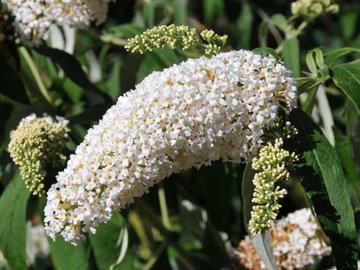
 Butterflies show up for the Butterfly Bush,
a big, and sweet-smelling plant.
Frequent watering gives it maximum height.

I knew my Butterfly Bushes in the Wild Garden are limited by dry spells, so I water them often. The White Profusion variety grows near our bedroom window, so it benefits from

  • Extra rain streaming off the roof.
  • The rain-barrel used just for watering the bush.
  • The dirty birdbath water dumped  on the base of the plant.

Mulching the entire area gives the large plant healthy growth and a good place for birds to wait for their turn at the feeders.

Berries populate like bunnies in the right conditions.

Tuesday, April 18, 2017

Inexpensive and Easy To Grow Plants for the Garden


I published a post on easy-to-grow plants - buckwheat and borage, so I decided to add a few more.


Some people decry their shaded yards, but some plants need shade and abhor the sun. Lily-of-the-Valley was requested by Mrs. Ichabod, so I bought some on sale in the fall last year and tucked them under the Crepe Myrtle and maple. This spring they popped up and began blooming. They will spread on their own over time.


Calladiums are another plant requested by Mrs. I. They do not over-winter. Gardeners can get them fully formed and potted at the gardening centers - or Lowe's - and plant them. Various websites specialize in the bulbs, because they come in all colors. In late fall the tender bulbs must be rescued and stored - or replaced in the late spring. They show their colorful leaves a bit late but stay colorful in the shade until late fall. I like planting the bulbs and watching them unfurl later, like tiny flags that grow in size and bright color. Calladium plants can be bought late in the season for very little, so that is one way to experiment with them.


Tiny bulbs have tiny prices, and one kind will pop up forever, bloom a long time, and spread on its own. The grape hyacinths come in deep blue, white, and variations in-between. They are hardy, never needing a rescue, and do not get grabbed by pesky squirrels.

The ground rodents love to eat crocus, or at least dig up and replant them.


Elderberries are really special in size, in hosting beneficial insects, and in spreading on their own. Mine are seven feet tall in mid-April and pushing new sprouts out of the ground. All the plants with umbrella-like compound flowers are attractive to tiny insects. Farming with Beneficial Insects states that elderberries are good at attracting beneficial insects to its flowers and solitary wasps to its hollow stems.

Buckwheat and Other Easy, Useful Garden Plants

I am partial all plants that require little care
and provide many benefits. Buckwheat tops the list.

Buckwheat
Buckwheat thrives in full to part sun and is very tolerant of lousy soils. Its heart-shaped leaves, averaging 3 inches (7.6 cm) long, are topped with clusters of small white to pale pink flowers that have what I consider a very pleasant scent, though subtle. The nectar and cover buckwheat provides are known to benefit assassin bugs, damsel bugs, spiders, syrphid flies, ladybugs, predaceous beetles, tachinid flies, parasitic wasps, minute pirate bugs, big-eyed bugs, spined soldier bugs, and others.

Walliser, Jessica. Attracting Beneficial Bugs to Your Garden: A Natural Approach to Pest Control (Kindle Locations 2281-2284). Timber Press. Kindle Edition. 

***

GJ - Jessica Walliser and Almost Eden like Buckwheat, and so do I. How easy this little flower? Last year, I scattered the seeds in semi-shade and deep shade, but still had the plants blooming and dropping seed. The plant flowers in a few weeks and grows dense enough to use it as weed-control, pushing out aggressive seed. Nevertheless, Buckwheat is not a pest. I saw blooms for a long time and assumed they were doing all the good things suggested by the experts.

We think of Buckwheat as a grain, but it is a semi-succulent with nutritious seeds. Some seeds are sold for dollars a packet and arrive in a small enveloped with an even smaller envelope inside. Buckwheat sells for dollars a pound.

Rosarians should start with Buckwheat to attract beneficial insects. This flower feeds and attracts bees and Flower Flies. The Flower Flies (aka Hover Flies aka Syrphid Flies) look like tiny striped bees. Their babies go after aphids, as shown by my flawless rose blooms after the first strike in the spring. The aphids go for the white and the Peace blooms, and the Flower Flies lay eggs for their children to hatch and devour the aphids.

I decided on a pound of Buckwheat seeds for the Butterfly Garden, which is now a thick blanket of mulch on top of very rich soil basking in the sun. I would rather not deal with ordinary plants when the roses demand a little attention each day. Sow Buckwheat and enjoy the benefits. Buckwheat will flower near the roses, attracting the best and the brightest insects.

I used to read about flicking aphids off roses and spraying them off with a garden hose. Those are great ideas that never work. Instead, the insects created, engineered, and managed by God do the work for me - as long as I keep toxins away and promote their habitat.

The first rule is - do not kill their babyfood with insecticide. If the beneficial babies grow up on pests, we want the first generation of pests to feed the young and help them reach maturity to lay a new set of eggs - on, in, or near the pests.

Most beneficial insects do their work for us in babyhood. The adults need nectar and pollen - not that their mature feeding is useless to us - and stick around to lay eggs. The over-rated Ladybug is known for eating pests at both stages, but I wager the other beneficials do most of the work.

Notice that Buckwheat attracts many kinds of beneficial insects. I do not have to sort out their name, rank, and serial numbers in the garden - that is already managed for me. Sometimes I see Flower Flies. At other times I see tiny Ichneumon Wasps and Tachnid Flies. When I cut roses, tough spider webs protect the stem from insects crawling up from the ground. The mulch also has spider webs cast across it, soon after dumping a new bag of shredded cyprus.

The Creation gardener only needs background knowledge to set these things in motion. I moved a log in the Wild Garden and found a big toad sitting there, unmoved by my disruption of his living room. Soon after I found out how many insect pests are eaten in a summer by the common toad. He came uninvited, but I set up many more logs and shallow pans of water to encourage more. Using logs to frame various plants, I ended up with toad motels.

Man Against Pest - Bet on the Pest
I have learned the painful lesson of battling pests. The store will always say, "Buy this gadget. And if that does not work, buy this poison." The pests will always win, because poisons kill them for a short time and also harm beneficial creatures. Slugs and moles have a divinely engineered purpose - they are not going away. They do their work well. A bloom in their numbers will attract predators. I put out beer once, in a shallow dish. The beer killed about 30 slugs and some creature enjoyed the chili con slugi - rich, satisfying, and sleep inducing.


Another Plant - As Easy as Buckwheat - Borage or Bee Bread
Readers will assume - correctly - that any bee plant is a great addition for beneficial insects in general.

Borage blooms and drops seed promiscuously, attracting bees, decorating the garden, and building up the beneficial insect population. I began growing it in Phoenix, where it needed no care at all (ditto weeds and cacti there). The flowers are good to eat and often appear garnishing fancy salads.

Borage is a cousin to Comfrey and grows
in the same loosey-goosey manner, but much smaller.


Borage is an herb that is reputed to make people feel better. ("I borage, give thee courage.") The plants we call herbs are easy to grow and tolerate shade, bad soil, and neglect. Was that done on purpose?

Walliser does not mention borage in her fabulous book, but the plant is known for building up the local beneficial insect population. They are the McDonalds of beneficial insect plants, always providing nectar and pollen.

This is another seed that I sow in various areas of the gardens, first in front of the porch, then along the growing areas, always near roses. Borage is similar to Buckwheat in thriving via seed rather than deep, spreading, engulfing root systems.


Seed Dust - Feverfew - Another Tough Herb

Thriving in lousy soils and full to partial sun, feverfew grows like a weed, and thus the caution I give in the next paragraph. Each small daisylike inflorescence comprises hundreds of tiny yellow disk flowers surrounded by a row of white rays. The ferny foliage is heavily fragranced (I don’t like the scent, but others do) and medium green. On any given day in my garden, the flowers of feverfew are crawling with tachinid flies, lacewing larvae, ladybug larvae, minute pirate bugs, syrphid flies, damsel bugs, assassin bugs, spiders, and lots of other natural enemies.

Walliser, Jessica. Attracting Beneficial Bugs to Your Garden: A Natural Approach to Pest Control (Kindle Locations 2764-2766). Timber Press. Kindle Edition. 

***

GJ - I bought thousands of Feverfew seeds, which fit in a tiny glassine packet inside the paper envelope. I sneezed, sowing 500 seeds at once.

Feverfew can take over all the bare places in the lawn. Not everyone wants that.