
IBM worked with me to get the set up going again (Ustream became IBM Ustream). We will have a communion service for Ascension tonight at 7PM.

ICHABOD, THE GLORY HAS DEPARTED - The antidote trusts the efficacious Word in the Means of Grace. John 16:8. Isaiah 55:8ff. Romans 10.

 |
| Heirloom Rose fragrance is potent enough to make someone cough. |
Two tools used by the Jackson ICU team are:

We often have too much rain in the spring, with oozing mud and a lake in the back yard (no interior flooding). But no one knows when the last good rain has left the area.
I love rain for soaking bare root roses, new roses, and stressed bushes. They can soak for a week if given sun for the branches.
Young plants arrive by mail, parched by the trip. The first job is lining them up in a bucket or wheelbarrow for a rainwater soak. Overnight is way too long, though I did that with Bee Balm and it survived...barely. Most plants are ready to go after a rainwater soak, indicating which is the root and which is the stem, within an hour. Some plants arrive as a ball or so tiny, that some clues help.
A plant - simply dug into the ground and watered - is going to be donating water to the dry soil. However, if the rose or new plant is already soaked, then watered after planting, a larger volume of damp soil will support growth instead of drawing that rainwater away.
Everyone knows by now - rain is liquid fertilizer, safe and always effective. A chemical engineer showed me how to put dry fertilizer into the hole dug for roses (?!) and plant it in that toxic-for-roses environment. I never bought a bag of fertilizer, but I did find horse manure and brought it back in a pickup truck. The trick is to praise horses until someone says, "People raise horses near us."
I gave a bunch of manure to a neighbor and he then snow-plowed our sidewalks all winter for free.
Mulches
Weeds may simply be plants yearning to do something more useful in life. A stand of crab grass is actually a grain product and prolific in its production. If cardboard is placed on it and mulch over that, the entire plant will feed the soil, its green leaves providing nitrogen quite a bit slower than rain, but still free.
I get tall pasture grass weeds growing in the garden from birds feeding in one area and fertilizing in another. I had a massive bunch near a rose, so I put cardboard down and a bag of wood mulch on top, almost completely opaque. That weed patch decomposed to feed the bush, and the bush grew instead of being engulfed by pasture grass.
A partial bag is only $1, which is a lot less work than weeding and always good for the soil.

 |
| The wine press became the printing press. |
After the prophet Mohammed died, in 632 AD, his enemies
rose up to remove his influence from Arabia. Instead, his followers countered
and wiped out all active opposition.
The
Byzantine Empire was protected against invasion until the growth of the Ottoman
Empire in the 1300s. Byzantium did not have a warlike culture, but the Muslims
were active in conquest. By 1453, the Byzantine Empire had been whittled down
to Constantinople alone, and it fell on May 29th. The last emperor
of Constantinople, who died fighting, was named Constantine, just as the last
emperor of Rome was named Romulus and died fighting in 476, which was
considered the end of the Roman Empire.
Constantinople
became Istanbul by combining the Greek words for “into the city.”[1]
The great and golden metropolis was simply called “The City,” just as New York
City is today. A lawyer who worked in New York said to us, “I can do my work in
the suburbs, so I seldom have to go into the City.” He added, “That is how we tell
newcomers from old hands. New York is simply The City.”
The
fall of Constantinople was accompanied by Greek scholars and artists fleeing to
Europe with their treasures, which initiated the Renaissance. Ancient Greek
culture was admired and copied in many ways, and the Greek New Testament came
to replace the Vulgate. Thus the end of the two empires, Rome and Byzantine,
mark the beginning and end of the Middle Ages.
The
fall of Rome facilitated the Church in governing Europe, with its common
language – Latin – and its network of bishops and priests. The struggle began,
not the first, but the most effective, the Gospel versus the Antichrist.
 |
| Was Jerome's the first Latin Bible - no. The first was based on the Majority Text. |
The Latin version of the New Testament seems
to come to life in the fifth century after Christ, with Jerome creating the
Vulgate. However, that is far off, because the Old Latin version was actually
translated around 150 AD. The difference is that the Old Latin and the Vulgate
have different sources. The Old Latin uses the Traditional Text, the other is
the Vaticanus, the opposing minority version Tischendorf and Hort adored and
exalted. This fact introduces the concept that there are two basic traditions
for the New Testament. One was copied voluminously and left behind thousands of
examples – the Majority Text. The other is the corrupted Vatican and Sinaiticus, deviously
promoted by Tischendorf, who “discovered” both, then fashioned the Standard Text by
Westcott, Hort, Nestle, and Aland.
The
Traditional Text in its many variations and translations became important for
the independent Waldenses, who in turn influenced Luther’s translation. The story
of these people is one of extreme persecution and hardship.
Most of us think of New Testament development as Greek –
Latin – Erasmus - Luther – KJV, omitting the Waldenses and many others. The
path is not so simple, as the Old Latin and Vulgate show. The Waldenses persecution
is taught in church history classes, but the story does not get the lasting recognition
it deserves. Wylie argues that the original idea came from a poem, Nobla
Leycon.[2]
An opponent of the movement, Rorenco, declared the movement was ancient.[3] The
name of the group comes from Peter Waldo, a merchant who sold his business and
gave the money to the poor toward the end of the 1100s. Others followed him,
which contributed to a tradition of voluntary poverty, lay preaching, and
evangelism. They did not agree with the Roman pope and already had a tradition
of independence from Rome. The Waldenses were discussed at the Third and Fourth
Lateran Councils. They were prevented from preaching without permission from
Rome. Persecution arose and they escaped to the mountains of Northern Italy.
John Milton penned the sonnet, which touches upon the
violence against the Waldenses
Sonnet
18
On
the Late Massacre in Piedmont (1655)
Avenge, O Lord,
thy slaughter'd saints, whose bones
Lie scatter'd on
the Alpine mountains cold,
Ev'n them who
kept thy truth so pure of old,
When all our
fathers worshipp'd stocks and stones;
Forget not: in
thy book record their groans
Who were thy
sheep and in their ancient fold
Slain by the
bloody Piemontese that roll'd
Mother with
infant down the rocks. Their moans
The vales redoubl'd
to the hills, and they
To Heav'n. Their
martyr'd blood and ashes sow
O'er all th'
Italian fields where still doth sway
The triple
tyrant; that from these may grow
A hundred-fold,
who having learnt thy way
Early may fly the
Babylonian woe.[4]
The Waldenses endured horrific persecution from the
Church of Rome, which made them the forerunner of the Reformation.[5] Studying
one book on the long history of the Waldensians will show that the Vatican did
not control all of Europe, and people stood up to the false claims and
teachings of the pope. They had Bibles translated into their languages, and these
Bibles influenced Luther and the King James editors in the language and Greek
manuscripts used. They followed the Majority Text tradition and not minority
Vaticanus.
Roman Catholic priests and nuns remember Erasmus, and not
always with fondness. One priest visited Notre Dame University, wearing a
Hawaiian shirt, to promote the social activism goals of his group. A nun
confronted him. “There you go, just like Erasmus, turning Protestant and going
secular.” Erasmus received a dispensation to wear secular clothes, and he
enjoyed the friendship of many powerful people. That remains the paradox of
Erasmus, because he starting the wagon going downhill to start the Reformation –
then he jumped off. Or – he laid the egg that Luther hatched.
[1] εις την Πόλιν
[2] The
Nobla Leycon though a poem, is in reality a confession of faith, and could have
been composed only after some considerable study of the system of Christianity,
in contradistinction to the errors of Rome. Wylie, J.A. . The History of the
Waldenses (p. 8). Kindle Edition.
[3] Yet
he states that "they were not a new sect in the ninth and tenth centuries,
and that Claude of Turin must have detached them from the Church in the ninth
century." Wylie, J.A. . The History of the Waldenses (p. 8). Kindle
Edition.
[4] https://www.poetryfoundation.org/poems/44747/sonnet-18-avenge-o-lord-thy-slaughterd-saints-whose-bones.
The actual slaughters are too horrible to print. They are haunting, focused on
the innocent, and impossible to forget.
[5]
Jack Moorman, Forever Settled, pp. 227ff.


My first venture in Joe Pye was timid, with only two plants. One got weed-whacked, but it came back. A couple bought Little Joe Pye and loved it, so I bought two Little Joes with my next order. They grew and bloomed.
Meanwhile I learned that Joe Pye can grow nine feet tall in the rose garden - and it did. Ranger Bob solemnly warned me about Joe Pye shading the garden even more effectively than Buckwheat dwarfing the roses.
The Carbon Cowboys reading this know how valuable root systems are to soil fertility, so Buckwheat and Joe Pye leveraged my efforts with wood mulch, paper, and cardboard.
The virtue of any tall plant is a deep root system that opens the soil to its water storage system. That means less run-off and more rainwater to build the plants.
They all have their timing. After the daffodil blooming, the rest of the garden was colorless. Joe Pye began showing its green in the rose garden, and Little Joe popped up in the blackberry weed section, a sunny area perfect for most plants and ideal for the squirrels' own berry harvesting. I lost the battle to blackberry canes last year and did a lot more to them this year. In putting in some calla lilies I found a long straight root which seemed to be the backbone of the blackberry network. I cut it.
I only have to consider previous years to see how hardy these plants are. Previously planted baby hostas are now hardy and ready to divide at the roots. The large hostas are even larger. I was only an amateur hosta grower. I worried that rabbits would eat all my hostas, and I am sure some tried. My neighbor gives them away, so I can move on to blue hostas, maybe.
Roses are budding but the exceptional cold spring frost-bit the first blooms. That is no loss, since trimming bad blooms away only encourages new ones. I have plenty of time to reverse the decisions of the past, such as planting the spirea bushes.
Plant are like pets. We think we are the masters and find out we are the staff, working for an intelligent and well designed, divine creation. Sassy Sue was born to protect and dominate her staff. She has trained me to add treats on top of her dog food, simply by looking up and asking "Where are the treats?" with her eyes. When I close my eyes for sleep, I expect her to order one more trip outside, one spoon of Frosty Paws, and one Pupperoni (since Frosty Paws are Frosty Paws and not legally a treat).
She times her afternoon walk to the period when Ranger Bob is most likely to be available. At 3 PM she makes herself a nuisance until she can run over and say hello, drink his outside water, and earn some treats (by barking commands at him). He tells her how spoiled she is and gives her "only eight."
 |
| Staff are never too young to be trained. |
 |
| This is the appropriate attitude at Mequon (Mordor), so they all graduate "the same," as boasted by the WELS First VP and Fuller graduate. |
 |
| This is closer to the truth. |
 |
| The faculty? Nothing but the best...blood relatives, in-laws, Enthusiasts, and NIV lovers. Fuller alumni who lie about going to Fuller are elevated to professor, vp, and seminary president. |

 |
| The trans-formation continues in WELS. |
 |
| Where was the diversity at her installation as pastor? |

Megan Rohrer (they/their), San Francisco, Calif., was elected May 8 to serve a six-year term as bishop of the Sierra Pacific Synod of the ELCA. Rohrer is the first transgender bishop in the ELCA. The election took place during an online synod assembly.
Rohrer was elected on the fifth ballot, with 209 votes. Jeff R. Johnson, pastor of University Lutheran Chapel of Berkeley in Berkeley, Calif., received 207 votes.
The bishop-elect has served as pastor of Grace Lutheran Church in San Francisco since 2014 and as community chaplain coordinator for the San Francisco Police Department since 2018. They served as executive director of the Welcome Ministry in San Francisco from 2002 to 2014, assistant night minister for the San Francisco Night Ministry from 2013 to 2018 and community garden coordinator at Project Homeless Connect from 2010 to 2012. Rohrer also served as pastor of a multiparish call serving the homeless and hungry at Welcome Ministry from 2006 to 2014.
Rohrer received a Bachelor of Arts degree from Augustana University in Sioux Fall, S.D., in 2001, a Master of Divinity degree from Pacific School of Religion in Berkeley in 2005, and a Doctor of Ministry degree in 2017. Rohrer is currently a doctoral candidate in transformative studies at the California Institute of Integral Studies in San Francisco. Augustana is one of 26 ELCA colleges and universities.
Rohrer’s installation is scheduled for Sept. 11 at St. Matthew Lutheran Church in Walnut Creek, Calif.
Mark W. Holmerud has served as bishop of the Sierra Pacific Synod since 2008 and will retire June 30.
 |
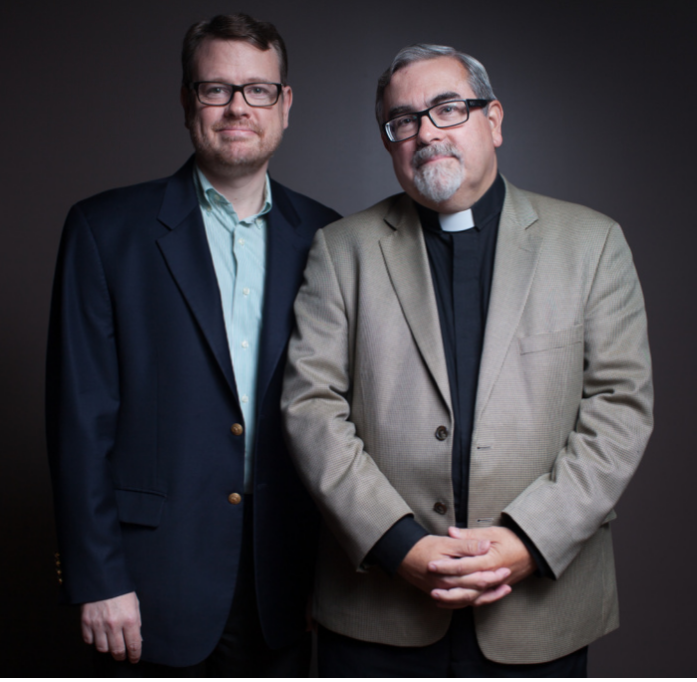
| The WELS Tele-Tubbies are key enablers for Thrivent's ELCA-WELS-ELS-LCMS union, and ELCA's most progressive leaders. |

 |
| Guy Erwin, the previous San Francisco ELCA bishop, is now the president of United Lutheran Seminary, a merger of Gettysburg and Philadelphia Seminaries. |

|
|
 |
| WELS Pastor Adam Mueller, Church and Change leader, led his church council members in a transgender family picnic, publishing photos for everyone to copy. He was recently honored as a speaker at a national WELS conference. |
 |
| Bishop-Elect Rohrer's LinkedIn Page |

 |
Britney Wheat, left, holds a booklet as pastor Susan Strouse of First United Lutheran Church, right, installs the Reverend Megan Rohrer, center, as pastor of Grace Evangelical Lutheran Church.
(Photo: Jane Philomen Cleland) |
 |
| Meghan will replace the bishop who became president of United (sic) Lutheran Seminary. |
 |
| These WELS MLC college students thought "Party in the Fire Island Pines" was so special, they copied it. A local paper covered the story - and the lies. |
 |
 |
| Start them early at Michigan Lutheran Seminary (prep school, WELS). Make up, cheer-leader skirts, the whole package. |


 Guy Erwin (he/him) is the president of United Lutheran Seminary in Pennsylvania, and in 2013 was elected as the