A WELS pastor tried to tell me I had a doctorate in agriculture. I said no, but he insisted. Finally, I said, "Don't you think I would remember if I did?" He finally conceded.
That extra degree may have been generated by the help I gave one seminary professor, who had no clue how to compost. Those who do not learn from gardening books are condemned to repeat this error.
 |
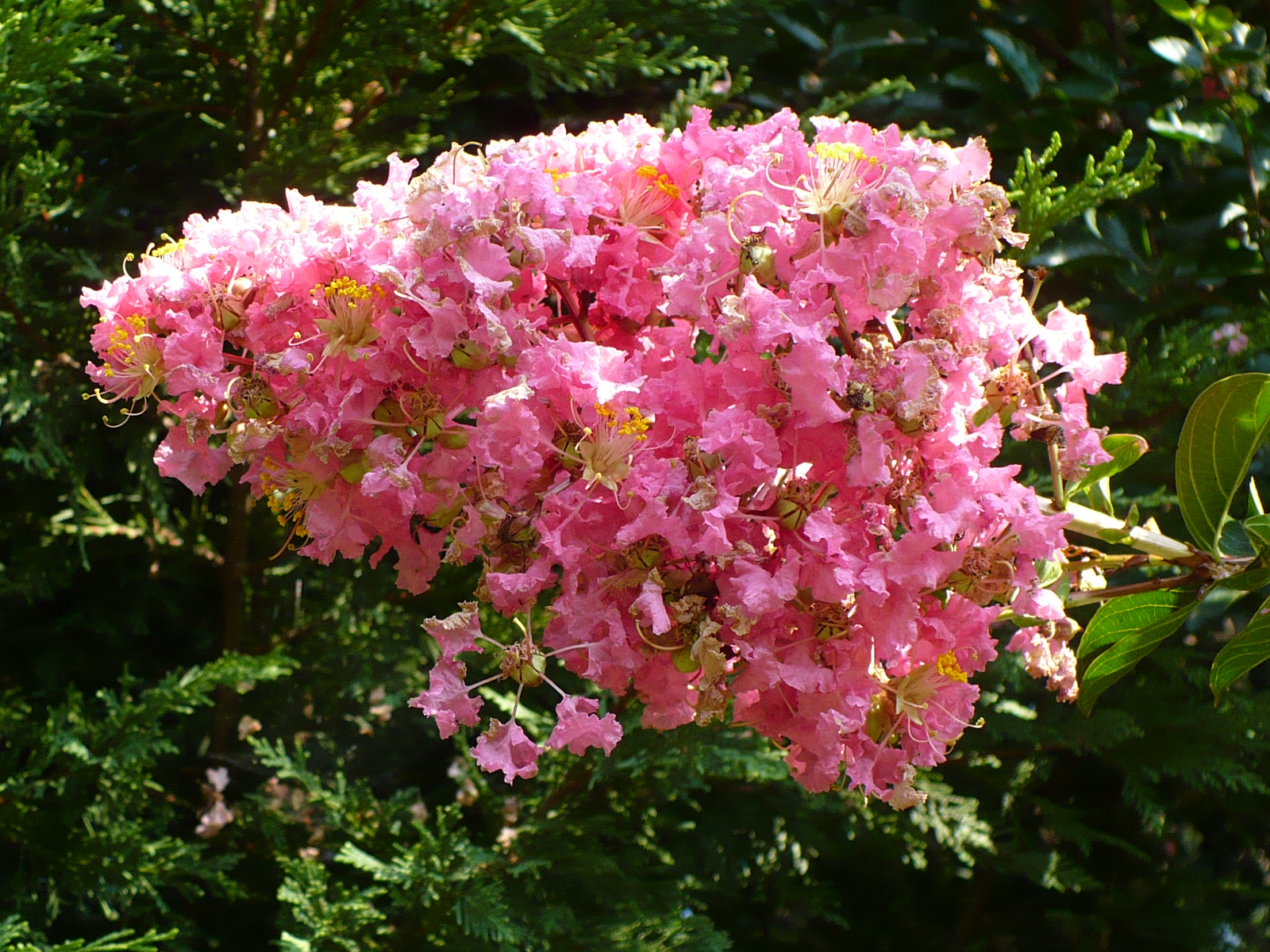
Crepe myrtles are easy to prune,
but where is the mulch below to feed them? |
Reading and observation go a long way in gardening. Initial problems generate disgust and a temptation to use an instant solution. Our crepe myrtle bush was too close to the mailbox, and it was way out of control. Our helper trimmed it back, about two wheelbarrows full. That summer it bloomed. Next we trimmed back the bottom part to show off the bark and give the bush a Lyle Lovett look. The blooms were even bigger because the bottom has been mulched, watered, and earthwormed for several years.
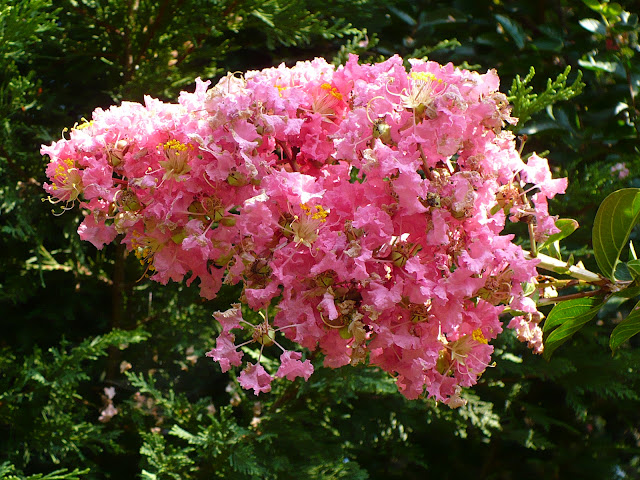 |
When the blooms are done, they can be cut off
for a second round of blooms
How many do this in the entire neighborhood? One. |
When Sassy and I return from our walk, the crepe myrtle looks like floral fireworks, with enormous vibrant blooms shooting off the top. Our single bush adds color and beauty to the entire cul-de-sac, and neighbors appreciate it. Our helper is proud of it because he did a lot of the pruning.
Today I cannot wait to dig into the watered soil and plant blueberry bushes. Almost Eden told me about things to do, and I read more on the Net when I woke up.
One big concern is birds eating the berries. I thought about netting - not a problem for the near future - and made a suggestion to Mrs. I. "Why not dedicate a bush or two to the birds. Give them all they want?" She thought that was a great idea.
God's creatures get their tithe, but they give far more than they take. I had a dozen ripe cherry tomatoes to bring in yesterday. They are just getting started and another dozen are green, ripening, enjoying the
Jackson Aerial Aqueduct. Larger tomatoes get slug damage from those critters rasping away on the fruit. They rest on the ground and are easy pickings for slugs and squirrels. I find ripe ones half-eaten.
Tomato cages are against my religion. Besides, a slug can climb if it wants. A cage will not solve the slug problem. When I explored the slug beer party at night, I found a slug five feet up the tree.
Mrs. I hopes most of the basic work is done. Last year's labor made this year easy to accomplish, mulching large areas in advance. Yesterday I planted blackberries under the mulch that was placed a year ago. The size of the weeds suggested fertile, sun dappled land. The pigweed was hilariously large and branched with beautiful blossoms. I cut some to add to the mulch.
Gardening Lessons
First I learned a lot more about soil chemistry from
Teaming with Microbes. The authors had been toxin addicts, but converted to organic methods when they learned more about soil life. Ditto Jessica Walliser, who had an arsenal of insecticides until she was converted by someone and eventually edited at Organic Gardening, a change of heart almost equal to St. Paul's on the road the Damascus.
That makes me inordinately proud of my upbringing, when I learned most insects were harmless and beneficial, keeping the bad ones in check. I recall my mother talking about this and showing us various insects. She even raised them for photography, read all about them, and gave slide shows on the topic.
I never went through the insecticide phase of gardening and liked the low cost of composting and mulching. I tried some weed killers but learned long ago that they promise more than they deliver. A trimmed lawn squeezes out weeds on its own, and many of our local weeds are attractive, blooming, insect-loving ground cover in the early spring. Why would wipe that out?
 |
Facebook friend Jessical Walliser -
I am memorizing this book. |
Beneficial Insects
Second, I learned about the relationship between plants and beneficial insects from Walliser's classic
Attracting Beneficial Bugs to Your Garden. I had a good attitude, which suffices for most gardening projects, but I wanted to be better informed.
Being informed makes me more trusting of the Creation solution.
The key theme is wounded plants sending out signals to beneficial insects, which will only lay eggs on those plants, so their larvae will have food to consume when they hatch. Thus killing the bad bugs will kill the good ones and keep them from setting up generational controls on those pests - eggs, larvae, adults.
I see beneficial insects on my plants every day, and I see almost no insect damage now.
 |
| I own this one too. |
Host Plants for Beneficial Bugs
I buy seeds and plants because they are havens for beneficial insects. Old and new favorites that contribute to this happy state are:
- Coreopsis
- Sunflower
- Dill
- Coneflower
- Bee Balm
- Borage
- Lavender
- Parsley
- Lace Flower
- Alyssum
- Shasta Daisies.
Some hosting plants are free - dandelions, pigweed, Queen Ann's Lace, and such ground covers as clover and speedwell.
 |
Another Facebook friend -
This is a fun, fact-filled, and inspirational book. |
Many of my favorite books are
serendipity finds, as Stan Hauerwas mentioned about his library research. He would go through the library stacks and look for something new and interesting, not off the required readings lists.
I go to book stores and book displays and look at new titles. I found
- Teaming with Microbes,
- Attracting Beneficial Bugs,
- and A Blessing of Toads
amid the ten marijuana growing books at Barnes and Noble. Each one gave me a new perspective on gardening and a massive amount of fun, motivating information.
 |
This is the best bird identification book,
so I can give away My Golden Book of Birds now. |