Saturday, January 4, 2025

Daily Luther Sermon Quote - St. Stephen's Day - "Do you then reply: Alas, shall we not follow the lives and examples of the holy saints? Why are they then preached? Answer: One should preach them so as to praise God in them, to stir up one another, and to comfort one another by his goodness and grace and not show forth their works, but their obedience in their works. However in our days they let obedience lie and lead us so deeply into works, that we have completely drifted from obedience, and we gape at works and despise our own mission and calling."


Complete sermon here -> 

Luther's Sermons - John 21:19-24.
St. John the Evangelist

DAY OF ST JOHN THE EVANGELIST.


18. Therefore we must close our eyes, not look at our works, whether they be great, small, honorable, contemptible, spiritual, temporal or what kind of an appearance and name they may have upon earth; but look to the command and to the obedience in the works. Do they govern you, then the work also is truly right and precious, and completely godly, although it springs forth as insignificant as a straw. However, if obedience and God’s commandments do not dominate you, then the work is not right, but damnable, surely the devil’s own doings, although it were even so great a work as to raise the dead. For it is decreed that God’s eyes look not to the works, but to the obedience in the works. Therefore it is his will, that we look to his command and our calling, of which St. Paul says in Corinthians 7:17: “As God hath called each, so let him walk.” And St.

Peter says, Ye are to be as faithful, good shepherds or administrators of the manifold grace of God; so that each one may serve the other, and be helpful to him by means of what he has received, 1 Peter 4:10. See, here Peter says the grace and gifts of God are not one but manifold, and each is to tend to his own, develop the same and through them be of service to others.

14. What a glorious state of things would reign, if it were thus that each tended to his own affairs and yet thereby served others, and thus traveled together to heaven in one flock in the right road. St. Paul also writes in Romans 12:4-6 and 1 Corinthians 12:12: “The body has many members, but all have not the same office.” Since we are many members of one congregation, but all have not the same office, no one should administer the office of another, but each his own, and all in childlike obedience and in the many offices and manifold works walk in unity and harmony.

15. Do you then reply: Alas, shall we not follow the lives and examples of the holy saints? Why are they then preached? Answer: One should preach them so as to praise God in them, to stir up one another, and to comfort one another by his goodness and grace and not show forth their works, but their obedience in their works. However in our days they let obedience lie and lead us so deeply into works, that we have completely drifted from obedience, and we gape at works and despise our own mission and calling.

Hence there is no doubt it is Satan’s own doings that divine worship is confined only to churches, altars, masses, singing, reading, offerings and the like, as if all other works were vain or of no use whatever. How could Satan mislead us more completely from the right way than when he confines God’s worship within such narrow limits, only to the church and whatever is done in it ?

16. Be on your guard, look in front of you, Christ will not suffer Peter to look around, not even to the disciple he still loves. Do you think it was for naught that the very disciple, whom Jesus loved, was preferred here to all the other disciples? It was for some purpose that he was not mentioned by name. He might indeed have said: Peter turned and saw John; but he said, “whom Jesus loved” etc. But he wished to meet this evil and banish from their sight the works of the saints, in order that nothing but pure obedience might always abide there, and no one might glory or excuse himself in that he had followed the example of the saints.

Friday, January 3, 2025

Luther Reed - A Classic in Liturgy - Alec Satin - Lutheran Library


View in browser 

Lutheran Library Publishing Ministry

Weekly Updates

May God bless you now and always.
From your Lutheran Librarian,

📅 NEW PUBLICATIONS AND UPDATES

The Lutheran Liturgy by Luther Reed

“Public worship… is the privilege and responsibility of the Church. It must be ordered and administered. It is not an abstraction; it is a solemn transaction. It is faith in action. Times, place, forms, and musical settings must be provided. Reverence, dignity, beauty, and efficiency can best be attained by appropriate formality. The Church has thought much about these matters.” - From the Introduction: The Mind of the Church Level of Difficulty: Intermediate: Some prior subject matter ...

Read more

Consolation: Discourses to the Suffering Children of God by James Alexander

The whole of Divine Truth may be regarded as a comfort to Christian disciples… We help the disheartened by… setting before his mind those great everlasting truths, the acceptation of which lays the basis for joy and peace. - From the Preface" Level of Difficulty: Primer: No prior subject matter knowledge needed. Contents About the Lutheran Library Titlepage Contents Preface 1 God’s Everlasting Mercy a Source of Consolation 2 The Providence of God a Ground of Consolation 3 The Same Subject ...

Read more

The Augsburg Confession: A Brief Review and Interpretation by Juergen Ludwig Neve

“The main stress in the book… is upon the interpretation of its text… It is prefaced by a chapter with simple talks on confessional questions… The second part… tell(s) the story of the Confession in a readable way.. The third part, with its interpretation of the articles of the Confession, forms the main part of this book… the effort has been made to write in such a way that a layman… can follow the discussions.” -from the Preface by J L Neve. Level of Difficulty: Primer: No prior subject ...

Read more

Life's Golden Lamp: A Treasury of Texts from the Words of Christ by Robert Offord

This daily devotional is made up of short messages based on Scriptural texts. Each has been written by a different minister of the Gospel. ‘May the Lord whose words are the vital portion of the book grant that as these are read from day to day… they may not return to him void!’ - from the Preface Level of Difficulty: Primer: No prior subject matter knowledge needed. Contents About the Lutheran Library Title page Preface These Sayings of ...

Read more

An Easy Guide to Scripture Animals by Vernon Morwood

“An Easy Guide to Scripture Animals, being a description of all the animals mentioned in the Bible, with the Scripture References, numerous anecdotes, etc. For home use and for day and Sunday schools.” Level of Difficulty: Primer: No prior subject matter knowledge needed. Contents About the Lutheran Library Original Cover Titlepage Presented to Frontispiece Preface Contents Vocabulary Scripture ...

Read more

How I Found the True Faith by Samuel McGerald

“The story of a remarkable conversion from Roman Catholicism, with additional chapters on subjects vital and fundamental.” Level of Difficulty: Primer: No prior subject matter knowledge needed. Contents About the Lutheran Library Titlepage What’s said about the book by Distinguished Men of Both Continents Autograph Frontispiece Epigraph Contents Foreword 1 My Early Years 2 Boyhood Experiences 3 Coming to America 4 A Turning Point in My Life 5 Reading the Sealed Book 6 The Word Winning Its ...

Read more

🚀 SHARE IT WITH YOUR FRIENDS

Liked this week's issue? Don't forget to spread it out!

Reformation Seminary Lecture - John 14 - Part 2


This Zoom link below will work during the live presentation. The next step is making it permanent.

https://us06web.zoom.us/j/82366381277?pwd=Qynr1Cu4emUel6F53KUaMUc1e8JtGP.1


KJV John 14 - Part 2


14.14 If ye shall ask any thing in my name, I will do it.


15 If ye love me, keep my commandments. [or - guard, protect]


16 And I will pray the Father, and he shall give you another Comforter, that he may abide with you for ever; [emphasis on the Holy Trinity and on the Spirit]


17 Even the Spirit of truth; whom the world cannot receive, because it seeth him not, neither knoweth him: but ye know him; for he dwelleth with you, and shall be in you.


18 I will not leave you comfortless: I will come to you.


19 Yet a little while, and the world seeth me no more; but ye see me: because I live, ye shall live also.


20 At that day ye shall know that I am in my Father, and ye in me, and I in you.


21 He that hath my commandments, and keepeth them, he it is that loveth me: and he that loveth me shall be loved of my Father, and I will love him, and will manifest myself to him.


22 Judas saith unto him, not Iscariot, Lord, how is it that thou wilt manifest thyself unto us, and not unto the world?


23 Jesus answered and said unto him, If a man love me, he will keep my words: and my Father will love him, and we will come unto him, and make our abode with him.


24 He that loveth me not keepeth not my sayings: and the word which ye hear is not mine, but the Father's which sent me.


25 These things have I spoken unto you, being yet present with you.


26 But the Comforter, which is the Holy Ghost, whom the Father will send in my name, he shall teach you all things, and bring all things to your remembrance, whatsoever I have said unto you.


27 Peace I leave with you, my peace I give unto you: not as the world giveth, give I unto you. Let not your heart be troubled, neither let it be afraid.


28 Ye have heard how I said unto you, I go away, and come again unto you. If ye loved me, ye would rejoice, because I said, I go unto the Father: for my Father is greater than I.


29 And now I have told you before it come to pass, that, when it is come to pass, ye might believe.


30 Hereafter I will not talk much with you: for the prince of this world cometh, and hath nothing in me.


31 But that the world may know that I love the Father; and as the Father gave me commandment, even so I do. Arise, let us go hence.


Daily Luther Sermon Quote - St. John the Evangelist - "The very same way the bishop and spiritual prelates also act, who should feed the sheep of Christ and follow Christ, and even suffer death for their sake; instead, they observe their seven canonical hours for prayers, hold mass, and then allow themselves to be called pious people. But if one of the bishops enters heaven then a different heaven must be created. All bishops at present are nothing but fire works of hell, in that they do not administer their office, not even a hair’s breadth of it."


St. John the Evangelist, Juan Ribalta


Complete sermon here -> 

Luther's Sermons - John 21:19-24.
St. John the Evangelist

DAY OF ST JOHN THE EVANGELIST.


TEXT:


John 21:19-24. Now thus he spake, signifying by what manner of death he should glorify God. And when he had spoken this, he saith unto him, Follow me. Peter, turning about, seeth the disciple whom Jesus loved following; who also leaned back on his breast at the supper, and said, Lord who is he that betrayeth thee?

Peter therefore seeing him saith to Jesus, Lord, and what shall this man do? Jesus saith unto him, If I will that he tarry till I come, what is that to thee? follow thou me, This saying therefore went forth among the brethren, that that disciple should not die: yet Jesus said not unto him, that he should not die; but, If I will that he tarry till I come, ,what is that to thee?

This is the disciple that beareth witness of these things, and wrote these things: and we know that his witness is true.


1. When Christ asked Peter three times whether he loved him, and Peter answered three times, “Yea, Lord; thou knowest that I love thee,” he commended unto him three times his sheep and said: “Feed my sheep.”

Immediately afterwards he announced to Peter his death, and says: “Verily, verily, I say unto thee, When thou wast young, thou girdest thyself, and walkedst whither thou wouldest; but when thou shalt be old, thou shalt stretch forth thy hands, and another shall gird thee, and carry thee whither thou wouldest not.” Closely joined to this is to-day’s Gospel: “Follow thou me,” as if to say: Since this is to be your lot, ponder it well and follow thou me and yield willingly to death. It is evident enough that this following signifies his death, and all the disciples understood it so, and it is a lucid and easy Gospel.

2. However as some were greatly worried to know whether St. John was dead or still alive, the Evangelist shows clearly enough that Christ did not wish to let us know, therefore we should not pry into the matter. He says:

Jesus did not say he should not die, neither does he say that he should die.

He thus lets it hang in doubt. If Christ had said: I will that he tarry till I come, it might have been understood that he would die on the last day. But that he says, “If I will, that he tarry”, it is still much more in the dark, in that he does not say right out whether he will or will not.

3. But in doing thus Christ taught us a beautiful and touching lesson for the sake of which Christ dismissed Peter in this manner.

THE TEACHING OF THIS GOSPEL.

The teaching is as follows: Nothwithstanding the examples and lives of all the saints every person should attend to the work entrusted to him and guard the honor of his calling. Oh, this is truly a needed and wholesome teaching. “It is very misleading, and it is almost universal, that we so highly esteem the works and lives of the saints. If we wish to imitate them, we think it to be a very precious work to do so. The useless babblers aid and urge this, who preach the lives of the holy saints and present them to the people for examples in the wrong way.

4. Here Christ works and speaks against this very thing. Peter is a type of such wild wanderers; when Christ had commanded him at once to follow him, he turns about and looks after another, worries as to where he is going whom Jesus had loved. Just so these persons do, they let drop what has been commanded them, and look after the lives and works of those God loved, namely his saints, therefore Christ reproves Peter, and says:

What is that to thee, where he is wandering? Follow thou me, I will attend to him; how, if I wish him to tarry, wilt thou also tarry? Do you imagine I wish the same from you as from him? No, not so; you attend to your duties. I desire to have many kinds of servants, but not all to be at the same work.

5. Alas, many persons are found, who like Peter do everything except what is commanded them. Many a one hears that certain saints made pilgrimages, for which they are praised; then he like a fool starts off, leaves wife and children sitting, who are entrusted to him by God, and trots to St.

Jacob, or here and there, not knowing that his calling and mission are quite different from that of the saint he is imitating. In the same way they do with their bequests, fastings, clothing, holidays, priestcraft, monasteries and cloisters. All that is nothing but looking around to the saints Christ loved, and turning their backs to the commission and calling to follow Christ.

Then they boast they did well, in that they followed the saints.

6. Therefore take heed, that the way of God leads into the right road, First, it tolerates no human doctrine and way or command, secondly, it does not allow of any works, sought and devised by self. Thirdly, God’s way cannot recognize the examples of the saints; but its anxiety is to be faithful, as God leads, in what he requires of us; as the prophet says in Psalm 25:8-12: “God shall instruct him in the way that he shall choose.” Likewise: “And the weak will he teach his way,” etc.

7. Then you may reply: But how if I am not called, what shall I do then?

Answer: How is it possible that you are not called? You have always been in some state or station; you have always been a husband or wife, or boy or girl, or servant. Picture before you the humblest state. Are you a husband, and you think, you have not enough to do in that sphere to govern your wife, children, domestics and property so that all may be obedient to God and you do no one any wrong? Yea, if you had five heads and ten hands, even then you would be too weak for your task, so that you would never dare to think of making a pilgrimage or doing any kind of saintly work.

8. Again: are you a son or daughter, and do you think you have not enough work with yourself, to continue chaste, pure and temperate during your youth, obey your parents, and offend no one by word or deed? Yea, since the custom of honoring such commands and callings has been abandoned, people go and pray with their rosaries and do like things, not belonging to their station in life, and no one ever thinks he is not faithful in his state or station.

9. Again: Are you a domestic or servant, and do you think you would go idle if you were to serve your lord or mistress with all faithfulness as your station and orders require, and also keep your youth under control as with a bridle?

10. And again: Are you a prince, a lord, spiritual or secular; who has more to do than you, in order that your subjects may do right, preserve peace, and wrong is done by no one? Why, do you think, the proverb originated:

A prince or lord is a wild deer in the heavens? Only because they have their office and wish to rule far off when they cannot govern even themselves; afterwards they wish to atone for their folly by masses, bequests, rosaries, prayers and indulgences, as if God were a dealer in old clothes, or a child that permits himself to be fooled with a penny.

11. The very same way the bishop and spiritual prelates also act, who should feed the sheep of Christ and follow Christ, and even suffer death for their sake; instead, they observe their seven canonical hours for prayers, hold mass, and then allow themselves to be called pious people. But if one of the bishops enters heaven then a different heaven must be created. All bishops at present are nothing but fire works of hell, in that they do not administer their office, not even a hair’s breadth of it.





Thursday, January 2, 2025

Tom Fisher Weather Report


How cold is it going to get?

The World Is Upside-Down


 "One Ring to rule them all,
One Ring to find them,
One Ring to bring them all, and in the darkness bind them."
J.R.R. Tolkien


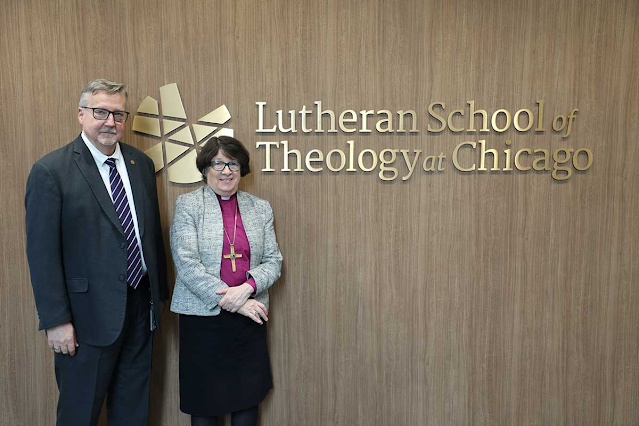
A video of the new location of the Lutheran School of Theology in Chicago can be viewed here, to encourage early morning restfulness. They now occupy the entire fourth floor of a Roman Catholic building that nestles many other entities, including McCormick Reaper Seminary (Presbyterian, PCUSA). LSTC has been shrinking faster than ever, so the next results may include a large van that stops at locations for apostate tutoring.

Everyone is "thrilled and excited."


 Eaton's grasp of English grammar is stunning, marvelous, cryptic.


Daily Luther Sermon Quote - St. Stephen's Day Epistle - "Would not the angels, yes all creatures, lend willing assistance when the Lord himself stands ready to help? Remarkably, Stephen saw not an angel, not God himself, but the man Christ, he who most delights humanity and who affords man the strongest comfort. Man, especially when in distress, welcomes the sight of another man in preference to that of angels or other creatures."


Complete Sermon ->

Luther's Sermons - Acts 6:8-14 and Acts 7:54-60.
St. Stephen's Day

EXAMPLE OF COMFORT AND ENCOURAGEMENT.

40. This epistle lesson, by the example given, inculcates the forcible doctrine of faith and love; and more, it affords comfort and encouragement. It not only teaches; it incites and impels. Death, the terror of the world, it styles a sleep; Luke says, “He fell asleep.” That is, Stephen’s death was quiet and painless; he departed as one goes to sleep, unknowing how — unconsciously falls asleep.

41. The theory that the Christian’s death is a sleep, a peaceful passing, has safe foundation in the declaration of the Spirit. The Spirit will not deceive us. Christ’s grace and power make death peaceful. Its bitterness is far removed by Christ’s death when we believe in him. He says (John 8:51), “If a man keep my word, he shall never see death.” Why shall he not see it?

Because the soul, embraced in his living Word and filled with that life, cannot be sensible of death. The Word lives and knows no death; so the soul which believes in that Word and lives in it, likewise does not taste death. This is why Christ’s words are called words of life. They are the words of life; he who hangs upon them, who believes in them, must live.

42. Comfort and encouragement are further increased by Stephen’s assertion, “I see the heavens opened, and the Son of man standing on the right hand of God.” Here we see how faithfully and lovingly Christ watches over us, and how ready he is to aid us if we but believe in him and will cheerfully risk our lives for his sake. The vision was not given solely on Stephen’s account; it was not recorded for his profit. It was for our consolation, to remove all doubt of our privilege to enjoy the same happy results, provided we conduct ourselves as Stephen did.

43. The fact that the heavens are open affords us the greatest comfort and removes all terror of death. What should not stand open and ready for us when the heavens, the supreme work of creation, are waiting wide for us and rejoicing at our approach? It may be your desire to see them visibly open to you. But were everyone to behold, where would faith be? That the vision was once given to man is enough for the comfort of all Christians, for the comfort and strengthening of their faith and for the removal of all death’s terrors. For as we believe, so shall we experience, even though we see not physically.

44. Would not the angels, yes all creatures, lend willing assistance when the Lord himself stands ready to help? Remarkably, Stephen saw not an angel, not God himself, but the man Christ, he who most delights humanity and who affords man the strongest comfort. Man, especially when in distress, welcomes the sight of another man in preference to that of angels or other creatures.

45. Our artful teachers who would measure the works of God by their own reason, or the seas with a spoon, ask: “How could Stephen look into the heavens when our vision cannot discern a bird when it soars a little high?

How could he see Christ distinctly enough to recognize him for a certainty?

A man upon a high steeple appears to us a child, and we cannot recognize his person.” They attempt to settle the question by declaring Stephen’s vision must have been supernaturally quickened, permitting him to see clearly into infinite space. But suppose Stephen had been under a roof or within a vault? Away with such human nonsense! Paul when near Damascus certainly heard the voice of Christ from heaven and his hearing was not quickened for the occasion. The apostles on Mount Tabor, John the Baptist ( Luke 3:22) and again the people ( John 12:29) — these all heard the voice of the Father with their ordinary hearing. Is it not more difficult to hear a voice from a great distance above than to see an object in the same place? The range of our vision is immeasurably wider than the scope of our hearing.

46. When God desires to reveal himself, heaven and everything else requisite are near. It matters not whether Stephen were beneath a roof or in the open air, heaven was near to him. Abnormal vision was not necessary.

God is everywhere; there is no need that he come down from heaven. A vision, at close range, of God actually in heaven is easily possible without the quickening or perverting of the senses.

47. It matters not whether or no we fully comprehend how such a vision is effected. It is not intended that the wonders of God be brought within our grasp; they are manifested to induce in us belief and confidence. Explain to me, ye of boasted wisdom, how the comparatively large apple or pear or cherry can be grown through the tiny stem; or even explain less mysterious things. But permit God to work; believe in his wonders and do not presume to bring him within your comprehension.

48. Who can number the virtues illustrated in Stephen’s example? There loom up all the fruits of the Spirit. We find love, faith, patience, benevolence, peace, meekness, wisdom, truth, simplicity, strength, consolation, philanthropy. We see there also hatred and censure for all forms of evil. We note a disposition not to value worldly advantage nor to dread the terrors of death. Liberty, tranquility and all the noble virtues and graces are in evidence. There is no virtue but is illustrated in this example; no vice it does not rebuke. Well may the evangelist say Stephen was full of faith and power. Power here implies activity. Luke would says, “His faith was great; hence his many and mighty works.” For when faith truly exists, its fruits must follow. The greater the faith, the more abundant its fruits.

49. True faith is a strong, active and efficacious principle. Nothing is impossible to it. It rests not nor hesitates. Stephen, because of the superior activity of his faith, performed not merely ordinary works, but wrought wonders and signs publicly — great wonders and signs, as Luke says. This is written for a sign that the inactive individual lacks in faith, and has no right to boast of having it. Not undesignedly is the word “faith” placed before the word “power.” The intention was to show that works are evidence of faith, and that without faith nothing good can be accomplished.

Faith must be primary in every act. To this end may God assist us. Amen.

Wednesday, January 1, 2025

Daily Luther Sermon Quote - St. Stephen's Day Epistle - "Many a man passes by his poor neighbor who has a sick child or wife, or is otherwise in need of assistance, and makes no effort to minister to him, but instead contributes to endow some church. Or else while health remains he endeavors to heap up treasures, and when he comes at last to his deathbed makes a will bequeathing his estate to some certain institution. He will be surrounded by priests and monks. They will extol his act, absolve the religious man, administer the Sacrament and bury him with honors."


The Complete Sermon for St. Stephen's Day - 

Luther's Sermons - Acts 6:8-14 and Acts 7:54-60.
St. Stephen's Day


15. But it must be that costly buildings with magnificent arches are required for the false preachers and diabolical teachers of today, though the Word of God could find in all Bethlehem no inn wherein to be born.

Should we not, then, with Stephen cry unto these unreasonable creatures: “Ye stiff necked and uncircumcised in heart and ears, ye do always resist the Holy Spirit. Ye are betrayers and murderers of innocent, harmless Christian souls. Though having received the commandments from the apostles, ye have observed none of them”? I suppose, should we do so, their hearts would be ready to burst with rage and they would gnash their teeth, saying we had blasphemed against God and spoken against the holy place; yes, had profaned all churches. O God, the blind leaders, and murderers of souls, who rule under the accursed popery!

A terrible storm battered the steeple of the ALC cathedral when "the vote" was passed for ELCA's continued, radical apostasy. LCMS and WELS said nothing, because bronze coins of ELCA are so precious.


16. You see now some reason why lightning strikes the costly Papist churches more frequently than it does other buildings. Apparently the wrath of God especially rests upon them because there greater sins are committed, more blasphemies uttered and greater destruction of souls and of churches wrought than take place in brothels and in thieves’ dens. The keeper of a public brothel is less a sinner than the preacher who does not deliver the true Gospel, and the brothel is not so bad as the false preacher’s Church. Even were the proprietor of the brothel daily to prostitute virgins, godly wives and nuns, awful and abominable as such action would be, he would not be any worse nor would he work more harm than those papistical preachers.

17. Does this astonish you? Remember, the false preacher’s doctrine effects nothing but daily to lead astray and to violate souls newly born in baptism — young Christians, tender souls, the pure, consecrated virgin brides of Christ. Since the evil is wrought spiritually, not bodily, no one observes it; but God is beyond measure displeased. In his wrath he cries, through the prophets, in unmistakable terms, Thou harlot who invitest every passer-by! So little can God tolerate false preaching. Jeremiah in his prayer ( Lamentations 5:11) makes this complaint, “They ravished the women in Zion, the virgins in the cities of Judah.” Now, spiritual virginity, the Christian faith, is immeasurably superior to bodily purity; for it alone can obtain heaven.

18. The false doctrines and works of the Papists are destructive not only of faith, but also of Christian love. The fool may always be known by his cap.

Many a man passes by his poor neighbor who has a sick child or wife, or is otherwise in need of assistance, and makes no effort to minister to him, but instead contributes to endow some church. Or else while health remains he endeavors to heap up treasures, and when he comes at last to his deathbed makes a will bequeathing his estate to some certain institution. He will be surrounded by priests and monks. They will extol his act, absolve the religious man, administer the Sacrament and bury him with honors. They will proclaim his name from the pulpit and during mass, and will cry: “Here is worthy conduct indeed! The man has made ample provision for his soul. Many blessings will hereafter be conferred upon him.” Yes, hereafter but, alas, eternally too late.

19. But no one while he is living warns of the man’s sins in not administering to the wants of his neighbor when it lies in his power to relieve; in passing him by, and ignoring him as the rich man did Lazarus in the Gospel. And he does not himself recognize his sins. Hence they must remain unconfessed, unrepented of and unabsolved, however many bulls, indulgences and spiritual fathers may have served. This neglect is the very sin concerning which Christ on the day of judgment will say: “I was... naked, and ye clothed me not.” Matthew 25:43. The religious one will then reply, “I heaped up treasures to establish an institution for thee, in obedience to the Pope’s decree, and hence he has absolved me from all my sins.” What can individuals such as he expect to hear but the sentence: “Depart from me, ye cursed, into everlasting fire”? For by their works they destroy the Christian faith, and for the sake of mere wood and stone despise Christian love.

20. Let us, therefore, beloved friends, be wise; wisdom is essential. Let us truly learn we are saved through faith in Christ and that alone. This fact has been made sufficiently manifest. Then let no one rely upon his own works.

Let us in our lifetime engage only in such works as shall profit our neighbors, being indifferent to testament and institution, and direct our efforts to bettering the full course of our neighbors’ lives.

21. It is related of a pious woman, St. Elizabeth, that once upon entering a cloister and seeing on the wall a fine painting portraying the sufferings of our Lord, she exclaimed: “The cost of this painting should have been saved for the sustenance of the body; the sufferings of Christ are to be painted on your hearts.” How forcibly this godly utterance is directed against the things generally regarded precious! Were St. Elizabeth so to speak today, the Papists assuredly would burn her for blaspheming against the sufferings of Christ and for condemning good works. She would be denounced as a heretic, though her merits were to surpass the combined merits of ten saints.