Wednesday, January 22, 2025

LutherQueasies Are Debating Good and Bad Pastors - All the Queasies Are Bad. They Loathe And Suborn the "Chief Article in the Entire Christian Doctrine."


They suborn the Chief Article in the entire Christian Doctrine. Ask our legal counsel what that means.

I always wonder what the LutherQueasies are drinking when they blindly stubble into Christian doctrine.

The Ovaltines at the ALPB Online Football Forum cannot be bothered with the heirs and airs of Walther dogma. The East Coast Catholic postulants care deeply about football but nothing else.


Citizen Free Press - Two Headlines - Who Started the DEI Shut-down? Ichabod!


This blog, which nobody reads, had no qualms about abandoning one of two universities, because D.E.I. was being forced upon the graduate students and various levels of idiocrasy.  I taught more than 5,000 students at the University of Phoenix, and HAL continues its robotic nonsense for no particular reason.


Sublime stupidity gathers around church and state, much like lint and other methods established to annoy and destroy. The Church Growth Movement has been around for more than 50 years. The only results have been apostasy, VD, and lawsuits - just like the golden years of Stephan and Walther.

The so-called Lutherans copy ELCA - and Pasadena - in every sense of their charter, which was amended a few years after its hellish birth.

Look around at the leaders - The Big Five Apostates - ELCA-LCMS-WELS-ELS-CLC (sic).


Ed O'Keefe
@edokeefe
OBTAINED FIRST BY @cbsnews@kristincbrown: All federal employees in DEI roles have to be placed on paid leave by 5pm Wednesday as those offices and programs are being ordered shut down, according to @USOPM memo.

Pay Attention to Luther's Sermon on the Third Sunday after the Epiphany


Luther's Sermons, Epiphany 3, Lenker edition - "Now learn from this how foolish and void of understanding we are in regard to God’s works and wonders, when we despise the plain Christian man and think that only the “men with pointed mitres” and the learned know and understand God’s truth; whereas Christ here exalts this heathen with his faith above all his disciples. This is because we hold to persons and dignities, and not to God’s Word and grace. Therefore with persons and dignities we also plunge into every error, and then say, the Christian church and the councils have declared so; they cannot err, because they have the Holy Spirit. Meanwhile Christ is with those despised ones and gives dignitaries and councils over to the devil."

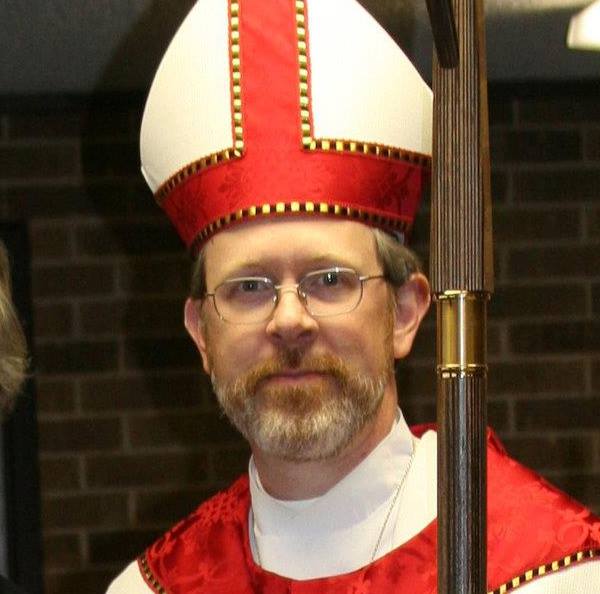
The cost of a silk chasuble? Impossible!
$1500!


Note how those without a real doctorate strut...and laugh about their salaries and perks.


Scaer's boss, Dr. Robert Preus, had the guts to teach Justification and Rome in his final book, edited by two of his sons.


Daily Luther Sermon Quote - Epiphany 3 - "Now learn from this how foolish and void of understanding we are in regard to God’s works and wonders, when we despise the plain Christian man and think that only the “men with pointed mitres” and the learned know and understand God’s truth; whereas Christ here exalts this heathen with his faith above all his disciples. This is because we hold to persons and dignities, and not to God’s Word and grace. Therefore with persons and dignities we also plunge into every error, and then say, the Christian church and the councils have declared so; they cannot err, because they have the Holy Spirit. Meanwhile Christ is with those despised ones and gives dignitaries and councils over to the devil. "


Rome calls it the "Angel Pose!"


Third Sunday after Epiphany. Matthew 8:1-13. Christ heals the Centurion’s Servant, or Two Examples of Faith and Love. The Faith and Baptism of Children


II. THE EXPLANATION OF TWO THOUGHTS IN THIS GOSPEL.

11. When the leper here limits his prayer and says: “Lord, if thou wilt, thou canst make me clean.” it is not to be understood as if he doubted the goodness and grace of Christ. For such a faith would be of no value, even if he believed that Christ was almighty, and was able to do and know all things. For that is living faith, which does not doubt that God is also good to us and is graciously willing to do what we ask. But it is to be understood in this way: faith does not doubt the good will God has toward a person, by which he wishes him every good; but it is not known to us, whether what faith asks and presents, is good and useful for us; God alone knows this,. Therefore faith prays in a way that it submits all to the gracious will of God, whether it is for his honor and our good, and yet it does not doubt that God will grant it, or, if it cannot be granted, that his divine will withholds it in great grace, because he sees it is better not to bestow it. But in all this faith nevertheless remains certain and sure of God’s gracious, will, whether he gives or withholds, as St. Paul also says in Romans 8:26, we know not how to pray as we ought, and as the Lord’s Prayer bids us to prefer his will and to pray for it.

12. This is what we have often said: we ought to believe without doubting and without limiting the divine goodness; but we ought to pray with the limitation, that it may be his honor, his kingdom and will, in order that we may not limit his will to time, place, measure or name, but leave all that freely to him. For this reason the prayer of the leper pleased the Lord so well and was soon heard. For where we submit to his will, and seek what is acceptable to him, he cannot refrain from doing in return what is acceptable to us. Faith inclines his favor to us, and submissive prayer inclines him to grant us what we pray for. As to the sending of the leper to the priests, why it was done and what it signified, enough has been said in the Postil of the ten lepers.

13. However, the saying of Christ: “I have not found so great faith, no, not in Israel,” has been discussed with solicitude, lest it should imply that Christ did not speak truly or that the Mother of God and the apostles were inferior to this centurion. Although I might say here that Christ is speaking of the people of Israel, among whom he had preached and to whom he had come, and that therefore his mother and disciples were excluded, because they traveled with him and came with him to the people of Israel in his preaching, nevertheless I will abide by the words of the Lord and take them as they stand; and for the following reasons. First, it is contrary to no article of belief that this faith of the centurion was without a parallel among the apostles or in the Mother of God. But whenever no article of faith openly contradicts the words of Christ, they are to be taken literally, and are not to be adapted and bent by our interpretation, neither for the sake of any saint, or angel, nor of God himself. For his Word is the truth itself above all saints and angels.

14. Secondly, such interpretation and adaptation spring from a carnal mind and intention, namely to estimate the saints of God not according to God’s grace, but according to their person, worth and greatness; which is contrary to God, who estimates quite differently, according to his gifts alone. For he never granted to John the Baptist to perform miracles, John 10:41, as many inferior saints did. In short, he frequently does through inferior saints what he does not do through great saints. He concealed himself from his mother, when he was twelve years old, and suffered her to be in ignorance and error, Luke 2:43. On Easter Sunday he showed himself to Mary Magdalene, before he showed himself to his mother and the apostles, John 20:14. He spoke to the Samaritan woman, John 4:7, and to the woman taken in adultery, more kindly than he ever spoke to his own mother. John 8:10. And when Peter fell and denied him, the murderer on the cross stood firm in his faith.

15. By these and similar wonders he shows that he will not have his Spirit in his saints limited by us, and that we are not to judge according to the person. He wills to bestow his gifts freely, according to his pleasure and not according to our opinion, as St. Paul says in 1 Corinthians 12:11.

Indeed even of himself he says in John 14:12: “He that believeth on me, the works that I do shall he do also; and greater works than these shall he do.” The purpose of all this is to prevent men from being presumptuous toward others and from elevating one saint above another and creating divisions. All are to be equal in the grace of God, however unequal they are in his gifts. It is his will to do through St. Stephen what he does not do through St. Peter, and through St. Peter what he does not do through his mother; so that it may be he alone who does all in all without distinction of person according to his will.

16. In this sense also is it to be understood that at the time of his preaching he found not such faith either in his mother or in the apostles, whether or not he found then or afterward greater faith in his mother and the apostles, or in many others. For it may easily be possible that at the time of his conception and birth he granted great faith to his mother, and afterwards never or seldom like great faith. At times he may have permitted it to decline, as he did when for three days she had lost him, Luke 2:48. He deals thus with all his saints; and if he did not, the saints would doubtless fall into presumption and make idols of themselves or we would make idols of them, and look more upon their worthiness and persons than upon God’s grace.


17. Now learn from this how foolish and void of understanding we are in regard to God’s works and wonders, when we despise the plain Christian man and think that only the “men with pointed mitres” and the learned know and understand God’s truth; whereas Christ here exalts this heathen with his faith above all his disciples. This is because we hold to persons and dignities, and not to God’s Word and grace. Therefore with persons and dignities we also plunge into every error, and then say, the Christian church and the councils have declared so; they cannot err, because they have the Holy Spirit. Meanwhile Christ is with those despised ones and gives dignitaries and councils over to the devil. Therefore note well, how Christ exalts this heathen. He surpasses Annas, Caiaphas and all the priests, scholars and saints, all of whom ought by right to be the pupils of this heathen, not to say that they ought never to be above him in their opinions and judgments. God sometimes grants to a great saint no faith and to a small saint great faith, in order that one may always esteem another better than himself. Romans 12:10.

Tuesday, January 21, 2025

Yes - This Episcopal Bishop Makes Liz Eaton Seem Normal


An Open Letter to the Left-Wing Bishop Who Lectured Trump and Vance at the National Prayer Service

This morning, while people were still sweeping up confetti and collecting empty champagne flutes from the inaugural balls, President Donald Trump, Vice President JD Vance, and their wives attended the National Prayer Service at the National Cathedral. For the more liturgically-minded readers and those wayward Episcopalians, the order of service can be found here

A certain amount of ecumenicism is to be expected and appreciated at such a service. Jesse J. Swann, Jr., chief of the Piscataway Conoy Tribe, gave the invocation. Rabbi Susan N. Shankman read from Deuteronomy 10:17-21, and cantor Susan Bortnick offered the Jewish call to prayer. There were the requisite high-ranking members of the Episcopal Church and leaders from other Christian faiths, which is fine since the nation is not a homogenous entity.

Curiously, there was a reading from the Koran by Dr. Muhammad Fraser-Rahim, the associate Imam at Masjid Muhammad (The Nation’s Mosque), and the Muslim call to prayer led by Cantor Shayhk Akbar Sharrief, chief mu'adhin of the same mosque. One can understand the desire for inclusivity, but at the same time, Islam makes no bones about its disregard and contempt for other religions, especially Judaism and Christianity. But the formalities must be observed, I suppose.

The Right Reverend Mariann Edgar Budde, bishop of the Episcopal Diocese of Washington delivered the sermon. Much of the homily was dedicated to the concept that now is the time for all of us to get along. There was talk of unity and loving one's neighbor. However, the conclusion was primarily directed at Trump and, to an extent, Vance. And even if Budde had not called upon the president, there could be no mistaking the intent of the final paragraph:

Let me make one final plea, Mr. President. Millions have put their trust in you, and as you told the nation yesterday, you have felt the providential hand of a loving God. In the name of our God, I ask you to have mercy upon the people in our country, and we're scared now. There are gay, lesbian, and transgender children in Democratic, Republican, and independent families, some who fear for their lives and the people who pick our crops and clean our office buildings, who labor in poultry farms and meat packing plants, who wash the dishes after we eat in restaurants and work the night shifts in hospitals. They may not be citizens or have the proper documentation, but the vast majority of immigrants are not criminals. They pay taxes and are good neighbors. They are faithful members of our churches and mosques, synagogues, wadhara, and temples. I ask you to have mercy, Mr. President, on those in our communities whose children fear that their parents will be taken away and that you help those who are fleeing war zones and persecution in their own lands to find compassion and welcome here. Our God teaches us that we are to be merciful to the stranger, for we will all want strangers in this land.

Bishop Budde, if LGBTQ people are afraid, it is largely because of the rhetoric that anyone opposed to transgenderism is a proponent of "genocide." 


"No more captions, Brett. Those ladies make me look conservative, or at least affirmative, sensitive, and bold."


Daily Luther Sermon Quote - Epiphany 3 - "Furthermore the example of love is presented here in the love of Christ to the leper. For you see here, how love makes a servant of Christ, so that he helps the poor man freely without any reward, and seeks neither advantage, favor nor honor thereby, but only the good of the poor man and the honor of God the Father."


As quoted in Justification and Rome, edited by the Preus Brothers but repudiated or ignored or denied.


Third Sunday after Epiphany. Matthew 8:1-13. Christ heals the Centurion’s Servant, or Two Examples of Faith and Love. The Faith and Baptism of Children


5. You see therefore that this example of the leper fights for faith and against works. For as Christ helps him out of pure grace through faith without any works or merits of his own, so he does for every man, and would have all to think thus of him and expect from him like aid. And if this leper had said: “Behold, Lord, I have prayed and fasted so much; I beg you to look upon this and on account of it make me clean” – if he had come in this manner, Christ would never have cleansed him. For such a person does not rest upon God’s grace, but upon his own merit. In this way God’s grace is not praised, loved, magnified nor desired; but one’s own works deprive God of his honor and rob him of that which is his. This is to kiss the hand and to deny God, as Job 31:27-28 says: “If my mouth hath kissed my hand; this also were an iniquity to be punished by the judges; for I should have denied God that is above;” and Isaiah 2:8: “They worship the work of their own hands,” that is, the honor and confidence they ought to give to God, they attribute to their own work.

6. Furthermore the example of love is presented here in the love of Christ to the leper. For you see here, how love makes a servant of Christ, so that he helps the poor man freely without any reward, and seeks neither advantage, favor nor honor thereby, but only the good of the poor man and the honor of God the Father. For this reason he also forbids him to tell anyone, in order that it may be a pure, sincere work of free and gracious love.

7. This is what I have often said, that faith makes of us lords, and love makes of us servants,. Indeed, by faith we become gods and partakers of the divine nature and name, as is said in Psalm 82:6: “I said, Ye are gods, and all of you sons of the Most High.” But through love we become equal to the poorest. According to faith we are in need of nothing, and have an abundance; according to love we are servants of all. By faith we receive blessings from above, from God; through love we give them out below, to our neighbor. Even as Christ in his divinity stood in need of nothing, but in his humanity served everybody who had need of him. Of this we have spoken often enough, namely, that we also must by faith be born God’s sons and gods, lords and kings, even as Christ is born true God of the Father in eternity; and again, come out of ourselves by love and help our neighbors with kind deeds, even as Christ became man to help us all.

And as Christ is not God, because he first merited divinity by his works or attained to it through his incarnation, but has it by birth, without any works, even before he became man; so we also have not merited by works or love sonship with God, so that our sins are forgiven, and death and hell cannot injure us; but without works and before our love, we have received it in the Gospel by grace through faith. And as Christ first became man to serve us after being God from eternity; so we also do good and exercise love to our neighbor, after we have become pious, free from sin, alive, saved, and sons of God by faith. Let this suffice concerning the first example, the leper.

8. The other example is like it in respect to faith and love. For this centurion also has a heartfelt confidence in Christ, and sets before his eyes nothing but the goodness and grace of Christ; otherwise he would not have come to him, or he would not have sent to him, as Luke 7:3 says.

Likewise he would not have had this bold confidence, if he had not first heard of the goodness and grace of Christ. In this instance also the Gospel is the beginning and incentive of his confidence and faith.

9. Here we learn again, that we must begin with the Gospel and believe it and not look upon any merit or work of our own as this centurion also advanced no merit or work, but only his confidence in the goodness of Christ. So we see that all the works of Christ exhibit examples of the Gospel, of faith and of love.

10. We also observe the example of love, how Christ freely shows him kindness, without any request or reward, as was said above. Moreover, the centurion also shows an example of love, in that he took pity upon his servant as upon himself, even as Christ also has had compassion upon us, and did the good deed freely, solely for the benefit of the servant, as Luke 7:2 says, he did it because the servant was dear to him; just as if he said: The love and affection, which he bore to him, impelled him to consider his need and to do this. Let us also do likewise, and see to it that we do not deceive ourselves and rest satisfied in that we now have the Gospel, and yet have no regard for our neighbor in his need. This having been said of these two examples, we will now also examine some details of the text.

Monday, January 20, 2025

The Inauguration Was Everything I Expected - Times 100


I grew up in the 1950s, when we read the newspaper, watched intelligent TV news anchors, and discussed what was happening at the dining room table. As I wrote before, my parents said more than once, "We are turning into Rome."

And we were. That took some time, because those days were not close to what we have today. We did not have drug dealers living on our street. Breaking into homes and businesses - not at all common. It was too easy to identify culprits, like the hoodlums who stole a cash register from my father's bakery. They had been kicked out for hanging around the cute waitress.

President brought back the olden days in his Inaugural Address. I was shocked to see so many issues addressed, each one aimed definitely for the good of our Constitutional Republic.


The Evangelical Lutheran Church in America (a stolen name) tore everything apart,  starting officially in 1988. As the Lutheran CORE pointed out recently, all the evil and nothing good has come from the smirking, radical, self-destructive witches of that merger.


Daily Luther Sermon Quote - Epiphany 3 Centurion - "Here behold the attitude of faith toward Christ: it sets before itself absolutely nothing but the pure goodness and free grace of Christ, without seeking and bringing any merit. For here it certainly cannot be said, that the leper merited by his purity to approach Christ, to speak to him and to invoke his help. Nay, just because he feels his impurity and unworthiness, he approaches all the more and looks only upon the goodness of Christ. This is true faith, a living confidence in the goodness of God."


Third Sunday after Epiphany. Matthew 8:1-13. Christ heals the Centurion’s Servant, or Two Examples of Faith and Love. The Faith and Baptism of Children


TEXT:

Matthew 8:1-13. And when he was come down from the mountain, great multitudes followed him. And behold, there came to him a leper and worshipped him, saying, Lord, if thou wilt, thou canst make me clean. And he stretched forth his hand, and touched him, saying, I will; be thou made clean. And straightway his leprosy was cleansed. And Jesus saith unto him, See thou tell no man; but go, show thyself to the priest, and offer the gift that Moses commanded, for a testimony unto them.

And when he was entered into Capernaum, there came unto him a centurion, beseeching him, and saying, Lord, my servant lieth in the house sick of the palsy, grievously tormented. And he saith unto him, I will come and heal him. And the centurion answered and said, Lord, I am not worthy that thou shouldest come under my roof: but only say the word, and my servant shall be healed.

For I also am a man under authority, having under myself soldiers: and I say to this one, Go, and he goeth; and to another, Come, and he cometh; and to my servant, Do this, and he doeth it.

And when Jesus heard it, he marveled, and said to them that followed, Verily I say unto you, I have not found so great faith, no, not in Israel. And I say unto you, that many shall come from the east and the west, and shall sit down with Abraham, and Isaac, and Jacob, in the kingdom of heaven: but the sons of the kingdom shall be cast forth into outer darkness: there shall be the weeping and the gnashing of teeth. And Jesus said unto the centurion, Go thy way; as thou hast believed, so be it done unto thee. And the servant was healed in that hour.

I. TWO EXAMPLES OF FAITH AND LOVE.

1. Two examples of faith and love are taught in this Gospel: one by the leper, the other by the centurion. Let us first consider the leper. This leper would not have been so bold as to go to the Lord and ask to be cleansed, if he had not trusted and expected with his whole heart, that Christ would be kind and gracious and would cleanse him. For because he was a leper, he had reason to be timid. Moreover the law forbids lepers to mingle with the people. Nevertheless he approaches, regardless of law and people, and of how pure and holy Christ is.

2. Here behold the attitude of faith toward Christ: it sets before itself absolutely nothing but the pure goodness and free grace of Christ, without seeking and bringing any merit. For here it certainly cannot be said, that the leper merited by his purity to approach Christ, to speak to him and to invoke his help. Nay, just because he feels his impurity and unworthiness, he approaches all the more and looks only upon the goodness of Christ. This is true faith, a living confidence in the goodness of God. The heart that does this, has true faith; the heart that does it not, has not true faith; as they do who keep not the goodness of God and that alone in sight, but first look around for their own good works, in order to be worthy of God’s grace and to merit it. These never become bold to call upon God earnestly or to draw near to him.

3. Now this confidence of faith or knowledge of the goodness of Christ would never have originated in this leper by virtue of his own reason, if he had not first heard a good report about Christ, namely, how kind, gracious and merciful he is, ready to help and befriend, comfort and counsel every one that comes, to him. Such a report must undoubtedly have come to his ears, and from this fame he derived courage, and turned and interpreted the report to his own advantage. He applied this goodness to his own need and concluded with all confidence: To me also he will be as kind as his fame and good report declare. His faith therefore did not grow out of his reason, but out of the report he heard of Christ, as St. Paul says: “Belief cometh of hearing, and hearing by the Word (or report) of Christ.” Romans 10:17.

4. This is the Gospel that is the beginning, middle and end of everything good and of all salvation. For we have often heard that we must first hear the Gospel, and after that believe and love and do good works; not first do good works and so reverse the order, as the teachers of works do. But the Gospel is a good report, saying or fame of Christ, how he is all goodness, love and grace, as can be said of no other man or saint. For even if other saints have a good report and reputation, it is nevertheless not the Gospel, unless it tells alone of the goodness and grace of Christ; and if it should include other saints also, it is no longer the Gospel. For the Gospel builds faith and confidence alone upon the rock, Jesus Christ.

The Past Predicts the Future - Here Are Echoes from an Earlier, Squirrely ELCA.
Response from The CORE


https://www.lutherancore.website/

Recent comments from The Lutheran CORE - https://www.lutherancore.website/2025/01/13/reconsiderations-more-than-simply-editorial/


Deluded? I was absolutely astounded when I read ELCA Presiding Bishop Elizabeth Eaton’s response to the recent action taken by the United Methodist Church to affirm the historic Christian view of marriage and human sexuality. Speaking of the very different vote that the ELCA took nearly ten years ago, she said, “Yet, though a controversial decision at the time, our 2009 action has brought strength and blessings for our life and mission beyond what we could have imagined a decade ago.” [emphasis added] 

How in the world could she make a statement like that when she wrote the following in the February 2019 issue of “Living Lutheran”? “Our congregations are growing older and smaller. At least 40 percent of our congregations have an average weekly worship attendance of 50 or less. ELCA membership decreases by 70,000 people a year, or roughly the loss of a synod per year. Clergy retirements outnumber new candidates for ministry. Financial pressures and building maintenance create stress. There is a dearth of people in their 20s and 30s in our pews.” 


<Bad News > Imagined Good Having recently said all of that, how could she now say that because of the 2009 decisions the ELCA is experiencing “strength and blessings for our life and mission beyond what we could have imagined a decade ago”? 

Revelations 

Instead the ELCA is revealing what it really believes and the direction in which it is determined to go by its doing nothing to address the “We Are Naked and Unashamed” movement and nothing to counter the growing influence and message of its most famous public spokesperson, the author of the book, Shameless: A Sexual Reformation. Also, while the Presiding Bishop is quick to respond to so many other issues, she refuses to respond to recent state legislation regarding abortion. How could she expect God to give “strength and blessings” to a church body that is refusing to deal with such blatant rejection of His Word? 


***

GJ - Kids were warned that smashing a puddle of toxic mercury would spread the liquid all over. That was a threat issued by various teachers and parents. ELCA counter-threatened their congregations and swore everything would be fine. Each Presiding Bishop was worse than the one before, leaving them with Elizabeth Eaton, who took a leave of absence for six months.

She is due a retirement in 2025. Strange how her current photographs are so different from the grinning Liz of the past. 

What could be more trite and juvenile than a Liz selfie with an ELCA conference?


Sunday, January 19, 2025

The Second Sunday after the Epiphany - 2025.


https://us06web.zoom.us/j/85224688970?pwd=I3Rfam56ScquWBaVaCgCtHWRUebOvb.1 


Hymn #417                How Can I Thank Thee             
The Confession of Sins
The Absolution
The Introit p. 16
Introit
All the earth shall worship Thee: and shall sing unto Thee, O God.
They shall sing to Thy name: O Thou Most High.
Psalm. Make a joyful noise unto God, all ye lands: 
sing forth the honor of His name, make His praise glorious.

The Gloria Patri
The Kyrie p. 17
The Gloria in Excelsis
The Salutation and Collect p. 19
Collect
Almighty and everlasting God, who dost govern all things in heaven and earth, mercifully hear the supplications of Thy people and grant us Thy peace all the days of our life; through Jesus Christ, Thy Son, our Lord, who liveth, etc.

The Epistle and Gradual   
Gradual
The Lord sent His Word and healed them: 
and delivered them from their destructions.
V. Oh, that men would praise the Lord for His goodness: 
and for His wonderful works to the children of men! Hallelujah! Hallelujah!
V. Praise ye Him, all His angels: praise ye Him, all His hosts. Hallelujah!
    
The Gospel              
Glory be to Thee, O Lord!
Praise be to Thee, O Christ!
The Nicene Creed p. 22
Hymn #381          I Know My Faith Is Founded

 The Marriage at Cana in Galilee
The Preface p. 24
The Sanctus p. 26
The Lord's Prayer p. 27
The Words of Institution
The Agnus Dei p. 28
The Nunc Dimittis p. 29
The Benediction p. 31
Hymn #577                    God Bless Our Native Land


Prayers and Announcements
  • Doctor's care - Pastor Shrader, Sarah Buck, Kermit Way, Dr. Lito Cruz, Alicia Meyer is doing better.
  • President Trump will be inaugurated tomorrow.
  • Chris Shrader's birthday, the same day as Pastor Jackson's mother but a few years earlier. Monday - OSU vs. Notre Dame.


KJV Romans 12:6 Having then gifts differing according to the grace that is given to us, whether prophecy, let us prophesy according to the proportion of faith; 7 Or ministry, let us wait on our ministering: or he that teacheth, on teaching; 8 Or he that exhorteth, on exhortation: he that giveth, let him do it with simplicity; he that ruleth, with diligence; he that sheweth mercy, with cheerfulness. 9 Let love be without dissimulation. Abhor that which is evil; cleave to that which is good. 10 Be kindly affectioned one to another with brotherly love; in honour preferring one another; 11 Not slothful in business; fervent in spirit; serving the Lord; 12 Rejoicing in hope; patient in tribulation; continuing instant in prayer; 13 Distributing to the necessity of saints; given to hospitality. 14 Bless them which persecute you: bless, and curse not. 15 Rejoice with them that do rejoice, and weep with them that weep. 16 Be of the same mind one toward another. Mind not high things, but condescend to men of low estate. Be not wise in your own conceits.

KJV John 2:1 And the third day there was a marriage in Cana of Galilee; and the mother of Jesus was there: 2 And both Jesus was called, and his disciples, to the marriage. 3 And when they wanted wine, the mother of Jesus saith unto him, They have no wine. 4 Jesus saith unto her, Woman, what have I to do with thee? mine hour is not yet come. 5 His mother saith unto the servants, Whatsoever he saith unto you, do it. 6 And there were set there six waterpots of stone, after the manner of the purifying of the Jews, containing two or three firkins [GJ -10 gallons per firkin] apiece. 7 Jesus saith unto them, Fill the waterpots with water. And they filled them up to the brim. 8 And he saith unto them, Draw out now, and bear unto the governor of the feast. And they bare it. 9 When the ruler of the feast had tasted the water that was made wine, and knew not whence it was: (but the servants which drew the water knew;) the governor of the feast called the bridegroom, 10 And saith unto him, Every man at the beginning doth set forth good wine; and when men have well drunk, then that which is worse: but thou hast kept the good wine until now. 11 This beginning of miracles did Jesus in Cana of Galilee, and manifested forth his glory; and his disciples believed on him.

The Marriage at Cana in Galilee

KJV John 2:1 And the third day there was a marriage in Cana of Galilee; and the mother of Jesus was there: 2 And both Jesus was called, and his disciples, to the marriage.

The first miracle of Jesus is one with many levels of meaning. It was His first miracle, included all His disciples - and His mother, and yet this took place in a little town where the unique event took place for a few people, a humble bride and groom.

The Scriptures describe what happened and include clear messages against future errors. This may be too obvious - Jesus began by blessing the institution of marriage. He did not bless or promote the distortions of men and women living separately and creating holiness for the world through isolated holy places and anti-family obsessions. More than a thousand years promoted the papacy and made the priesthood, monks, and nuns captive to orders outside of and against marriage. Luther broke that up by getting marriage, almost against his will, and promoted what God blessed from the beginning - a man and a woman united as husband and wife, raising children, a unit of the Christian Faith, blessed by Jesus Himself.

3 And when they wanted wine, the mother of Jesus saith unto him, They have no wine. 

These were poor people. Wine was basic and they ran out. The parents were evidently no longer alive. Mary took the place of the bride's mother and father. I have participated in quite a few weddings - the mother of the bride is the manager. Everything must be done properly - to perfection. Not having wine was the most basic for a number of reasons. Guests would say, "It's just not done!" 

At a conservative Methodist wedding, the couple was unwrapping gifts - one was a bottle of wine. That was re-wrapped quickly and slipped back into the array of gifts.

The discussion with Jesus meant one thing only - Mary believed Jesus would take care of matters. She had seen the greatest miracles anyone could imagine - her difficult trip to Bethlehem, the shepherds coming to see the baby Jesus, the Wise Men come from the East, risking their own deaths.

4 Jesus saith unto her, Woman, what have I to do with thee? mine hour is not yet come. 5 His mother saith unto the servants, Whatsoever he saith unto you, do it

Jesus did not say, "Mother" or even "Dear Woman" in John 2. His response emphasized His divinity and her human nature. In the Gospel of John, Mary was addressed as "woman" twice - at the wedding and at the cross. Jesus had John take Mary to safety, with this dialog - behold your mother, and behold your son. But He addressed Mary as "woman."

This anticipates the cult of Mary, which grew up after a debate about Mary giving birth, which became an obsession about Mary. That grew throughout many centuries and still grows today. "Mary comforts the tortured souls in Purgatory," a claim and a terrible distortion even today, in Rome and Eastern Orthodoxy.

In a few words, Mary expressed her faith in Jesus - without limits - much like the many who came to Him in His public ministry or were dragged to Him so they could be healed, even the Roman soldier who believed that a Word from Jesus would cure his servant at a distance. The woman with the terrible disorder, never healed, and yet believed she would be healed just by being touched.

6 And there were set there six waterpots of stone, after the manner of the purifying of the Jews, containing two or three firkins [GJ -10 gallons per firkin] apiece. 7 Jesus saith unto them, Fill the waterpots with water. And they filled them up to the brim. 8 And he saith unto them, Draw out now, and bear unto the governor of the feast. And they bare it.

This is a widely distributed miracle which did not take place from Jesus touching or doing the work, but various people being involved. As Jesus' ministry grew, the population doubtless shared the story of the wedding - "I was there!" That could not be missed - the sudden amount of wine, the perfection of the wine, the helpers doing the work, but the Word coming from the Son of God.

9 When the ruler of the feast had tasted the water that was made wine, and knew not whence it was: (but the servants which drew the water knew;) the governor of the feast called the bridegroom, 10 And saith unto him, Every man at the beginning doth set forth good wine; and when men have well drunk, then that which is worse: but thou hast kept the good wine until now. 

The groom was dragged into this miracle because the order of wine was described by the master of the feast - so the groom an experience as well. The groom got the best wine until later.

11 This beginning of miracles did Jesus in Cana of Galilee, and manifested forth his glory; and his disciples believed on him.

The miracle of the wine is known world-wide, but often neglected through the miracle of marriage itself. Walter Meyer emphasized that there should always be another person in the marriage - Jesus Christ. Two become one, and that leads to mutual love that transcends daily life and goes beyond the ordinary.