Showing posts with label Charlotte Kirschbaum. Show all posts

Saturday, January 11, 2025

Dogmatics - Lo, How the Professors and Bishops Have Fallen!


"The first and coarsest is that of St. Thomas (if indeed he be a saint). This was taken from the system of pagan science and art which was written by that great light of nature, Aristotle. Now they say that his philosophy is like a bright, shining plate, and the Word of Christ is like the sun. And as the sun shines upon the plate, causing it to gleam and glitter all the brighter, so the divine light shines upon the light of nature and illumines it. With this beautiful simile they have introduced pagan doctrines into the Christian church, which have been taught and cultivated by the great universities and in which teachers and preachers have been instructed. The devil has taught them to speak in this way. Thus the Word of God is trodden under foot, for when it is given full play, it subverts all these satanic doctrines." Epiphany 1 sermon, #16.

Dogma is often used as a term to refute someone's argument, but somehow  Dogmatics is a wonderful, large, impressive set of books, required reading - they claim. A few years later, they are retired reading, beautiful backdrops of 300 unread volumes hovering above and behind a pastor's head.

Luther's statement above - and in the previous post - is enough to warn people away from dogmatics. However, even today the ranking theologians are stuck and will not let themselves be unstuck (the last being another fad).

Here is a sample -

Thomas Aquinas - required reading for future popes and dogmaticians.

Calvin - boring, lifeless, often ridiculous, but somehow addicting to semi-Lutherans.

CFW Walther, BA, genuinely Calvin with a veneer of Luther.

Paul Tillich - The Courage To Be, mostly forgotten.

Karl Barth and his live-in mistress/assistant - Church Dogmatics; on sale for $1 a volume.

Franz Pieper, Christian Dogmatics, a clever sleight of hand, merging Justification by Faith with Objective Faithless Justification, promoting yet denying the efficacy of the Word of God.

Braaten-Jenson, Christian Dogmatics, an introduction to ELCA, a superb collection of ponderous drivel. 

These volumes are guaranteed to slowly turn someone into an atheist, step by step, though many deny it. Note that the Pieperites are perfectly happy to work with ELCA's Braaten-Jenson and Fuller Seminary's McGavran/Peter Wagner style theologians.

The only book they all loathe is the King James Version of the Bible. Now we begin to smell the pot-roast, as Luther once wrote.

Friday, June 2, 2023

They Do Not Teach Faith in Jesus Christ the Savior - Because They Have No Faith


From Luther - The First Holy Trinity Sunday

God will make no one such a king who is not God, for he will not give the reins out of his hands; he alone will be the Lord over heaven and earth, death, hell, the devil and all creatures. If he, then, makes Christ Lord of all that is created, Christ must truly be God.

8. We can. therefore, have no surer foundation for our belief in the divinity of Christ than that we enwrap and enclose our hearts in the declarations of the Scriptures. The Scriptures gradually and beautifully lead us to Christ; first revealing him to us as a man, then as the lord of all creatures. and finally as God. Thus we are successfully led to the true knowledge of God. But the philosophers and the wise men of this world would begin at the top and so they have become fools. We must begin at the bottom and gradually advance in knowledge, so that the words of Proverbs 25:27 may not apply to us: “It is not good to eat much honey; so for men to search out their own glory is grievous.”


I am glad that Carl Braaten - born 1929 - has lived so long that he can see the wreckage of the Lutheran Church that he worked so hard to accomplish. Every era has a dominant theme backed by a philosophy, whether acknowledged or not. Braaten's philosophy is one where anything divine is rejected and in need of a filler for the void. He earned a PhD at Harvard and studied under the lecherous gaze of Paul Tillich, whose own wife ratted him out in her book about Tillich.

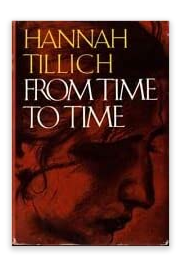
Tillich's wife wrote about his sleazy behavior after he died.

Imagine if you will, a two-volume work on Christian Dogmatics, not just any work, but the Braaten-Jenson cooperative. You're traveling through another dimension -- a dimension not only of sight and sound but of mind. A journey into a wondrous land whose boundaries are that of imagination. That's a signpost up ahead: your next stop: the Braaten-Jenson! [The Twilight Zone]

The Braaten-Jenson content is too precious to explain to ordinary people:

  • The Trinity is denied.
  • The Virgin Birth of Christ is rejected.
  • Miracles did not happen.
  • The Atonement has no meaning.
  • The Resurrection is imaginary.

They needed a group of men to replace the articles of faith with their own dull, worn out, 19th century theology - BOMFOG. The German rationalists had already reduced the Christian Faith to the Brotherhood of Man and the Fatherhood of God. New England wits extended that summary - "And the neighborhood of Boston." Earlier, Unitarianism had been confined to New England, but it gradually became the philosophy of America.

The label Banned in Boston used to make me think Beantown was a bigoted city, because books were always banned there and nowhere else. Finally I realized that Boston was so loose that anything could be published there.

Likewise, the traditional Christian Faith was taken for granted across America, but the Great Depression gave many church leaders a chance to blame the Christian Church, not the Federal Reserve Bank, for the economic debacle. 

Based on endless reading about the era from the 19th century to Great Depression, I consider the 1930s the transition to German rationalism. That was slow at first but gradually took over the academic leaders and subsequently their students. Someone could say, "I read Tillich!" instead of "Jesus was only a man." A cool Karl Barth fan would say, "Have you read II, 2?" - the mark of the Barthian Church Dogmatics mostly written by his live-in mistress.

One of my professors was the President of the Karl Barth Society and told us about Barth's alleged use of his mistress, now openly acknowledged but hushed up. My dissertation advisor studied under Barth to earn his doctorate. Another advisor emphasized Barth in his work. 


Karl Barth paid his lovely young assistant, Charlotte Kirschbaum, almost nothing to assist their work with editing and research. Karl moved her into his house, against the objections of his wife.

The head of my program was enamored by Tillich's work - the Karl Barth Society professor said in class - "Lutherans do not understand Tillich." I responded with "Lutherans do not understand a Lutheran?" I merely pointed out what Tillich's own colleague said - the Union Seminary colleagues were appalled by his paganism.

The unspoken atheism of that era allowed the highly educated church professors - much like Luther's generation - to blabber about their own philosophies without being disturbed by the revelation of the Scriptures. 


Fuller Seminary - 
The Last Frontier of Atheism for Dullards

Fuller Seminary latched onto the pro-abortion Disciples of Christ professor Donald McGavran, a sociologist with a PhD from Columbia University. He attracted others who joined his incredibly stupid crusade, and that became the New Religion, good for everyone and harmless as well. The only effect Fuller has had is negative. To make their methods neutral, they divorced any suggestion of the Christian Faith from marketing. 

Some escape the dreariness of Church Growth for the Church of Rome, where the Scriptures are dodged once again in favor of method. They glory in their incense, their prissy demands of costumes, their choreography of entertainment without Christ Himself.


Thursday, February 4, 2021

Working on Text Criticism Sources

Barth's Marxist theology, a thousand miles wide, an inch deep. Who else could be the theologian for Fuller Seminary, WELS, LCMS, ELS, ELCA? He could double-talk any topic, because he worked with his mistress, night and day, at his home, at the summer cabin, and on his tours. They replaced Christianity with Anything Goes, and conservatives still defend his/their honor.


Thursday, October 15, 2020

Centenniel of Apostasy - Karl Barth's Triumph, Charlotte's Revenge

Charlotte Kirschbaum and Karl Barth worked together and traveled together.

This photo of Charlotte and Karl was taken many years later.

We can safely claim that Calvinist Karl Barth and his mistress Charlotte Kirschbaum were able to undermine Western Christianity with a two-fold attack. He appealed to the professors with his double-talking Dogmatics, and became the official theologian of Fuller Seminary, thanks to faculty studies at Basel, Switzerland. His commentary on Romans in 1919 created a sensation, and he soon became a professor rather than a parish pastor. Thus the Centennial of Apostasy.

Before taking Barth (Kirschbaum) seriously, read this book.


When various people express their awe of Barth, they either do not know or want to know about his Marxist thought or his live-in mistress, Charlotte Kirschbaum. That has been thoroughly discussed by George Hunsinger, head of the Barth Institute (Temple) at Princeton. I met Hunsinger at Yale, worked at the Yale Medical Library with his first wife, and met him again at Notre Dame. 

"As his unique student, critic, researcher, adviser, collaborator, companion, assistant, spokesperson, and confidante, Charlotte von Kirschbaum was indispensable to him. He could not have been what he was, or have done what he did, without her." Hunsinger, review of the S. Seliger book, Charlotte von Kirschbaum and Karl Barth: A Study in Biography and the History of Theology.

Barth was not trained to be an academic, and he was swamped. The mysterious Charlotte Kirschbaum showed up to be his assistant and his mistress. He tried to divorce his wife Nelly, but she said "Nein! mein Schnutschi-Putschi." He lived with Charlotte during the summer and moved her into his home a bit later.

We know next to nothing about Charlotte, who was willing to work for almost nothing her entire life. She was clearly the researcher and likely the one who wrote the small print in the Dogmatics. She went with him on his trips and shared the same room when he stayed at faculty homes on his trip to America. She represented him at a major Marxist confab.

In Academics

Schleiermacher, educated at Halle University, had a major struggle with the Christian Faith, so his father's urging him to study made him a highly educated sceptic. The result was a theologian who established "faith without belief," the theologians characterized by my friend as "people with a sentimental attachment to Christianity."

Schleiermacher was ideal for those who were really rationalists but chose to remain within the Church by using their God-talk, their faith-words, to express their ideas.

Barth and Kirschbaum built upon this by created a system where the radicals could exploit their double-talk from within the institution, a far more effective position than outside of it.

Barth was the dominant theologian at Notre Dame in the 1980s. Frank Fiorenza, now at Harvard, was the president of the Barth Society at one point. He shared Barth's co-writing tactics with us. As he said, "Most of us in the Barth Society thought Charlotte wrote the fine print and he wrote the large print." For those uninitiated in Barthology, the large print was the outline of each section, written in complete sentences in a larger font. Many people extolled the fine print and the special essays in the volumes. Some of the large print sections or markers were laughable.

My main advisor for the dissertation was John Howard Yoder, who studied under Barth at Basel. This made Yoder a rock star among Mennonites. Hauerwas encouraged Notre Dame to share Yoder with Goshen College, which was not far away. Hauerwas was another advisor.

Various names are mentioned among the famous modern theologians, but Barth's was always on the list, just as much for Catholics as for Protestants. Having a major work, with 12 fat volumes, was a great way to dominate in publishing and influence. 


In Church Growth

Two key figures at Fuller Seminary studied with Barth in Basel. One was the founder's son. The Battle for the Bible and its sequel deal with this. The anti-inerrancy people won, and the credit for this back-sliding was given to Barth's influence.

Fuller is not only the most influential school for Evangelicals, but also the finishing school for LCMS-WELS leaders. Those WELS-LCMS leaders who have studied there would make a glorious Wall of Shame for anyone curious about their decline. David Valleskey and Frosty Bivens are so devious that they brag about their Fuller studies to some and deny it (calling me a liar) to others.

One step removed, C. Peter Wagner earned his doctorate at Princeton, a very liberal Calvinist school, home of the Barth Society (Temple).

For WELS, LCMS, and ELCA, union with Calvinism is a nostalgic trip back to their roots. They make up 99% of registered but confused Lutherans in America. The three denominations began with a heavy dose of unionism with the Calvinists, struggled to pull away, but ran back, just like the abused children who defend their moms in court and deny the broken bones and bruises.

Fuller argues that they can turn up the heat slowly for the frog in the kettle, and it will not jump out - it will stay in until thoroughly cooked. Then why have so many Lutherans jumped out?

Valleskey borrowed "spoiling the Egyptians" from Barna, who borrowed it from Augustine. Notice how fast an analogy goes downhill? I had various Mordor graduates warming, "Don't throw the baby out with the bathwater!" I responded, "Don't wash the baby in sewage."


The Fortune Cookie Theologian


Wednesday, January 15, 2020

From an Anonymous Source - Walter Martin and the Seminexit

 Liberalism: Its Cause and Cure, The Poisoning of American Christianity and the Cure - Amazon.This is available from the author at the discounted price.


Walter Martin was on television, often through John Ankerberg. The video above involves a lot of yelling, so at least two of us find it hard to follow him for long.

However, Martin's basic claims about modern theology are true. The liberal theologians do not believe much of anything. Their philosophy has permeated Protestantism and Catholicism through the hugging hoaxers Karl Barth and Charlotte Kirschbaum, via Fuller Seminary.

 ELCA meeting

 WELS Martin Luther College graduate. See below.


A snapshot of the Lutheran synods today will reveal that the modern apostates own all of the Martin claims, too.

  • Fuller Seminary is being sued for not allowing gay students, but WELS explains they have gone rainbow at their college because of federal student loan guidelines (and the dollars involved).
  • Concordia, St. Louis is miffed that anyone would question their attacks on Creation. "That is slander!" the professors say, speaking as one.
  • Concordia Publishing House has taken the Seminexit too. Universalism dressed as Objective Justification is their published dogma, and the traditional, genuine ending of Mark's Gospel is not kosher.
  • No Lutheran synod - not even the archdiocese of ELDONA - accepts the traditional text of the Bible, favoring the latest cut and paste efforts by the NIV and ESV instead.


 Holy Mother WELS can never be criticized, but these Fulleroids spent their careers doing exactly that, to get rid of any vestiges of Lutheran doctrine and practice. They won, and now their shrinking seminary is producing Fuller clones and Willow Creek shills.

Saturday, November 16, 2019

Time To Post the Efficacy Motherlode Again - Proof Against Intuitu Cavo

 Graphic by Norma A. Boeckler


I posted the Efficacy Motherlode again, because the Lutherans are hopelessly stuck in view of Calvinism (intuitu Calvo), thanks to his influence on both sides -

  1. The liberals (ELCA and offshoots) get their Calvinism from the academic theologians they hire and from the Fuller Seminary experts they promote.
  2. The "conservatives" (LCMS, ELS, WELS, CLC sic) get their Calvinism from the academic theologians they hire and from the Fuller Seminary experts they promote.
As readers can seethe, the cause is almost hopeless. But it is only hopeless if we rely on institutions rather than the Word of God.

The synods and seminaries have been able to sell their garbage at fantastically high prices because they have abandoned various positions that are Biblical, taught clearly during the Reformation, and inimical to their rationalistic and Pietistic programs:
  1. The efficacy of the Word
  2. The Means of Grace
  3. Justification by Faith.
I test each issue of Christian News (web pdf) with a control-f search on these topics - Justification by Faith, efficacy, Means of Grace. They do not come up often. The Chief Article is not Justification by Faith but magically transformed into Objective Justification. That is what they mean (OJ) when they invoke the term Justification. That is so clever. 


Karl Barth and his Commie mistress Charlotte Kirchbaum updated Calvin by playing with Biblical terms just as their exemplar did. This gave the post-Kantian theologians permission to do the same, so modern theology means playing with Biblical categories in order to weave together a new vision of Faith without Belief. 

Barth-Kirschbaum were simply working with the midwife of this approach, Friedrich Schleiermacher - Halle University, of course.

 We haf got you surrounded, Barth on the right, Barth on the left.


Because Barth-Kirschbaum influenced the early leaders of Fuller Seminary, they became the official theologians of Fuller. Because Barth was lionized among the mainline churches of Europe and America, with a big fat set of Dogmatics to cite, he became the paper pope of academics, Protestant and Roman Catholic.

I can name at least four Notre Dame professors who loved Barth - Fiorenza, Yoder, Hauerwas, and Hommes. Affiliations? - Roman Catholic, Mennonite, Methodist, liberal Calvinist.

CFW Walther dripped Calvinism and did his best to supplant the Lutheran doctrine of his colleagues with his brew of Calvinistic-Pietistic dogma, heavily reliant on Bishop Stephan, STD.


Thursday, October 31, 2019

The Problem with Pastoral Plagiarism


Plagiarism is pandemic in higher education, so much that online universities have mandatory "plagiarism checkers" for every single assignment. When they post their work, the software starts looking for text-matching, which is not perfect but certainly handy.

Apart from dishonesty and laziness, the problem with plagiarism is the lack of study and reflection on the text of the Bible. The popular sermons are quite shallow and manipulative, so their effect is to take the pastor farther away from the Word than before.

WELS has a great formula at Mordor. They hate Lenski for teaching Justification by Faith. The faculty encourages "good sermons writers" to share on a server so the overworked, hungover brothers do not have to write their own. WELS leadersare so full of themselves that they make the graduates think they have reached a genius level of Biblical studies, even though their education has been watered down year after year, following the LCMS-ELCA model.

In the past WELS has paid pastors to attend Fuller and Willow Creek, so they can grow their churches the way Calvinists do.

How you gonna keep them down on the farm,
After they've seen Church Growth?
How you gonna keep them away harm
After they've heard such things from Parlow?


At Gettysburg Seminary, in the good old days, seminary was a series of Greek and Hebrew courses in the Scriptures, with homiletical courses added - German preaching expected.

Many pastors were intellectual giants because of their constant study, as were the leaders of the Lutheran Reformation.

We are not all equally moved to study and write, but this formula is still true for all composition -

"Great writing comes from great research, because research is the energy behind thought and composition." - G. Jackson

I teach that to every class I have whether it is an MA in education or a graduate degree in theology. Those who linger and malinger at the textbook level have nothing new to say. They simply repeat the bromides they have learned from the text.

When I read the verbose volumes of liberal scholars, I usually see the endless repetition of rationalism from the past. The theologians are anxious to prove they have devoured the works of Karl Barth, or more honestly - his mistress Charlotte Kirschbaum. Thus we have Calvinistic human reason on both sides, with nothing to offer from the Word itself.

Halle University launched the Easter Absolution of the Entire Word (without faith, of course). Halle also promoted Biblical rationalism and culminated in Schleiermacher's pivot into modernism - faith without belief. He taught the academics to write enormous volumes where all the words of faith were used, but emptied of meaning. That remains the "genius" of Barth-Kirschbaum, the theology of Fuller Seminary, and the method of the modern Lutherans who ape Calvin so marvelously well.

 Barth and his Commie mistress - Charlotte Kirschbaum. He plagiarized the documents/research his colleagues sent him, kind of a Walmart of theology. Charlotte did all of his research and received no credit until very late.

Ow! - I need eye bleach. This is the after picture.

Tuesday, May 7, 2019

Karl Barth and His Hawt Commie Babe Co-Author.
They Are the Foundational Theologians for Fuller Seminary and the Lutheran Dolts Brainwashed There.
Published in 2012


Charlotte Kirschbaum was the Commie babe who bedded Barth in his own home, moving in shamelessly. Many Barthians claim she was a major contributor to the gaseous Church Dogmatics that Barth claimed as his own. Note the Church Growth parallels with adultery, apostasy, and plagiarism.


Karth Barth was so cute in his Swiss Army uniform - I had to post this photo for laughs. It looks like a scene from Laugh In.


My friend from Yale explored Barth's love for Marxism and his known affinities with the red cause. Barth-Kirschbaum is the official theologian for Fuller Seminary, where most of the leaders of WELS, Missouri, the ELS, and ELCA have attended.


Here ve haff da luffly Barth family, Karl mit Charlotte, und Kinder, und Frau Barth way over on da outside right. Das machen me schniffle ein bischen. Zo touching und varm. Der kleine Hans hat two mommies - eine Hausfrau und eine va-va-voom Commie. [Translated into German to keep the caption G-rated.]


Carl Braaten, the son of missionaries, latched onto Leftist theologians, incorporating Barth-Kirschbaum and Tillich (another adulterer) into Lutheran theology. Barth's $1,000 set now sells for $99. Tillich is a has-been, known chiefly for his promiscuity and sadistic fetishes.

Note the catchy subtitle, which came from an orthodox Lutheran.
The UOJ dimwits use that phrase in all their essays attacking justification by faith.

Carl  Braaten, Justification, 1990:

We cannot hold a universalism of the unitarian kind. People are not too good to be damned. There is no necessity for God to save everybody nor to reject anyone. God is not bound by anything outside of himself. He is not bound to give the devil his due. If we take into account God's love, he would have all to be saved. If we reckon with his freedom, he has the power to save whomsoever he pleases. This does not lead to a dogmatic universalism. But it does mean that we leave open the possibility that within the power of God's freedom and love, all people may indeed be saved in the end. This follows as a possibility from the fact that God is free from all external factors in making up his mind. (p. 139)

...

Then Why Evangelize? (heading, Braaten, p. 140)

...

Barth's doctrine is radically objective. [Bratten now quotes Barth-Kirschbaum verbatim.]

There is not one for whose sin and death he did not die, whose sin and death he did not remove and obliterate on the cross...There is not one who is not adequately and perfectly and finally justified in Him. There is not one whose sin is not forgiven sin in Him, whose death is not a death which has been put to death in Him...There is not one for whom he has not done everything in His death and received everything in His resurrection from the dead. (Barth, Church Dogmatics, IV, 1, 638)
In the face of literally hundreds of such beautiful passages, evangelicals understandably ask, Then what is the point of evangelism? If the heathen are already saved in Christ, and nothing more needs to be added, then where is the urgency in world evangelization? (Braaten, p. 140)


Universalism-Denying
The parallels with WELS, Jon Buchholz, Jay Webber, and Don Patterson are obvious. They deny they are Universalists while confessing the basics of Universalism. Texas WELS even featured an essay where someone read from the Universalist creed and said, "See - we are not Univesalists." The truth hurts.

The language is borrowed the Halle's Knapp, because Halle was pivotal in the transition from a Biblical Pietistic school to a Rationalistic university.

Earlier, Samuel Huber taught the same way, but the Wittenberg theologians crushed him like a bug. The same kind of Enthusiasm came back via Pietism, since that movement was allergic to orthodox confessions but overly fond of unionism. Spener was the first union theologian, but not the last.

UOJ makes anything possible (except rejection of UOJ). Take money from unrepentant adulterers? No problem? Plagiarize the false doctrine of Fuller Seminary? That is spoiling the Egyptians. Engage in child porn file swapping? You are forgiven because you are sorry you got caught again.

---

From Wikipedia and George Hunsinger:


Relationship with Charlotte von Kirschbaum

When Barth first met Charlotte von Kirschbaum in 1924 he had already been married for 12 years to his wife, Nelly, with whom he had also had five children.[14] In 1929, von Kirschbaum, with Barth's consent, moved into the Barth family household. This arrangement–described by one scholar as "convoluted, extremely painful for all concerned, yet not without integrity and joys"–lasted for 35 years.[15]
A kind of household of three relationship developed between Barth, von Kirschbaum and Barth's wife, Nelly. The long-standing situation was not without its difficulties. "Lollo",[16] as Barth called the 13-year-younger von Kirschbaum, once wrote to Barth's sister Gertrud Lindt in 1935, where she expressed her concern about the precarious situation:
"The alienation between Karl and Nelly has reached a degree which could hardly increase. This has certainly become accentuated by my existence."[17]
The relationship caused great offence among many of Barth's friends, as well as his own mother.[18] Barth's children suffered from the stress of the relationship.[18] Barth and von Kirschbaum took semester break vacations together.[18] While Nelly supplied the household and the children, von Kirschbaum and Barth shared an academic relationship. Barth has fallen victim to criticism for his relationship with Charlotte von Kirschbaum. One critic has written: "Part of any realistic response to the subject of Barth and von Kirschbaum must be anger."[19] Hunsinger summarizes the influence of von Kirschbaum on Barth's work: "As his unique student, critic, researcher, adviser, collaborator, companion, assistant, spokesperson, and confidant, Charlotte von Kirschbaum was indispensable to him. He could not have been what he was, or have done what he did, without her."

  1. ^ George Hunsinger's review of S. Seliger, Charlotte von Kirschbaum and Karl Barth: A Study in Biography and the History of Theology.
  2. ^ Hunsinger
  3. ^ Eberhard Busch, Karl Barths Lebenslauf, München: Kaiser, 177ff.
  4. ^ Karl Barth: Gesamtausgabe, Teil V. Briefe. Karl Barth – Eduard Thurneysen: Briefwechsel Bd. 3, 1930–1935: einschließlich des Briefwechsels zwischen Charlotte von Kirschbaum und Eduard Thurneysen, eds. Caren Algner; Zürich: TVZ, Theologischer Verlag, 2000, p. 839.
  5. ^ a b c Busch, Karl Barths Lebenslauf, 199 = Karl Barth: His Life from Letters and Autobiographical Texts (Fortress Press, 1976), 185-6.
  6. ^ S. Seliger, Charlotte von Kirschbaum and Karl Barth; quoted in K. Sonderegger's review.
---

hunsinger, george
Hazel Thompson McCord Professor of Systematic Theology
Department of Theology
102 Hodge Hall
Phone: 609.252.2114
Fax: 609.497.7728
Email: george.hunsinger@ptsem.edu
(Presbyterian)

Profile
George Hunsinger is Princeton Theological Seminary’s Hazel Thompson McCord Professor of Systematic Theology. He earned his B.D. from Harvard University Divinity School and his M.A., M.Phil., and Ph.D. from Yale University. He served as director of the Seminary’s Center for Barth Studies from 1997 to 2001. He has broad interests in the history and theology of the Reformed tradition and in “generous orthodoxy” as a way beyond the modern liberal/conservative impasse in theology and church. An ordained Presbyterian minister, he was a major contributor to the new Presbyterian catechism. He teaches courses on the doctrine of the Holy Spirit in the Reformed tradition, the theology of the Lord’s Supper, the theology of John Calvin, and classical and recent Reformed theology. He is the founder of the National Religious Campaign Against Torture.

---
George Hunsinger is an ordained Presbyterian minister and theologian. He is currently the Hazel Thompson McCord Professor of Systematic Theology at Princeton Theological Seminary in Princeton, NJ. Hunsinger was the director of the Center for Barth Studies at Princeton from 1997 - 2001. Hunsinger received a BD from Harvard University Divinity School and an MA, MPhil, and PhD from Yale University. His work has focused primarily on the theology of Karl Barth. Hunsinger was the recipient of the 2010 Karl Barth Prize and joins previous prize recipients Eberhard Jüngel, Hans Küng, John W. de Gruchy, Johannes Rau, Bruce McCormack, and others.
Hunsinger has also been associated with the postliberal movement and is an authoritative interpreter of Hans Frei. He has a long history of anti-war and human rights activism and is also an open critic of the war in Iraq. Since 2003 he has been active in the Ecumenical movement through the Faith and Order commission and recently completed a book on The Eucharist and Ecumenism: Let Us Keep the Feast, published by Cambridge University Press in 2008.

---


Charlotte von Kirschbaum and Karl Barth:
A Study in Biography and the History of Theology

Suzanne Selinger, Charlotte von Kirschbaum and Karl Barth: A Study in Biography and the History of Theology (University Park, PA: Pennsylvania State University Press, 1998), viii + 206pp. $29.00
Reviewed by: George Hunsinger

When Charlotte von Kirschbaum first heard Karl Barth lecture in 1924, she was 24 years old, financially almost destitute, and in poor health. Deeply religious and a voracious reader with a keen interest in theology, she had already devoured Barth's 1919 Römerbrief, at the recommendation of her pastor, shortly after it had appeared, and then avidly kept up with Barth's work through the journal Zwischen den Zeiten. At a time when only a tiny fraction of the general population, virtually all male, went on for a university education, she had been trained for a career as a Krankenschwester or Protestant nurse. It was George Merz, her pastor, who first recognized her intellectual gifts. After guiding her through confirmation in the Lutheran church, Merz included her in the intellectual circle he had gathered around him in Munich, which included Thomas Mann. It was also Merz, by then editor of Zwischen den Zeiten and godfather to one of Barth's children, who had taken her with him to that lecture, and who introduced her to Barth afterwards. Barth invited them both for a visit to his summer retreat, the Bergli, in the mountains overlooking Lake Zurich.

Merz and von Kirschbaum went to the Bergli that summer and returned the next. Von Kirschbaum made a very good impression. She was drawn into the circle of theological friends who spent their summers at the chalet. Pastor Eduard Thurneysen, Barth's closest friend, and Gerty Pestalozzi, owner with her husband of the Bergli, took an interest in furthering her education. (Becoming a Krankenschwester had required no special academic training or higher degrees.) Ruedi Pestalozzi, Gerty's husband and a wealthy businessman, paid for her to receive secretarial training, after which she became a welfare officer at Siemans, a large electronics firm in Nuremburg.

In October 1925 Barth switched university teaching appointments from Göttingen to Münster. His wife and family remained behind until a suitable residence could be found. In February 1926 von Kirschbaum visited Barth for a month in Münster, shortly before his family was to join him, but while he was still living alone. Barth's situation at this time is worth noting. He was 39 years old, had been married to Nelly (then aged 32) for nearly 13 years, and had five young children. The marriage, not a particularly happy one, had by his own account left him feeling resigned to loneliness. After his parents had prevented him in 1910 from marrying Rösy Münger, whom he deeply loved and never forgot -- and who died in 1925 -- he had submitted in 1911 to an engagement and then in 1913 to a marriage, with Nelly, that had in essence been arranged by his mother. (Barth always carried a photograph of Rösy with him for the rest of his life, sometimes wept when looking at it, and would continue over the years to visit her grave.) Although we do not know exactly what happened between Barth and Charlotte von Kirschbaum in that fateful encounter of 1926, we do know that from that point on they were in love with each other, that Barth immediately gave her manuscript after manuscript for advice and correction, and that she committed herself henceforth to doing everything she possibly could to advance his theological work.

After spending a sabbatical at the Bergli in the summer term of 1929, with von Kirschbaum at his side as his aide, Barth announced in October that she would be moving into the family household to be a member of it. This arrangement -- convoluted, extremely painful for all concerned, yet not without integrity and joys -- lasted for nearly 35 years until 1964 when von Kirschbaum had to be admitted to a nursing home with Alzheimer's disease. These were exactly the years of Barth's most productive intellectual life. As his unique student, critic, researcher, advisor, collaborator, companion, assistant, spokesperson, and confidant, Charlotte von Kirschbaum was indispensable to him. He could not have been what he was, or have done what he did, without her.

The reverse would also seem to have been true. Von Kirschbaum was a strong, noble and unconventional woman who made her own choices and willingly bore their great costs. The costs of the arrangement with Barth were many, not least a total rejection by most of her own family, and a thousand constant humiliations from church, society, and the larger Barth clan (not excluding Barth's mother, who eventually tempered her harsh disapproval). Many real exits opened up along the way (such as a proposal of marriage from the philosopher Heinrich Scholz), but she never took any of them. What she once wrote in particular to a friend would seem to hold true of her whole life: "It is very clear to me that Karl had to act in this way, and that comforts me whatever the consequences." From her first encounter with his theology in her youth to the very end of her life, she felt gripped by a sense of the greatness of Barth's contribution, an excitement that she once described simply with the words, "This is it!" During one of Barth's last visits to her in the nursing home, she said, "We had some good times together, didn't we?"

We may well wonder also where Nelly Barth was in the midst of all this. There is undoubtedly much we will never know. But we do know that in her own way she never ceased to believe in her husband and his work. We know that the two of them experienced a reconciliation after Charlotte departed the household, that she and Karl both visited her at the nursing home on Sundays, that she continued those visits after Karl died in 1968, and that when Charlotte herself died in 1975, Nelly honored Karl's wishes by having Charlotte buried in the Barth family grave. Nelly herself died in 1976. Visitors to the Basel Hörnli cemetery today can see the names of all three together engraved one by one on the same stone.

The book by Suzanne Selinger is not the first to cover this territory, nor will it be the last. As a study in the history of theology, it succeeds reasonably well. The sections on how Barth and von Kirschbaum respectively viewed male/female relationships as bearing the image of God are interesting and worth reading. As a biographical study, however, the book seems less successful. The author seethes with so much resentment toward Karl Barth that as I closed the book I had an image of him as St. Sebastian. At the level of adjectives, he takes a lot of hits. Unfortunately, Charlotte von Kirschbaum fares little better. The author unwittingly undermines her purposes of sympathy and compassion -- unless one can persuade oneself that it is not demeaning to scorn the life that Charlotte von Kirschbaum actually chose for herself and openly affirmed, as opposed to one that could not have been and never was.

---

http://www.psupress.org/books/titles/0-271-01824-0.html

---

http://www.jstor.org/discover/10.2307/1465536?uid=3739536&uid=2129&uid=2&uid=70&uid=4&uid=3739256&sid=47698978832417