Showing posts with label Catholic Lutheran Protestant: A Doctrinal Comparison of Three Christian; Confessions; Thy Strong Word; Creation Gardening; The Lost Dutchman's Goldmine. Show all posts

Tuesday, August 25, 2020

Creation Garden Point Two - Weed Whackers Arrive

Look at the Buckwheat farm growing around the Crepe Myrtle. I overdid the sowing.

'Twas a Springdale day. I took The Sass for a morning walk. She dislikes being brushed, so I finger brush her outside, usually sitting on a curb. She enjoys that and we see fur flying in little bunny clumps, perhaps the lining of a bird's nest in the near future. When we were getting up, an SUV was driving slowly toward us on Scott, which is a quiet street at 7 AM. The driver stopped and rolled down his window, "Are you OK?" Strangers are friendly and helpful in this area. On two separate occasions I was told to wait until they had the Town Car running. "You are NOT calling AAA!"

Later that day, Ranger Bob announced he would weed-whack the Rose Garden if I had plastic collars to protect all the healthy roses. In fact, I had a new box plus almost all the old ones. One ran away during a wind storm, but I got it back. "No more of that!"

So yesterday I heard the usual knock and went outside. Bob and PFC had finished their selective destruction of the garden. As I wrote before, the heavy rains and sunshine had boosted weed growth to remarkable levels, and the more mature Joe Pyes were 8 feet tall.  But I had clipped most of the JPs at the soil level, so Bob and PFC had a relatively conflict-free area to cut down. It was done! All they wanted was cold water, hot coffee, and damp towels.

Sassy looked at me, triggered. She always gets a Milk Bone when Bob comes, so she had her bone and then set up her defense perimeter to keep us safe during the coffee hour outside.

 I like giant Aliums (garlic) but most bulbs do not thrive here. Tulips are a disaster.


Creation Garden Point Two
I have tried out many plants in the Creation Garden, which means our rabbits are the healthiest and most fertile in NW Arkansas. They have no toxins in their food and enjoy a wide variety of tender new plants, which I usually never see again.

They ate three Clethra shrubs over the winter. The magical tree, exuding sweetness and cinnamon, probably tastes as good as it smells. Cutting back the Pyes released the shrubs to the breezes that lift the fragrance across the yard and driveway.

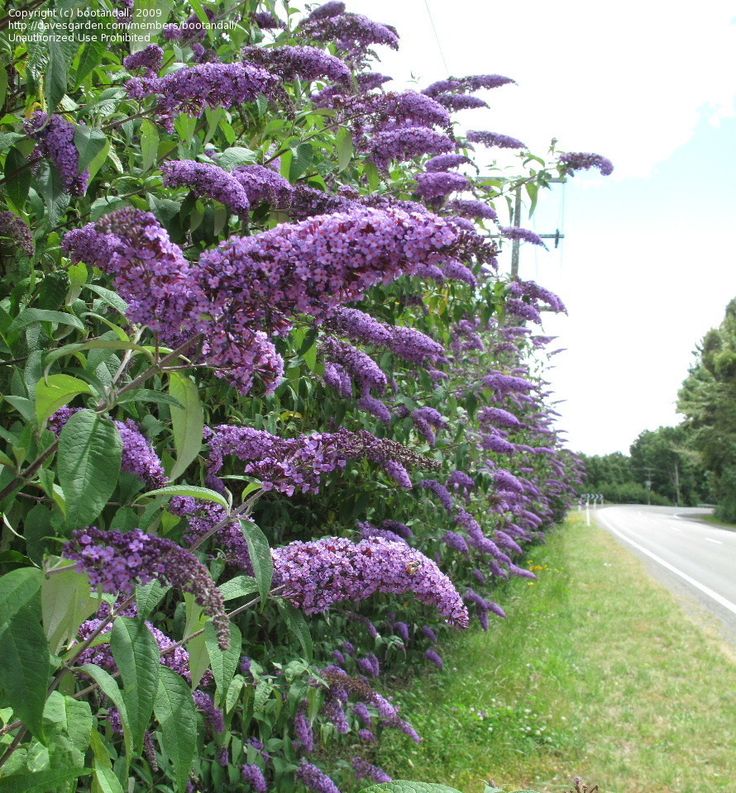
 Butterfly Bush does not do as well as Crepe Myrtle here. 


Summing up what can be handled, I decided that the garden is really vertical and can be weeded only by machine. That means:

  • Roses
  • Daisies
  • Bee Balm
  • Clethra
  • Crepe Myrtle
  • Joe Pye
  • Hostas with their stalks of trumpet flowers for the Hummingbirds.
Except for roses, these are bully plants that protect and expand their territory by growth at the base and in their height.

We will put in an ocean of Daffodils in the fall. They will grow up in drifts and in spots between plants, but they will finish their cycle before the rest get going. Staying below, they will repeat this for a long time. Animals do not like them (yay!). Squirrels do not dig them up for storage elsewhere (double yay!). Daffodils are beautiful solo and in large drifts. 


Friday, July 10, 2020

Six AM Farming - 10 AM Storms

 Corn is loaded with calories, so Cardinals love to peck away.

Every task I had in mind yesterday seemed to lead to more, but that was fun too.

I found that a persistent weed was easy to pull gently from the ground, even if part of it remained.

Several plants weed-whacked from the Butterfly Garden defiantly grew and bloomed again. So many people write definitely as defiantly that I wonder when the adverbs will merge into one meaning - "something done with purpose and a rebellious mood, can be spelled definitely or defiantly."

The plants not only grew back, but bloomed to earn a rose collar for future protection.

I have learned that plastic rose collars are ideal for isolating fragile plants and protecting them from the greedy whip of nylon string.

I moved the Whoops-a-Daisy, added Peat Humus and wood mulch, and put a rose collar around the entire area.

I used the loppers to cut through some questionable rose canes that lacked ambition to leaf out.

After I did far more than planned, I showered and checked when it would actually rain. Friday? Saturday? First came the gentle rumbles in the sky. I looked for the jocular email - "Have you dumped the rainbarrels?"

No! I ran out and dumped every single one, a bonus for the backyard in case we had another promising storm that only promised without delivering. John often observed, "It did rain, just not here. It rained somewhere."

Mosquito eggs like days in the water to hatch, so I cut that short. Rumbles went on and I went inside. Immediately, serious thunder took over, a monster wind blew through, and the rain cascaded down.

I did not get the frigid early blast that proves a genuine thunderstorm is arriving. But I was glad the rain came to add to my little bit of labor and fussing, as God provides:

  1. Need hydration? Done.
  2. Need gentle, effective fertilizer? Done.
  3. Need more soil creatures to improve everything? Done.
  4. Need tree pruning? Done.
  5. Need the new transplant settled in the soil? Done.
  6. Need all the dust and pollen washed into the garden? Done.
 Norma Boeckler's Christian Art


Wednesday, June 17, 2020

While Talking Roses, Rain!

 Queen Elizabeth is the star of this display of roses.

A new postman delivered a package to us, only one block off. I was thinking of reciting to him, "Neither snow nor rain nor heat nor gloom of night stays these couriers from the swift completion of their appointed rounds." (USPS, shamelessly borrowed from the Persian Empire)

I told the lady on the porch that the Post Office confused her address with ours, same number, different street. She said, "Where the roses are! My husband loved walking by."

We talked roses and what would help hers along the front of the house. Mrs. Ichabod, who suggested replacing the lawn with roses, will deliver the altar flowers with me today. Those Veterans Honor and Easy Does It roses are fully opened and magnificent after being arranged on Sunday morning.

While we were talking roses - rain! None was predicted all week.
After a trip to the store, a sure-fire way to be a rainmaker, the deluge came down. Rainbarrels are full again.

 This bargain rose, found on clearance for 5, is also the largest bloom of the hybrids, Bride's Dream. 


I am taking dozens of photos of the garden flowers for a picture book later. One member's interest got me thinking about a good way to enjoy the flowers by themselves, without all the writing. Some wording yes, but not a lot. Other members liked the idea.

Next is The American Calvin: CFW Walther.

 California Dreamin' 

Saturday, April 20, 2019

Creation Gardening Successes - The Lessons and Warnings

 Joe Pye Weed


Mrs. Gardener, our neighbor, held up two plants she bought on clearance. They were clearly stressed and partially dried up. I prescribed my favorite medicine - rainwater. I brought over five gallons in a paint bucket and pointed to a row of full ones (plus large barrels) under the eaves.

She is an avid gardener and uses a lot of flowers to decorate her front and back yards. The use of rainwater made her go to her own wheelbarrow full of rain and distribute the treasure among the rest of her potted plants.

Rain and snow are always effective, as God spoke in Isaiah 55. The parallels are too obvious - except to the spiritually blind. In an era of gimmicks, fads, and congregations closing, the Word of God is the only solution, not the main one, the only one. Nothing else conveys Jesus and the Gospel through the Holy Spirit in the Word.

Gardening and Creation have been successfully separated, so people wanting green lawns and spectacular flowers never think of Creation solutions. Instead, they are herded into buying chemical fertilizer (bad for the soil), pesticides (bad for all creatures, especially the beneficial ones), and fungicides (killing the most powerful component in soil, the fungal network. When these man-made solutions fail, the salesmen urge the customers to use more of the same.

Parallels to Church Growth fads becoming even more radical, silly, and sterile should be noted.

Ranger Bob makes a point of jibing me for gathering neighbors' leaves the way a hen gathers her chicks, for having - gasp - weeds. I said, "When someone around here has roses like mine, I will repent. Until then..." He laughed.

My vicarage supervisor was as old-fashioned as one could hope in the 1970s, that exciting decade of burning down institutions. He had 3,000+ baptized members and a program of preaching, teaching, and pastoral visitation. Three years of confirmation were scheduled mid-week with suppers, and it was all basic and Biblical.
This large church had a church council and a parish education committee. Vicars taught, preached, and visited.

Worship services were the liturgy, creeds, sermon, readings, and all hymns sung standing up (every verse, too).

Naturally, the pastor was a constant target of jibes and few wanted to work at such an old-fashioned church.

 Feverfew seeds itself, so love it if you plant it.
Beneficial insects love it, so you should.


Successes
I enjoy reading The Grouchy Gardener at the local bookstore. It appeals to the gripes every gardener has, but also provides a lot of good information. I was thinking of listing gardening failures but decided instead to describe some successes and lessons, all due to Creation and its simple rules.


Roots, The Novel...Gardening Method
Sometimes we overlook the rules. The Carbon Cowboys stress deeply rooted plants for breaking up clay soil like mine and taking rainwater deep down instead of have wasteful and eroding run-off. I took the bucket challenge and poured five gallons of water at the base of an established bush. It disappeared faster than the same amount poured down a bathtub drain. Mrs. Ichabod wisely demanded that the front yard be turned into a rose garden, and I began adding insect friendly bushes to host the beneficials. When it rains 4 inches, as it often does, I keep that in the soil savings account. Grass is shallow rooted and does not go deep.

 This is the best value you can get it in gardening.
I know the book better than the Lincoln Town Car Repair Manual.


Wood Mulch, Queen E. Approved
The first attempt at defeating the front lawn consisted of holes dug in the grass, photographed by our grandson, inspected by Sassy, filled with bare root rose bushes, heavily mulched with shredded wood.

Later I learned how much power fungal strands have in moving nutrition and water through their extensive networks, getting carbon from plants to exchange for vegetative needs. Fungus attacks and dissolves dead wood, with help from soil creatures, easily proven by leaving tree stumps in the garden for bird perches. In two years or so, the stumps simply fall apart from donating their tough interiors to fungus, bacteria, and soil creatures.

The Queen's official gardens use no man-made toxins and encourage fungus as much as possible.

Black spot appears on my roses but I do nothing and find little or no damage from the most-hated enemy of the plant.

That was the year of long, warm, autumn rains and monster rose blooms.


Seldom Mentioned Bushes and Plants - Useful
I knew nothing about most bushes until Almost Eden (our neighbor) introduced me to them.

 Chaste Tree was raised and used to make the monks forget about women.
It worked all too well.


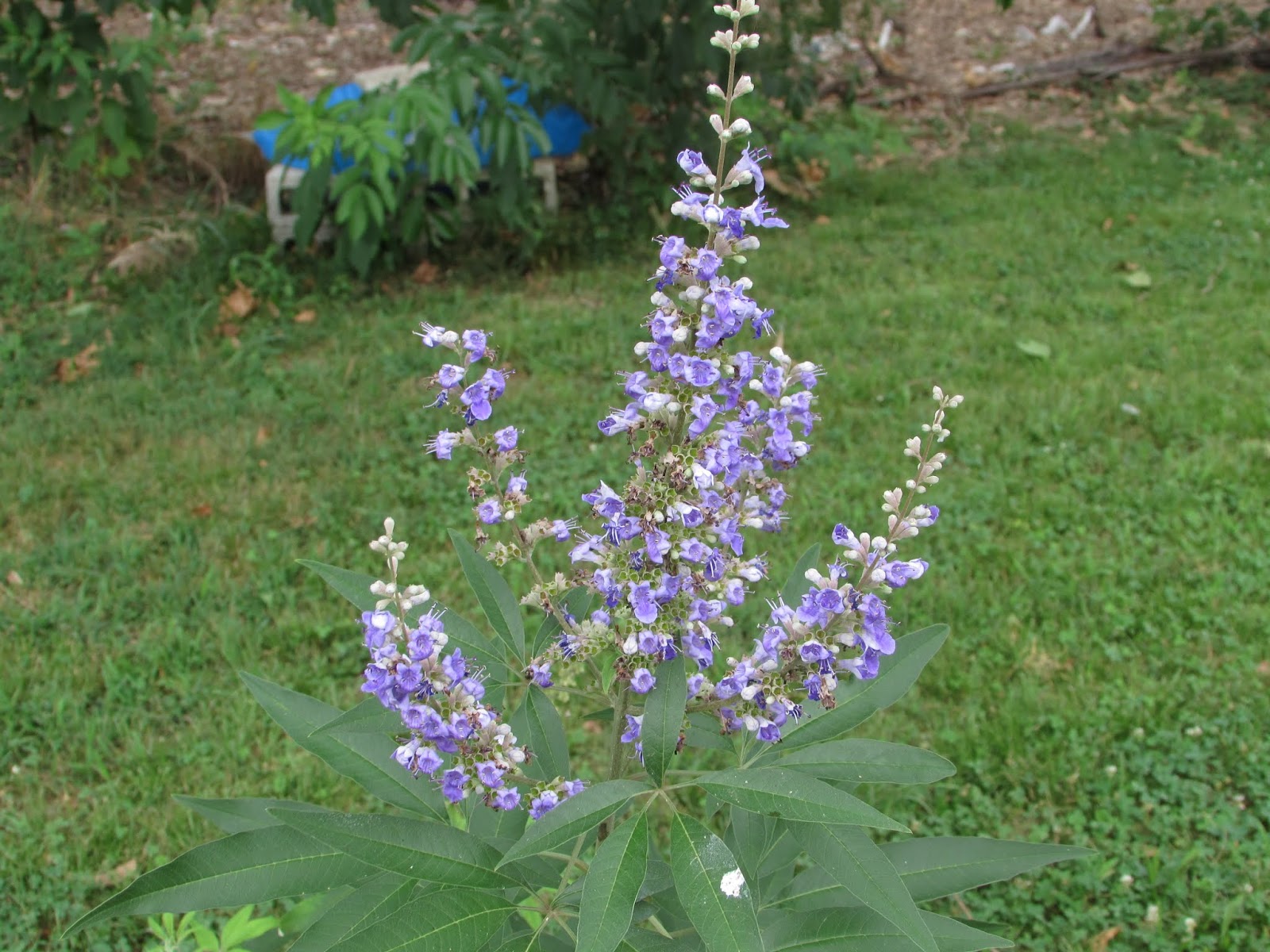
Chaste Tree is low growing shrub, sometimes called Marijuana Tree for its leaves, with a medicinal smell and beautiful purple flowers loved by bees. One plant has survived two near-death experiences and is leafing out again.

 Beneficial insects are often teeny-tiny, so they need miniature flowers like Clethra.

Clethra is known as Summer Sweet, known for its attraction to all kinds of beneficial insects and butterflies. I call it the Cinnabon Tree because it exudes a wonderful aroma of cinnamon rolls long after the blooms are gone.

Joe Pye is lacking in nothing except a dazzling name.
Never mind, it sells out faster than No-Doz at Mequon.


Joe Pye (Weed) is an easy-to-grow bush in large (7 foot) size and Little Joe size. It is a late bloomer but keeps its flowers and scent a long time. Butterflies are wild for it. One good indicator is that this plant has to be ordered early or supplies will be gone. Joe Pye is named for the herbalist who used it in his potions.

Poke (Weed)


Poke Weed horrified me until I learned this Southern plant's berries are favored by about 60 birds. I still buy some bird food, but Poke grows for free and attracts beneficial insects. Deep roots benefit the soil and the soil creatures who gather around these natural food sources and elevators. Since they drain rainwater so effectively, the moisture needed by all creatures is gathered and spreads from the roots.

Mints
Many mints deserve a bad name for spreading their roots and taking over - Peppermint, Catnip.

Tamer mints are fun to have. Cat Mint forms a mound and produces flowers for beneficial insects.

 Learn repentance from growing Mountain Mint.


Mountain Mint is tall and especially attractive to insects, but I would plant that under a maple tree - or in the back where I would no longer consider violent removal.

Bee Balms have different colors and excellent manners.


Horse Mint - Bee Balm
Bee Balm and its cousins attract bees (shock!) and hummingbirds (awe!). My three flowers for hummngbirds are Bee Balm, Butterfly Bush, and Hosta. Others may have different experiences, but that is what I have observed here. I do not fill hummingbird feeders - I grow them.

 If you like really loud vines that can cause skin irritation, try Cow Itch. But, to be frank. doesn't this bloom look just like those giant hummingbird feeders that require constant attention? 


Trumpet Vine (Cow Itch) can be attractive to hummingbirds, but my vines grow more than they flower - so far. One day I may be blessed or cursed for growing four of them. Like many gardeners I grow things I remember from my tender years, and we had Trumpet Vine on our garage in Moline - and all through the lawn. We delighted in mowing the shoots that came up.

Pepé Le Pew

What Have We Learned Today?
The denominations and their false teachers have pursued fads and gimmicks like Pepé Le Pew.

These apostates are like the chemical gardeners, who waste enormous amounts of money on man-made fixes while ignoring the power of God's Creation.


Smells like Kelm spirit.

 Kent Hunter and Waldo Werning became leaders of the LCMS-WELS-ELS for their store-bought ideas, which C. Peter Wagner said "do not work."

The Synods of Ozymandias - 
Foretold by Shelley

I met a traveller from an antique land,
Who said—“Two vast and trunkless legs of stone
Stand in the desert. . . . Near them, on the sand,
Half sunk a shattered visage lies, whose frown,
And wrinkled lip, and sneer of cold command,
Tell that its sculptor well those passions read
Which yet survive, stamped on these lifeless things,
The hand that mocked them, and the heart that fed;
And on the pedestal, these words appear:
My name is Ozymandias, King of Kings;
Look on my Works, ye Mighty, and despair!
Nothing beside remains. Round the decay
Of that colossal Wreck, boundless and bare

The lone and level sands stretch far away.”


Thursday, January 31, 2019

Doting on a Plant in the Creation Garden

Once wimpy and not blooming, this crepe myrtle owns our cul-de-sace most of the summer, and reblooms too.

Doting - "to be lavish or excessive in one's attention, fondness, or affection"

I do not work very hard on plants; instead, I concentrate on the soil they grow in. Each year I dote on one or two plants and do everything possible to improve the soil.

When we moved here, we had a scrawny Crepe Myrtle that never bloomed. I pruned and manured it, gave it all kinds of excessive organic matter, including wood shavings and grass droppings from the lawn mower. I added red wiggler earthworms to help digest and pull down the amendments.I was startled to see how bags of mushroom compost and piles of autumn leaves could be devoured by the plant base. A friendly mole circled the plant base and ate the worms, but I did not mind. The stirring of the soil was good and the survivors would quickly build another colony.

My project for 2019 is to dote on the purple butterfly bush, supposedly the largest variety but not very big so far. I am not too keen on them for gathering butterflies, though they do entertain a few and stay in bloom if I prune them. The chief merit of this butterfly bush is the hummingbirds sipping from its flowers.

People always have similar answers when they are interviewed on the street about having a chance to ask God just one question. I would say, "Why did you create so many wonders with the tiniest creatures, often the most overlooked? Is it to give us encouragement in our own lives?"

The key to Creation gardening is ignoring everything they try to sell in the gardening department: insecticides, herbicides, fungicides, and man-made fertilization.

What is left? Mushroom compost, peat compost, manure, and mulch. Plastic trash cans converted to rain barrels are also good for real gardening.

 Butterfly bush makes our backyard smell like grape jelly.
Hummingbirds look for more than nectar - they need insects in their diets.


How Did I Dote in the Autumn of 2018?
I had a lot of leaves from a wild ginger plant. I put them around the base of the soon-to-be-spoiled butterfly bush. Next I dumped two bags of peat compost (Stinky Peat), which is wet manure mixed with peat moss. I had some wood mulch, so I added a generous layer of wood chips. Then I put bags of rotting leaves around and on the previous layers.

Coffee grounds always go on the butterfly bush.

Much rain followed. That means the roots had a chance to grow and aerate the soil, and soil creatures had the time and materials to multiply and do their work.

This is important - the ideal is to maximize the chemical swapping in the root zone - this goes on with life, death, and feeding. The eaten food is not gone but recycled into another creature.

Living roots provide most of the fertility in the soil and increase rain infiltration. When I prune the butterfly bush in the early spring, the roots will be triggered to grow even more, and the upper bush will sprout faster and bloom more - just like roses (John 15).

The organic mass I layered around the butterfly bush will decompose and feed the soil creatures, holding rainwater and gently hydrating the plant. I could buy tree diapers that do the same thing, but they cost about $20 each. No, they do not call them Treepends.

My goal is to have a generously blooming purple butterfly bush that will attract larger numbers of hummingbirds and butterflies.

 Buckwheat grows easily and seeds itself. 

Tuesday, January 29, 2019

Facebook Says I Am Neglecting the Creation Gardeners


Spring is here, according to the gardening catalogs. Here are some ideas:

Leave the debris in the garden until late spring. Then the soil creatures will devour most of it. Many beneficial insects are wintering there because they cannot fly to Florida. Add leaves to the yard instead of moving them away. That is good for butterflies too.


Roses

Better to get a group of one rose variety than to buy collections - in my opinion. I like having an abundance of one rose. Some great ones are:

  • Veterans Honor - the best red, the best rose for cutting, great fragrance. The flower formation is stunning.
  • Easy-Does-It - Sunset colors, blooms like crazy with long stems, good fragrance. Inexpensive!
  • Queen Elizabeth - The ultimate Creation rose, developed by a Creationist. Color and flower shape, ethereal beauty.
  • Falling in Love - Pink and white, fragrant, bought it by accident, now we buy it on purpose.
  • Double Delight - Great colors and fragrance, very popular for a long time.
  • All My Loving - This is a deep pink rose with fragrance that reminds me of Pink Peace.

Beneficial Bug Hosts
I have had a habit of trying this plant and another, a bit too scattered. For good pest control without toxins, go strong on one or two of these easy to grow beneficial bug hosts. They take care of the parents so Mom can lay eggs near, on, or in the pest. Gasp. This efficiency made Darwin doubt Creation, and made God doubt Darwin.

 Joe Pye is easy to grow and love.

  1. Joe Pye is great for beneficial bugs of all types and especially good for butterflies.
  2. Clethra or Summersweet is as good as Joe Pye with the added benefit of exuding a sweet Cinnabon scent most of the year.
  3. Fever Few seeds itself and always hosts beneficials.
  4. Sunflowers are the aircraft carriers of beneficial plants. They have room for a zillion good bugs and bees, plus nectar for butterflies.
  5. Daisies multiply easily and host the most aggressive pest hunters.
  6. Hostas also multiply like daisies, so they can be divided again and again for filling in gaps and providing flowers for hummingbirds.

 Tiny beneficial insects love tiny tubular flowers.

Friday, January 25, 2019

Does the Concordia Seminary in St. Louis Own a Copy of Keil-Delitzsch?

 Norma Boeckler

Nein? Ich bin so traurig.

In contrast with all these mythical inventions, the biblical account shines out in the clear light of truth, and proves itself by its contents to be an integral part of the revealed history, of which it is accepted as the pedestal throughout the whole of the sacred Scriptures. This is not the case with the Old Testament only; but in the New Testament also it is accepted and taught by Christ and the apostles as the basis of the divine revelation. The select only a few from the many passages of the Old and New Testaments, in which God is referred to as the Creator of the heavens and the earth, and the almighty operations of the living God in the world are based upon the fact of its creation: In Exodus 20:9-11; Exodus 31:12-17, the command to keep the Sabbath is founded upon the fact that God rested on the seventh day, when the work of creation was complete; and in Psalms 8:1-9 and 104, the creation is depicted as a work of divine omnipotence in close adherence to the narrative before us. From the creation of man, as described in Genesis 1:27 and Genesis 2:24, Christ demonstrates the indissoluble character of marriage as a divine ordinance (Matthew 19:4-6); Peter speaks of the earth as standing out of the water and in the water by the word of God (2 Peter 3:5); and the author of the Epistle to the Hebrews, “starting from Genesis 2:2, describes it as the motive principle of all history, that the Sabbath of God is to become the Sabbath of the creature” ( Delitzsch ).

Keil-Delitzsch, Genesis Commentary

https://www.studylight.org/commentaries/kdo.html - Look up anything in Keil-Delitzsch


 Norma Boeckler

Monday, November 5, 2018

The Language of Creation and Science


One of my Facebook friends asked about the author of Darwin's Black Box being Old Earth or Young Earth. I looked up some information and found the author started out strong in the field called Intelligent Design, but crab-walked into evolution later.

I have a number of books that are scientific and in perfect harmony with Creation by the Word. One author spouts "evolution!" in such a way that I think he is feeding the evolution minders. I doubt whether any of these books would stay on the market if they witnessed to Creation. But that is not the point here.

If a book - good or bad - contributes to our understanding, we should read it. The SynCon Pietists - WELS-Otten-LCMS-ELDONA-ELS-LCMS have their extensive NO GO zones. Tis sad how Pharisaical they are, because Otten will gladly sell Church Growth idiot books like Valleskey and anti-Luther liars like Father O'Hare, but Herman will ban anyone who has ruffled his oh-so-delicate feathers.

Sig Becker is dreadful on Holy Communion and Justification, but his book on Luther's use of reason is excellent. I found WELS Church Shrinkers using "ministerial" reason to individually appropriate Zwinglian dogma - pretty funny. They missed the entire meaning of their adored professor's book. But they cannot grasp Luther or Paul, so what else is new?

The worst books should be read so we know their arguments. I scoured the Trinity ELCA Seminary Library for all the Church Shrinkage books. Why read such awful stuff? Answer - To be inoculated against the disease agents therein. What better statements is this in the graphic below?


If we take the time to read truly awful books, like Valleskey and Werning, we find common patterns. Sometimes it is common language. WELS' constant lying about their addiction to Fuller is always on display in the books and articles promoted. They are like the people caught with white powder under those nose, saying, "Officer, I just had a powdered sugar donut. Really. They are messy. Spiders. Spiders. Get them off!"

When science is against Creation, the same patterns in language can be found. I look for facts rather than theory, because the revelation of the Holy Spirit judges their theories. The facts scream creation, engineering, and management - all divine of course - but the words say:

"Desert plants evolved so that they had a thick waxy skin to hold moisture within the plant." 

So I ruminate about whether mama, dad, or the children made those drastic changes without a single brain cell to use.

I think it is dangerous to try to use science against evolution, because science is a weak argument for Creation. Those who have faith in the Savior can understand through faith, through the  efficacious work of the Spirit, how God does everything through the Word.

I use the data of science to say, "What a fine Creation. Look at the engineering of each component and the management of the entire system."

 Norma A. Boeckler
Comment from California -

Thank you for your remarks in the segment:  "Language of Creation and Science".   Couldn't agree more that limiting reading about issues from secondary sources cannot be compared to reading original source material by purveyors of false ideas.  
Reading about something is always at least one step away from the source...right or wrong.  

Having done a  lot of research about a lot of issues, original source material is essential to identify what other writers or speakers have said, in order to document sources quoted in my own writing.    

Limiting sources to only writers about subjects is  like limiting one's self to articles about the Bible instead of reading the Bible itself.

Friday, November 2, 2018

Fall and Winter - The Tiny Things Matter Most

Vanilla Spice is another form of Clethra.


I was discussing fall and winter with famed editor Virginia Roberts, who is well acquainted with science. I had a copy of Darwin's Black Box to share. I do not argue Creation from science, but I enjoy discussions about the topic. I have yet to see "science" contradict Creation.


We discussed how the tiniest parts of Creation are the most fascinating, because they carry out complex operations perfectly. We all know the answers to the behavior of animals - instinct. Why do first-time mothers take care of their young so well? Answer - instinct. Why do bees do a dance to lead their colleagues back to food? Answer - instinct. Why do birds fly South for the winter? Answer - instinct. We should not ask Who wrote the software for this instinct, all instincts working in perfect harmony. But what drives the bacteria, fungus, protozoa, and other microbes?

Darwin's Black Box argues that evolution was easier to sell when no one knew the workings of nature at the microscopic level. In essence, technology and research have undermined the foundations of evolution.


I have either done or avoided most of the work. Now the autumn rains, leaves, and mold start the winter tasks. The old chemical gardeners thought green = nitrogen = growth, but I think rotting leaves = carbon = fungal growth. Nobody would put on nitrogen fertilizer in the fall, though it works on grass - if grass is your passion. And strangely, people treat these useful, power-packed leaves as toxic invaders of the yard and garden. Rake them, burn them, haul them away! I like their attitude - I take their piles of leaves and improve my soil over winter months. I can be standing in piles of leaves in the early spring and yet have none in the late spring - all turned into soil ingredients by earthworms and mites.

Meanwhile, the roots work all winter to improve their fantastic network with fungi, the fungal growth fed by carbon.

Our little congregation is similar. We are few and scattered. But by God's design and will, we use the Word to spread the Gospel in many ways. Sassy and I walk door to door, but we also go country-to-country through the Net, with followers all over the world. In the old days, anonymous scolds made a point to say how nobody read the blog, nobody gave any credibility to the factual reporting, the doctrinal discussions. I miss copying the comments into the main body of the blog so people could observe their eructations forever and ever.


Monday, October 29, 2018

Creation Garden - Busy All Winter Doing Nothing

Books by Norma A. Boeckler

My mother lived upstairs when we were in New Ulm. She asked, "Why are the sunflower stalks sticking up through the snow? I thought you would clean them up?"

I said, "The birds love to perch on them and look for food. Insect larvae are on them or in them. Besides that, the roots will rot into the soil all winter - and be mostly gone in the spring."

We are far behind the North in facing winter. The Reformation picnic was 70 degrees on Saturday. The leaves are on the trees and mostly green. But the signs of winter are evident.

 Beautyberries are striking in the fall, when they set themselves up to feed  the birds as food sources decline.

The Crepe Myrtle has shed most of the leaves, leaving sprigs full of seeds for winter feeding. The Comfrey and cousin Borage are still in bloom for pollinators. The Beautyberry bush has fresh berries and Poke has dried berries for the birds.


 Rugosa roses boast bright red hips, full of Vitamin C,
which is why roses are considered herbs.

How can God's creating Word have no power when each plant goes through seasonal cycles to feed the soil creatures, insects, and birds? Temperature and sunlight trigger different reactions for each plant. Yesterday provided one rose in bloom for the entire garden. The roses are nodding off into their winter sleep. The remaining flowers will turn into Vitamin C-potent hips for bird snacks. I have one Rugosa rose, known for its big hips in the fall and modest flowers in the spring.


The Carbon Cowboys taught me about the value of roots, especially those deep roots that contribute so much to the soil's fertility and absorption of rain. Most of the soil's fertility comes from roots, which create miles of swap-meets where fungus can trade nutrition and water for the carbon they need to grow.

All winter, those roots will be busy establishing a better foundation for spring:

  • Roses
  • Spirea bushes
  • Joe Pye
  • Mountain Mint
  • Cat Mint
  • Daisies
  • Monarda
  • Poke
  • Garlic
  • Dandelion
  • Crepe Myrtle.
Everyone enjoys the burst of growth in the spring, from the melting snow and rain, but all winter the soil was being prepared for the display, billions of creatures playing their roles. Each one is perfectly created, engineered, and managed to carry out specific functions that fit into one vast plan.

 "I've been for a walk on a winter's day -
California Dreamin, on such a winter's day."