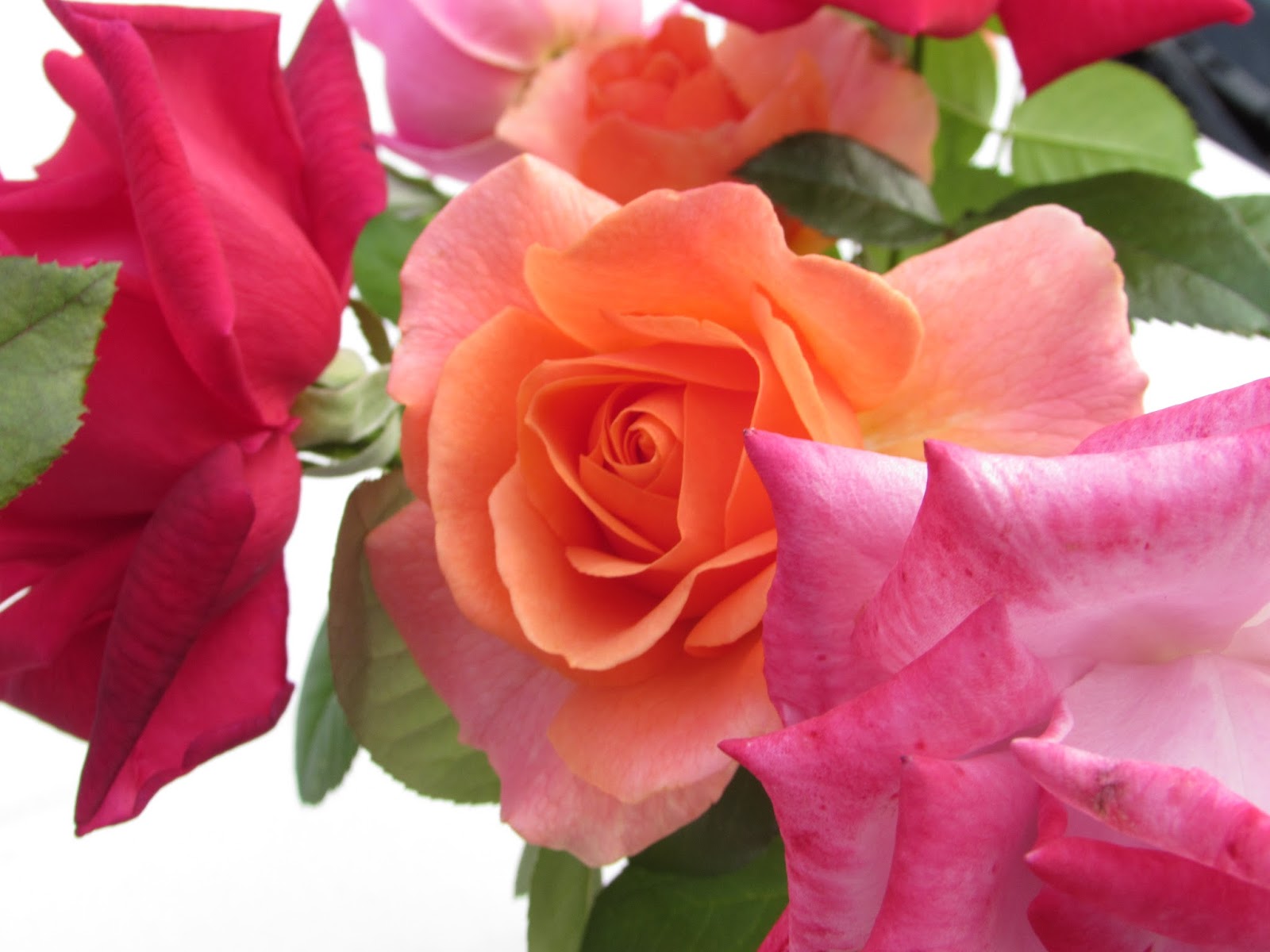
This British gardener, Shewell-Cooper, wrote in Compost Gardening that the organic material should be left on top for the creatures to pull down. He made massive amounts of compost for that, but the same can be done with mulch left in place and renewed when digested.
One of the great fallacies of gardening is the urge to dig, plow, and turn over all the soil - to make it better!
One LCA pastor proudly told me that he took all the fallen leaves and rototilled them into the soil in the fall. He took a warm, insulating leaf blanket that would let the soil creatures stay warm and moist, away from the sun, converting the mass into food for billions of microbes and soil creatures. And then he slaughtered the soil population with his machine.
He was also an advocate for the lavender revolution in the LCA, so it was no surprise he did not grasp "the laws of Nature and of Nature's God."
This plant cell shows that a complex of chemical factories and regulating equipment is found at the microscopic level, all designed perfectly by the Creator.
The soil is almost as complex and also adept at self-healing. The garden soil has to heal itself after so many take their 10 hp osterizers to stir it up, as if they are sifting flour to make it better.
To exert the least labor and enjoy the most results, gather and keep organic matter for constant mulching. The lawn crew kept the maple tree nursery they scooped out of the gutters, and I thanked them.
Egg shells and Epsom Salts do not improve the soil, but coffee grounds do. The handiest and easiest free materials are bags of mown grass and raked leaves.
Let living roots grow instead of rooting them out of the ground. I foster Poke Weed (tap root) in the backyard and Dandelion in the front. Birds love me, so I have lots of Poke in Rose Garden. I snip those off at the base, leaving the greens as mulch.
Almost all greens are high in nutrition (nitrogen) and quickly used in composting or mulching materials.
A compost pile is handy when getting rid of a huge amount of green. I put one in the corner of our yard, in the shade of a Mimosa weed tree. Mr. Gardener added all of his - which he loved, and I loved. I parked some red wiggler worms there, never hauled any stuff out. It kept going down, down. The Mimosa supercharged, going from weak and barely there to one we both cut back. It wanted the sun from their yard too.
Where Is This Going?
The Word works the same way. Luther says the Word has 100,000 arts against the thousand arts of Satan. God's complexities are as infinite as the relationships we see in Creation.
Digging small holes is fine. I think this was staged.
Cardboard covered by wood mulch will turn lawn into compost. The next step is planting a good combination of roses, companion plants, and living mulch plants.
Many growers realize that soil is depleted by two modern obsessions - plowing and chemical fertilizers. Root systems make the biggest contribution to organics in the soil - 75% of the organics in soil - carbon compounds.
Root systems also break up soil and direct rain deeper into the soil layers. Long rainstorms soak into my soil but run off my neighbors, who have grass and trees.
What used to be mocked as low NPK is now valued for carbon, bacteria, and the production of fungus - mulch. That mulch can be dried leaves, shredded wood, cardboard, newspaper, or compost. I use all of them and gladly take my neighbor's when offered or set out on the curb.
But non-living mulch is going to invite and provoke new growth on top. Creation covers and protects soil, which means building soil and its fertility. Any bare patch of soil will soon be covered by dead leaves, grass, and opportunistic weeds.
As I told one reader, I have a system for living mulches.
First of all, plants can be grown together, even crowded to provide their own shade. I do not believe in lining up plants like rows of soldiers on a marching field, with plenty of space between them. True, roses like elbow room and deserve space for showing off. But a rose will grow right out of living mulch and bloom, if it is watered and pruned. Sometimes this happens by accident when a tiny plant grows up near a rose and crowds it. Why not watch them together rather then tear one up and disturb the rose in the process. "Living roots should be left in the ground as long as possible," says Gabe Brown. Those roots are producing organic matter for the soil.
If I remove a dead rose plant, the first thing I notice is how easy it is to put a new rose, mint, or beneficial insect plant there. The soil is perfect for planting because the struggling roots were trying to feed the rose and by doing so, fed the soil, breaking it up. Earthworms and soil creatures joined the labor, benefiting themselves, the plant, and the soil. That is God's plan from Creation.
Earlier I mulched under the Crepe Myrtle. Now the same area is packed with Buckwheat, Calladium, and Lily-of-the-Valley.
Weeds as Living Mulches
First of all, we should appreciate many so-called weeds as living mulches. These weeds rush to cover bare spaces and well watered areas in our shredded wood, leaves, pine needles, and compost. Here are some plants designated as weeds that I value as living mulches in the rose garden:
Hog Peanuts - They grow easily around here and are tough to remove, no matter how. But why? They are legumes that add nitrogen to the soil. Dandelions - This misunderstood herb will mine calcium from the subsoil and put it on the soil surface with leaf litter. The taproot helps to break up the soil. The leaves are very nutritious to eat in salads. Clovers - I do not need to plant Dutch White Cover, but I did buy Crimson Clover to add to the mix. Clovers grow densely and feed the bees and soil. I do not buy nitrogen fertilizer - I grow it. Wild Strawberries - Birds plant these as they work the soil for worms and bugs. The low-growing plant covers the soil, blooms, and fruits to feed Creation. Poke - This enormous plant is a perennial, grows to 20 feet, and also thrives in the cracks in sidewalks. Most of my Poke is in the backyard, where I feed birds and let them perch on rustic fences, after their baths. People swear by Poke salad (prepared properly) and use the plant for medicine. I found a Pokeweed in the rose garden, where I will let it grow a bit, then cut it back. In the backyard, Poke is a screening plant in the Wild Garden and also in the bird feeding area. More birds love Poke berries than any other food - 60+ species. The seed is not easily broken up, even by birds, so they plant the seeds effortlessly with a dash of fertilizer.
The early Poke flowers are white.
Pokeberries turn deep purple and are still used for food dyes.
Poke flowers attract high class insects.
Buckwheat has attractive flowers loved by beneficial insects.
Tamer Living Mulches Buckwheat is the easiest of all living mulches. I simply sow the seeds wherever I want them growing. Little green plants pop up everywhere. Soon the plants are knee-high, in bloom, feeding bees and other beneficial insects. Buckwheat is shade-tolerant and will force less desirable plants to cease and desist - they cannot compete for sun and room for their roots. Butterflies and beneficial insects love Buckwheat. Borage is almost as easy to sow, but loves bright sun. People call it "bee bread" and many gourmands eat the flowers alone or in salads. Research shows that the plant will increase the variety and numbers of beneficial insects. Borage produces flowers and seeds so fast that it keeps growing all summer.
Both of these seeds are inexpensive to buy in bulk.
Borage flowers are both pink and blue.
Borage can have a sloppy growing habit, like its big cousin, Comfrey.
God turns ordinary water into the best wine in His Creation: we call it photosynthesis, composting, and the soil food web.
Not knowing that Buckwheat enjoys warmer weather, I scattered some early in the season and now have the plant blooming all over the rose garden.
Almost Eden was telling me about Buckwheat, because of our mutual loathing of Bermuda grass. Buckwheat grows up fast, so it tends to shade the weedy grass into oblivion, crowding out the Bermuda roots with its own tight network of roots.
Mulch promotes the growth of every type of weed, because the conditions of sun, rain, wind, and birds will either deposit or germinate seeds.
Unaware gardeners have a passion for uncovering the soil, leaving it open to sun-baking sterility, water and wind erosion. Bare soil becomes so hot that all microbial activity stops near the surface, which is where we want the wee little creatures most active.
Organic mulch - in the form of compost, dry grass, shredded wood, newspaper, and cardboard - cools the soil and keeps it moist. Mulch is always in the process of breaking down, so it feeds the soil at the same time. Since mulch is not only a weed barrier but also a weed promoter, another layer of protection will stop that by growing plants closely together or throwing down a living mulch of non-competing plants.
I was going to carpet the rose garden with Garlic Chives, but that project never took hold. Chives worked well in a limited area, where I got them growing among six Double Delight plants. Buckwheat suits our larger rose garden and now provides hundreds of blooms for bees, butterflies, and beneficial insects.
The Synecdoches of Gardening
Whatever we do wisely in gardening is a synecdoche, emphasizing a part for the whole. The following can be gleaned from the bookshelves:
One earthworm per shovel - healthy soil conditions for all creatures - a longstanding gardener's rule of thumb;
Carbon Cowboys - building up organic matter and stopping destructive measures that deplete the soil - a recent movement in organic farming;
Teaming with Microbes - providing the best conditions for fungus, bacteria, protozoa, and nematodes, which serve as the foundation for all plants, ultimately for all animals - Jeff Lowenfels;
Teaming with Fungi- recognizing that benefiting fungus will nurture all soil life and leverage fertility - Jeff Lowenfels;
Attracting Beneficial Bugs - planting to attract the bugs and spiders that kill pests by feeding on them - Jessica Walliser;
A Blessing of Toads - viewing the garden in terms of all creatures that prosper our efforts, whether birds, toads, or Flower Flies - Sharon Lovejoy.
Creation Gardening and Farming - trusting from the Scriptures that God created, engineered, and still manages everything in the universe - moi and Joel Salatin.
The soil food web - an expression often used when writing about how everything in the soil influences what is above, and vice versa.
Yes, I want to fertilize the soil, but not with chemical salts that stop or hinder the natural exchanges of organic matter. If I see a big clump of dried lawn grass, thanks to the mower, I tuck that under a small log by the Crepe Myrtle - food for the eater, and nitrogen for flowering plant.
"I know you want me to have a bunch of bones. That is why you brought me here. Right? Right?"
Sassy often has the look of the dog pictured above. On our walks, she has a big smile to reward me when she gets to pick our route. Today she felt the urge to walk down Daline and return to Scott by taking Joye. The dog Romeo hangs out on Joye, but my walking stick keeps him away. I think she likes him, but large dogs tend to pick on her or alarm her, so I keep them away.
People wonder about how to deal with strange dogs. A walking stick is very handy, because they respect that and keep away when warned. The two ankle-biters that barked up a storm were on Sassy's case once, but I held the stick over my head and yelled, "Go back to Mordor. Go back. Go back to where you belong." They left walking backwards, barking. Now they stay 100 feet away and retreat without shame.
I noticed that dogs do canine wheelies. Our neighbor's dog is a dachshund mix and always does a wheelies when starting up. The front legs go up in the air and off he goes, like a herd of turtles. Sassy does the same when she is really energized, and she gives me a big grin for letting her have her way.
Maple tree - garden of weeds. Roses planted. Tree trimmings at the curb - just a start. Grass lawn just aching to be turned into roses.
Investing in Mulch
Today we found three squirrels working the lawn at a neighbor's house. Sassy ran over to give them exercise in tree-climbing. The weather is unusually warm, though foggy and a bit misty as well.
Some people see such weather as gloomy, but I think of it as hastening the decomposition process of the leaves. Because of the late drop of leaves, few have been raked up and hauled away. They have drifted into the streets and been crushed by traffic. Even the pine needles from our neighbor have blown along the street and now rest in front our house.
I happened upon a Google photo our house, wondering if they updated our front yard. Not at all. Mrs. Ichabod enjoyed the contrast. The old photo shows I have already begun trimming trees and digging in roses, but the front yard is all grass. Now it is all roses.
The Crepe Myrtle bush is a thin little bush in the photo, not a large, arching spray of blooms.
Roses from the former lawn - a good return on the labor involved.
Sassy keeps track of all the children she knows, and they love her gentle spirit.
Sassy wanted to walk at 6 AM, so I got a late start. Better to walk first and make coffee second than to look at her puppy eyes damning me for making her wait. The early walk is our longest one now, and she loves exploring when the child of morning, rosey-fingered Dawn appears.
Last night she fooled me, as she often does. Sassy was supposed to walk the cul-de-sac with me and go inside again. Instead, she smiled and walked into the grassy acreage of Almost Eden. I thought, "OK, she wants something different." She looks at me and smiles for permission to go where she wants. She repeated this several times, getting closer and closer to the plants, but that was still a bit of a walk.
I headed us behind the earthen berms, where top soil had created a paradise for wild flowers, weeds, insects, and birds. I was trying to see if they had Poison Hemlock, as I did earlier. Once past the berm we were among the gardens, fruits, and bushes. I heard a sound - perhaps Little Almost Eden. Then I realized the game. Sassy can detect her friends from our front yard, goes on alert, and strives to meet them. This time she only heard them and worked her way into a reunion.
The dog Opie, Little Almost Eden, and Grampa walked into view. The dogs had a happy meet and greet, and the rest of us talked about dogs and gardening. I knew it was a former dairy farm, but I also learned our house was the area where they grew grapes. Sassy soon become warm and tired, so we said goodbye and walked home. She stretched out on the cool floor to get comfortable again.
Our Crepe Myrtle blooms look like pink Christmas trees.
Feeling the Mulch
I joined our helper at 6 AM yesterday in spreading as much mulch as possible in the main rose garden. We had a lot of fun kidding each other as we worked. This morning I felt the results in the back of my legs, but it is far more productive than the sterile exercise possible in a gym.
Unlike the rest of the neighborhood, I coddle our Crepe Myrtle bush. Before the rain I watered it slowly at the base to bring out the blooms, which are big, fluffy, and pink. Now that it is almost in full bloom, I built a new base of fertilizer for future health and beauty.
Basement layer - the clippings, sticks and leaves from the maple tree.
Ground floor - a bag of cow manure compost from Walmart.
First floor - newspaper and brown paper to discourage grassy weeds.
Top floor - a bag of cyprus mulch from Walmart.
I have built organic material pyramids under the Crepe Myrtle many times before, and the ground always ends up level. While some of this may be blown away by the wind, most is composted into the ground by soil creatures while providing a bird feeder and spider haven.
God has sorted out who does what during these stages of decomposition and feeding. This is where the Creation gardener gets to observe the unique functions of each creature, but also the careful engineering and design of each form of life, and finally the expert management that makes them all work together.
Does your wood mulch invite bugs? Spiders will cast a net over the mulch on the first day and birds will poke through to catch some. Starling beaks are fashioned so they spring them open to flip leaves and twigs to expose bugs.
Did a dog vomit on your mulch? No, that is a slime mold called Dog Vomit, and it is actually doing some cleanup duty before disappearing. Our Army veteran buddy picked it up just before I called it Dog Vomit, swore, and asked, "Why didn't you tell me?" I laughed and said, "Not Sassy's. That is a slime mold that forms on wood mulch."
Is your mulch pile under the plant shrinking? That is the divine example of Project Management, a skill we teach - and pay big money for - in our daily lives of labor and rest. But the Creating Word has this all arranged in advance so the necessary recycling of all living things will feed the next generation of plant and animal life. Nitrogen and manure heat up the pile under the bush. Wood scraps alone can heat up enough, in huge piles, to start a fire. (That was always a problem with coal and perhaps a reason why the Titanic went down in 1912, trying to burn off the simmering coal piles.)
The more we know about this, the better we can let our gardens take advantage of what was established by the Word at Creation.
Feeling the Burn
During the day I felt the heat and smelled the acrid smoke of lumber burning next door. The kids built a large bonfire out of scraps, breaking a bevvy of laws:
Scrap lumber cannot be burned.
A burn permit is required for legal fires, like burning brush.
The fire cannot be within 50 feet of combustible buildings (one on each side).
A hose must be near the fire - none visible.
The fire must be tended at all times, never left alone.
No fires before dawn or after sundown. They previously had many outdoor fires at night, but that practice stopped.
The nearby station sent a truck over with three men. They arrived in minutes after I described the situation. The firemen came out of the truck looking very grim. Soon one boy was dousing their bonfire. I am not sure if the boys earned a ticket for their efforts, but the scrap pile was thoroughly extinguished and the outside quiet for the rest of the day.
Nothing starts a gardening conversation faster than fresh roses. We were at the chiro's office before when I had a long conversation with a retired professor about organic gardening. This happened again, at the same office, with another retired professor - agriculture. His wife was there for treatment and she fussed over the roses I brought for the office. He invited us to the farmers' market the next day, so we saw him again and took a bunch of roses for her.
I could tell he was in agriculture when he talked about the effects of our unusual 2015 (too much rain and then no rain) and the mild winter. He pointed out the takeover of clover in the lawns all around town, because they went to seed so completely. As he and I both noticed, the flowering trees and bushes were simply astonishing this spring. I mentioned the red bud trees never being so packed with color in any other year, and he said, "Look at the red bud seed pods outside the window." That told me - agriculture for sure.
At the farmers' market, we talked gardening and met the vendors who were there on the off-day. Thursday brings only a few stalls at the Jones Center. Saturday brings about 20 vendors of all types: custom furniture, etc. Growing up in Moline and working at my father's business, I always tried to patronize small businesses from our hometown, which applies to Walmart too, but there is nothing better than a farmers' market.
Emptying the Rainbarrels Again
Rain was about to start when I fed the birds again, late in the afternoon. They ate all day, and continued late in the afternoon, which seemed to be verifying the rain prediction.
I now use four large garbage cans, one small one, and the wheelbarrow to catch rain. The wheelbarrow is my rain gauge, backed up by Lake Gideon, the puddle that forms in a low spot on Scott Street. If it rains a lot and the soil is dry, Lake Gideon is unimpressive. If it fills and overflows into a secondary lake nearby, we had a real sod-soaker, one to wash out the cricks. Last summer one rain did that and perhaps gave us 14 inches in a day, a bonanza for weeds and clover.
Mulch Helps with Light Rains
So my favorites got extra rain from the barrels before the rain - White Profusion Butterfly Bush, hybrid tea roses along the fence, some ambitious blackberry canes, and bee balm.
We have had many light rains this year, which is fine for the roses and returning perennials. We had a little rain last night and some misting this morning. That is where mulch really comes into the Creation food cycle. Mulch holds in the moisture in the soil that would be dried up by steady winds and sunlight. Grass and weeds want to soak up the sun and crowd the roses, drawing from soil moisture as well.
Roses do not like competition, so the proximity of grass and weeds will keep them from producing well. In contrast, mulch will hold moisture and feed the soil creatures and fungus that benefit the roots and feed the plants.
I called this Fireworks once, but it is named Purple Splash.
I try to keep a mulch zone of 3 feet around each rose bush. That also discourages foot traffic, while nearby grass does not. Our helper has mint crowding his Purple Splash roses transplanted from our yard. He can cut the plants at the surface, surround the plants, and cover the zone with cardboard, then mulch. The mint will keep away from the roses, and the cuttings will feed the soil creatures.
Some people fear the seedy weeds, like crabgrass (actually a grain brought to America). Tearing out crabgrass is just about impossible. Using Roundup will leave unsightly plant-free zones, and it is not good for the soil creatures or the environment. The best solution for crabgrass is to turns its sun-power against it - cover the plants with cardboard or newspaper and another layer of some mulch. The worst and seediest weed will become compost in the dark.
I had a Veterans' Honor like this one in a vase, even though the stem was too short. The bloom was just too luxurious and full. Later I had to put the bouquet outside to make room for new flowers - and this rose remained full and colorful on the ground instead of wilting.
When we went outside for photos of his birthday present, Alex said, "Grampy, could I walk on your cardboard?" Adults would scoff at half the yard covered in cardboard and say, "What a Dogpatch!" but a boy is going to explore it and ask about it.
"Why all the cardboard?"
I answered, "This is going to be the Wild Garden, so we are killing off the lawn grass and building up compost."
"Cool!"
Sassy Sue supervised our backyard adventure. She helped sing "Happy Birthday" to Alex.
Cardboard
Large cardboard boxes speed up carpeting the lawn, but we still needed carloads of scrap and almost all the cardboard used in our home over a period of time. However, we did get the entire area, half the backyard, covered with one layer of cardboard and a series of objects holding it down.
The last storm gave us lots of wind and almost no rain, so some of the cardboard tried to fly away. The storm from yesterday and today is making the layer heavy and soggy now. The first object is to keep sunlight from renewing the sod in spring, Instead, the lawn will turn into highly productive compost. Entire books are written about building compost, but the easiest and best way is to use something in place with all the ingredients - soil creatures, soil microbes, nitrogen sources (grass), and food (miles and miles of roots).
Do you want even bigger, more radiant blooms than this one, from the Net? Mulch and earthworm your bushes.
Leaves
The leaves are only starting to fall now. In the front yard they are going under the crepe myrtle bush in a tall pyramid, to feed the roots and protect the Calladium bulbs I left there. They are tender bulbs that might last the winter under a thick blanket of leaves, their spaces creating insulating air pockets.
Sweetheart Calladiums grew under the crepe myrtle and matched the color of the blooms.
Another place is the rose garden, where thousands of earthworms pull down all organic matter. Their fertilizer is made up of leaves, newspapers, wood mulch, and Robin-gro.
The sunny garden, formerly the Straw Bale Organic Slug Farm, will have leaves to fertilize the tomatoes I grow there next spring. That area already enjoys bales of rotting straw (a nitrogen base), newspapers, wood mulch, weed remains, and newspapers. The area is teeming with earthworms and holds water very well. Although I tended to neglect watering those roses compared to the main rose garden, the bargain roses grew prodigiously all summer.
I will grab autumn leaf bags from neighbors when I can. They can laugh all winter long, but they will be at the Jackson Rose Farm when they want roses. On Sunday I easily cut a bunch of KnockOut roses for the altar and expect to again this Sunday. After that, the frost will begin to nip them. The hybrid tea roses, more delicate, have decided to sleep for the winter.
Wood Mulch
I am more likely to get one big load of mulch for next year. Almost Eden Nursery is next door, and that will work well for both of us. Mulch will look pleasant and harbor all kinds of creatures while holding down weeds and feeding the soil.
Every time I put down fresh mulch I see a spider's web cast over it. When I cut perfect roses for the altar, I often find a tight spider's web woven around the base of the stem, a message to pests, like Gandalf's - "You shall not pass!"
Arnold Schwarzenegger spoke at the Walmart Saturday Morning Meeting. He was hilarious.
We also heard an actress speak about "Polar," an upcoming TV movie.
We used a few bags of cyprus mulch to finish the main rose bed. The eight KnockOut roses had about 280 blooms altogether, decorating the front yard. The hybrid tea roses were blooming shyly, a few blooms for each rose, providing quite a selection in roses, color, and fragrance.
Every few days I cut more roses for neighbors and friends, which keeps all the bushes in production and looking great. I leave the blooms on the KnockOuts a little longer, for color, and they are also good for bouquets.
The recently trimmed crepe myrtle showed off its first new bloom, more like a tiny pink feather for now.
My other concern was the blueberry patch. Lowe's did not have acidic peat moss for digging in the blueberries, so I settled for peat compost, a combination of peat and horse manure. Blueberries like acid, but Almost Eden advised me that mulching with pine needles would help. He followed the same recipe to show customers that mulching alone was sufficient, if not the ultimate.
Our neighbor has pine trees, so they have needles galore and pine cones too. Our helper took the wheelbarrow over and filled it with mulch, just as I nabbed the same amount in grass clippings from our landscaper neighbor. The grass went for the sunny garden, and leaves will provide another blanket for the soil creatures.
The pine needles now fill the blueberry row with a potent aroma of Pinesol. I never used pine before, so I was startled that dried pine needles retained so much fragrance.
Vines English Ivy
Most of our vines are doing well. The English Ivy on the front porch is completely neglected, not even trimmed. One little stem has grown under the door. One of our first concerns when moving was filtering light through the picture window. Our special wooden shelves are there, and sunlight would eventually eat away at them. I put on a plastic window treatment that would eliminate most of the rays and let sunlight through.
The vine began framing and decorating the window, even though the growing area is the little front porch - no soil except on the far side. This spring a bird sat on the vine and pecked away at its rival mirrored in the semi-opaque glass, every day. He had to be a male seeking dominance for his lady love.
The nectar and pollen are bound to attract insects, hummingbird baby food.
Trumpet Vine
The three Trumpet Vines have begun to grow. I laughed at a column I saw on the Net, making Trumpet Vine sound like The Kudzu Vine That Swallowed Atlanta. The vines arrived looking like dried sticks, but I soaked them in rainwater for several hours and planted them. One is climbing on the Wright fence. One is climbing the maple in the front yard. The third one was planted in the shade of a tree in the backyard, mostly neglected. I made a point of watering the first two, which also enjoy sunlight. The third vine is doing almost as well, without much water or sunlight.
Norma Boeckler has a Trumpet Vine, with beautiful orange blooms, very attractive to hummingbirds, whose little ones grow on insects - not sugarwater. No, I am not condemning those who support the hummingbird feeder industry. For good results, plants for the nestlings and shelter for the parents should be considered.
Boston Ivy is wonderful, full employment for the groundskeepers.
Boston Ivy
The hated and loved Boston (Japanese) Ivy, which adorns so much of the Ivy League, sits in the sun and grows like crazy when planted in the shade, trying to reach the sun. Since it really is wild grape, Boston Ivy provides fruit for birds. I do not mind inheriting it, but I am leery of starting a plant that groundskeepers curse later.
Honeysuckle gets compost this fall. It will grow over the dead tree stump, which is fairly tall. When our landscaper friend was cutting up the dead tree, which had fallen over, I said, "Woodman spare that tree. I want a vine trellis for free."
Honeysuckle Vine
Like most vines, Honeysuckle has a romantic image and steely roots. I was trying to dig some for a friend to grow. It was more like a tangle of cable, one big tenacious unit. I patted it back down - later, maybe after the rain.
Passion Flower Vine - Maypop
Mine was chewed by slugs and never made it past Baltic Avenue. I may try again next year, but not likely.
Cow Vetch
The fence is colorful when the Cow Vetch blooms.
Cow Vetch
This homely name is owned by a member of the bean family. Its seeds are loved by budgies but hated by those who consider it an aggressive pest. On its own, Cow Vetch climbed my back fence and flowered. Later a group of birds were eating the seed sown by the vine.
Morning Glory, like Cow Vetch, wins by sowing seed.
Morning Glory
This vine entered the backyard, unbidden. Mr. Gardener tells me it was growing when he moved nextdoor 35 years ago. Last year, during fall cleanup, he put all his extra Morning Glory vines in my compost. When I saw the pile of vines there, I thought, "Yes, I have them too."
Liebig began the chemical experiments with soil and crops that led to inorganic fertilizers.
Bindweed and Crab Grass are prodigal providers of seed. Bindweed is the evil cousin of Morning Glory, so it loves to hide in bushes and wrap itself around plants. Pulling it out can simply add more seeds to the collection in the soil.
Crab Grass came over as a grain and escaped with great success, like dandelion and day lilies.
Weed seeds survive in the soil as long as 40 years, so simply turning over the soil can expose them to sunlight and prompt them to grow.
The key to weed reduction is not herbicides, which are especially effective on bushes and flowers, but to use Jackson Mulch. I did not invent Jackson Mulch, but emulating the Roman Empire, adopted the technology to my growing and needy rose gardens.
Jackson Mulch is simply a complete layer of newspapers, weighed down by shredded wood mulch, leaves, or compost. I favor wood mulch for keeping the newspapers in place. Leaves are not reliable in keeping down the newspaper, if the wind picks up and dries them out. Sticks and branches can also be used. Compost is great because it combines the ingredients and soil creatures, even earthworm egg capsules. that the soil requires.
Newspaper style mulch works because the cellulose will break down in time, unlike plastics and "landscaper's cloth." The first effect of the newspaper layer is to block the sun. If you think that does not kill everything below, leave a big sack of seed or mulch on the lawn for a week or two.
The vitality of the weed is rendered null and void with no sunshine to sprout the seeds. In fact, the mass of weeds will quickly turn into the best compost, including their roots below. The greens decompose very fast and the roots leave spaces in the soil when they die. All this feeds the soil creatures, which simply love darkness, damp, and rot.
The sun baked weeds turn into dark enclosed compost, especially because the moisture previously dried up by sun and wind is held down below to feed the process of decomposition.
The gardening industry wants people to believe that inorganic fertilizers help plants, when the chemicals only do their job when available to the plant roots. Most of the inorganic fertilizer will pass down into the water table, as proven by one rose grower who had terrible results with fertilizer while his friends were having great results with organics.
The clue is simple - soluble, that is, available chemicals. The atmosphere is 80% nitrogen, so why would plants lack nitrogen?
The lightning makes nitrogen compounds in the rain that give seed for the sower and bread for the eater. 'Isaiah 55
Classroom - Nitrogen But nitrogen compounds, such as ammonium and nitrates, do mix with water. If those nitrogen compounds exist in the air, they can mix with water and come down with rainwater. The question then is, how can stable nitrogen molecules convert to nitrogen compounds? The answer is that it takes energy. For example, lightning provides enough energy to split nitrogen molecules and stimulate the formation of nitrates -- molecules with nitrogen and oxygen molecules. Bacteria decomposing animal manure and internal combustion engines are also sources of energy that produce nitrogen compounds that can end up in the atmosphere. Green, leafy plant material is high in nitrogen compounds, so smothering the weeds with mulch will give those compounds to the good plants. We mulched large areas of lawn months in advance, to have a garden area ready - without tilling or back-breaking digging. We also mulched after the roses were planted, so the lawn decomposed around the plants to feed them as they grew. Having mulch around the entire fence perimeter meant that we had plenty of easy digging to plant 30 asparagus, 16 roses, beans, peas, and other plants. Long-term, the soil creatures are moving bags of usable nitrogen. I have neglected the earthworm, which we take for granted, in favor of the soil microbes. Next is a post on the earthworm's role.
Crabgrass can be mowed or mulched. Pre-emergent toxins can be used, but do not let children play in the grass.
The Rosetta Nebula is far more subtle in a telescope, but quite beautiful
Like astronomy, gardening makes people more observant about Creation. When I owned a reflector telescope with a 10 inch mirror, the weather affected all viewing efforts. A telescope as tall as a man is best at gathering light. For instance, a 10 inch mirror is three times better than a 6 inch in gathering light, and 10 times better than a 3 inch mirror scope.
Deep sky objects (outside the solar system) are best viewed without a moon. I found the clearest nights were on the days up to and including a full moon, which was also a good night for frost. High pressure zones means good, clear, cold weather. Outdoor football games often focus on the full moon in a cloudless sky.
After a full moon we often had rain. Hence, the old wives' tale - plant after a full moon, so the seeds germinate and take root. Our helper scours the weather reports for the best time to help with the yard. I look over the projections as well. Our last project preceded three days of rain, so the newspapers had plenty of water to hold them down and start the decomposition, with leaves on top to complete the blanket for the winter. Next spring, that area will be filled with bee and butterfly plants.
I also watch what the plants do throughout the year. We have a couple of warm days coming up, but the roses are dormant. The crepe myrtle bush is ready to drop leaves. Even the weeds are retreating and giving up for the winter. That is why careful gardeners do not freak out over annual weeds like the dandelion or crabgrass. The plants have done their best and left their seeds for next year.
Dandelions are nutritious herbs. Dont' believe Scotts Lawn and Garden.
Therein is another key difference. Mulch defeats shallow rooted weeds by monopolizing the nutrients at the top of the soil. Later the same weeds will go steroid as the released nutrients (still there) become available to them. Thus the Jackson Mulch Method--mulch on top of newspapers--will defeat the shallow rooted weeds by denying them sunlight to germinate and grow.
Dandelions get around the Jackson Mulch Method by their production of air-borne seeds. Dandelions came over as herbs, and they are good for the soil and birds, so I do not mind having a few growing in the mulch. Many people eat organic dandelion leaves as salad, because of their high vitamin content.
Creation gardeners wait for spring, for the earliest signs. That is why I planted a number of hardy bulbs - they need the winter to perform their magic before the spring flowers have enough sunlight to bloom. Bulb flowers already exist below the surface. They only need a little warmth to push above the soil. The second part of their cycle is gathering solar energy to feed the bulbs for the next bloom cycle.
A weighty question will be - should we have some tender (spring) bulbs? I can picture one of the exotics, like elephant ears. I know Dutch Gardens will send me a catalog, so I can covet every single one.
Application
We have a nation of city-slickers now. They know little or nothing about gardening, farming, or the infinite complexity of relationships in Creation. Much of the foolishness in our leadership, church and state, comes from this office desk mentality, where common sense is divorced from policy.
Our favorite brown mulches are made from the leaves we save each autumn after they fall. These support fungal dominance unless ground up into very fine pieces (in which case they are open to bacteria, who beat fungi into the material). It is also our experience that leaf mulches grow more fungi (or at least grow fungi faster) than do wood chips. Jeff; Lowenfels, (2010-09-10). Teaming with Microbes: The Organic Gardener's Guide to the Soil Food Web, Revised Edition (Kindle Locations 2097-2100). Timber Press. Kindle Edition.
Butterfly Weed is a close relative of the milkweed. Monarch butterflies need one plant or the other to feed their caterpillars.
We had 48 degree weather yesterday, and it will be just as warm today. This prompted discussions on Facebook about raking leaves, which we are only starting. Half the leaves are still in the trees, all over town. We had a snowfall, but all of it melted at once.
Our neighbor donated more newspapers, so I want to to use them as an initial layer on the grass where I will built up a butterfly and hummingbird area. Both creatures like the same kind of plants, a variety including Butterfly Bush and Butterfly Weed. Bee Balm (Oswego Tea, also called Monarda) is another fave, along with Bee Bread (Borage) and Comfrey (a Borage relative).
Borage - Bee Bread - will seed itself.
To have a good area for planting, I want the grass mostly gone and the soil soft for spring planting. I am going to try two free sources for this, a layer of newspapers and a layer of leaves on top. Rain is coming so that could work out well.
Our artist-in-residence, Norma Boeckler, was intrigued about my double-layer of newspapers and mulch. Most mulching sources will mention commercial mulch alone, but not the newspapers.
Newspapers block more of the sunlight from the soil, which is important in killing off the lawn grass and creating compost rather than weeds like crabgrass that roar through the wood mulch and grow even higher.
In a short period of time, newspaper alone will turn grass black, generating compost on the spot with all the right ingredients - high nitrogen grass, earthworms, moisture, darkness, and soil creatures. I would rather kill knee-high crabgrass with newspapers than spraying the patch with RoundUp, vinegar, Dawn, salt water, or a torch.
A rain-soaked box of newspapers is incredibly heavy. Cellulose holds a lot of water. When the box of newspapers dries, the pages blow all over the neighborhood. I have experience newspapers soaking wet and dry from heavy winds and sun. Our helper is skeptical about leaves holding down the newspapers, but I am optimistic - if the promised rain comes and the leaves keep falling.
We already filled the compost bin (chicken wire) with leaves on top the green trash from Mr. Gardener's harvest. Snow fell and melted on the dead plants, and the leaves began to decompose and speed up the green material's decomposition. I add wrinkled apples, fallen pears, and black bananas from time to time.
Pig Weed is a beautiful plant with bad PR. This weed will generate juicy, tender growth for composting, growing anywhere and yet easy to harvest.
Given that a large area of organic matter will cover the lawn in the far back, what will we do in the spring? Planting through mulch is the easiest possible way to garden. Simply pull the much away with a metal rake - and plant. The rest of the mulch will continue to feed the soil, hold water, and block unwanted weeds.
The roses along the fence will be different. We will plant the roses in the lawn, then mulch with newspapers and cypress around them. We can create a straight line and space them easier this way. The mulch budget for 2014 was used up faster than the snow removal funds in Buffalo this fall.
In short, a Creation gardener will save as much organic matter as possible for renewing the soil, and trust the soil creatures to pull down what is needed for their use.
The soil web theory argues that the populations beneath the surface will shred the initial contributions, break up the complex chemicals (cellulose, carbohydrates), and hold them close to the plant roots. The soil creatures will endlessly swap the chemicals and keep them right where the plants need them. In turn, the plant roots will swap their carbon for the NPK and metal ions they need.
Not rototilling is the best possible way to build up the soil population.
Plants need nitrogen for growth, which is passed around by bacteria, nematodes, protozoa, fungi, and earthworms. Nitrogen is a trust fund kept in the family by the Creation gardener.