Showing posts with label A Blessing of Toads. Show all posts

Saturday, June 25, 2016

Heard from Three Gardening Gurus at Once -
Mulch Is Modular and Fun To Use.
Saving Planet Earth So You Don't Have To


Yesterday I heard from my favorite gardening gurus at the same time. The three are:

  • Jessica Walliser - Attracting Beneficial Bugs to Your Garden
  • Jeff Lowenfels - Teaming with Microbes - Soil
  • Sharon Lovejoy - A Blessing of Toads - The Big Picture

Sharon Lovejoy seemed surprised that I discovered her Blessing of Toads at  Cracker Barrel. All three chimed in with a like or a comment.

As I wrote before, these three books are essential for a Creation Garden, with far less work and cost, far more enjoyment and production. We had a brief spell where all the roses were waiting to bloom or just finished. 

For the KnockOuts, I pruned 50% of the bush. For the rest, I looked for dead wood, crossed canes, and unhealthy looking canes. The Jackson Rose Farm looked like a vast mulch display with little color. With some rain and watering, the roses took off again.The KOs are bursting with buds and blooms. The rest of the roses are either in full bloom, looking for some pruning, or ready to bloom he first time.

Strangely enough for some readers, the Maple Tree Rose Garden, which merged with the main rose area, is thriving with $5 roses in bloom - around 20 in all. Common sense says - 
  1. Do not plant among maple tree roots.
  2. Do not make roses compete with greedy maple roots.
  3. Do not plant roses where there is more shade.
  4. Do not even think about digging under a maple.
I made the case with Mrs. Ichabod and lost, but I am glad. Our helper and I actually dug roses in between lumps of roots. Those roses get plenty of sun in the morning, another sunbath in the afternoon. The ones most in the shade are slower, but they also bloom.

The key argument is - "I want to see the roses." The most visible flowers are going to  be enjoyed more - and our neighborhood loves them. The ones we pass every day will also get the most attention. Roses do not need a lot of work in the Creation Garden, but they need regular attention with their need for water and pruning.

Before I had any $5 roses to plant, I threw 10 bags of mushroom compost in the area where I hoped to plant something else. I covered the entire area with shredded mulch, added some garlic bulbs, and sprinkled red wiggler earthworms on top. That was in the autumn. At the worst, it was far better looking than what we inherited, an area packed with maple suckers, weeds, and broken toys.


Modular Mulch
The various weeds are pushing their way through the wood mulch. I can only blame the superfertile soil for that. Mulch builds the fungi network that Lowenfels describes so well. Earthworms and all soil creatures thrive with mulch. Besides those benefits, mulch conserves water and topsoil.

Weed seeds blow in and come up from below. Birds deposit them with fertilizer the natural way. Like any enemy, weeds find the weak spots and attack.

Mulch is modular. We do not need to re-mulch the entire garden. Instead, we:
  1. Look for weed patches.
  2. Cover them with cardboard or newspaper.
  3. Hold down the shade layer with shredded cyprus mulch - or water jugs in the back.
In the Wild Garden we used 60+ bags of autumn leaves to hold down the cardboard. That worked so well that hardly anything grew on top of the mulch. When I lifted the  cardboard, unmoved for six+ months, the former lawn was soft composted soil, easily dug, earthworm packed.

I have a new supply of cardboard and wood mulch for the areas that want to be weedy. The weeds are great ingredients for compost. Why pull them up and compost them? They are more useful when they rot there, feeding billions of soil creatures and feeding the plants I want to thrive.

Helianthus is a permanent sunflower plant,
which I want, because the squirrels eat every sunflower seed I plant.


Thursday, May 26, 2016

True Diversity in Planting the Creation Garden

Jessica Walliser writes about beetle banks,
where beetles are sheltered as an investment in pest control.

I write for the newer gardeners, because there are so many basics ignored in the colorful gardening books sold in stores. The foundational books for gardening are Lowenfels (soil), Walliser (beneficial bugs), and Lovejoy (observation and discovery).

As Jessica Walliser explains so well, planting diversity is the key to enjoying the support of beneficial bugs in the garden. Some of the efforts I have made include:

  • Letting grassy areas grow as shelter for beetles and web-less spiders.
  • Seeking out tiny-flowered plants for beneficial bugs.
  • Looking at the value of weeds, which often have unexplored virtues and benefits.
  • Emphasizing butterfly, bee, and hummingbird plants.

The umbrella flowers of he carrot family, like dill in this photo,
are appealing to beneficial insects.

Some are saying, "Thou hypocrite. Thy entire front yard is planted in roses." I like hearing from KJV fans, but they miss the mark here. I have also planted:

  1. Garlic, which repels insects and supposedly makes roses healthier.
  2. Mountain Mint, a plant that beneficial insects loves.
  3. Spirea, a low growing bush that favors butterflies and bees.
  4. Crepe Myrtle (inherited), a tall bush that currently harbors a cardinal nest.
  5. Bushes (inherited) near the house, which shelter toads and various creatures.
  6. Raspberries and Blackberries to feed the bees and birds.
Pokeweed has several virtues - deep taproots,
easy care, and berries for many birds,
which plant them for free.

Pokeweeds yield bright red poke berries,
and this native wildflower grows anywhere and everywhere.
Grandson Alex says, "Deal with it."

Birds plant Pokeweed and Wild Strawberries for me, but I leave those in the backyard.

Plant diversity means a constant flowering of weeds and flowers that feed the creatures we value so much. Many beneficial insects feed from flowers in the adult stage and set their babies upon the pests in their infant stage. Ladybugs are unusual in devouring pests at both stages.

Many plants have one bloom cycle. They display pollen, get pollinated by various creatures, and set seed. "Done. Bye. See you next year." We can see that in the low-growing weeds in the lawn. Arkansas has many wild flowers or weeds that garnish the monotonous lawn with color from time to time. They give the beneficials and bees a chance to feed all summer long, or in-between the big crops. Dandelions, a valued herb, is prominent and despised for no other reason than its ability to thrive in grass.

For example, by feeding and watering the birds, these creatures get into the habit of coming to our window feeders and nesting nearby. Likewise, the beneficial insects would rather set up housekeeping near sources of food and water.

Bombing the landscape with poisons is no way to foster diversity in insects. The effect of pesticides is to kill all insects and spiders, a bad result. The effect of fungicides is to kill bad fungus, good fungus, and other forms of life. I once had a lawn service that sprayed the yard with a weed-killer (contrary to my expressed wishes) that killed all the violets in the yard. long ago in Midland.

Almost Eden has a pile of topsoil he obtained for free from a construction site. They messed up orders in scraping and made the soil commercially unappealing. He had the low hill installed as a berm, and it began to grow with all the weeds and wildflowers dormant as seed in that soil. I said, "That is going to be wild with beneficial insects." We saw carrot family, possibly Angelica, common weeds, and some plants too exotic to try to name. I plan on visiting it with Sassy to look for insects.

My morning walks with Sassy often reveal piles of great gardening material set out as garbage. I often bring them home, so I have stumps (rescued by car), rotten wood, Gandalf staffs, and slices of trees. Almost Eden asked where I got my attractive rustic fence in the front yard. I said "Across the street. We went through the pile for the best examples."

The mint family (Mountain Mint here)
is appealing to all insects but can get away.
I told our helper, "Mulch your roses with your
mint scraps."

Saturday, May 16, 2015

Alex and I Will Break - Or Rather Build - Toad Homes

Toad House on Park Avenue - $72.

Toad House on Baltic Avenue - $1

I almost told Little Ichabod that the edible pod peas were hanging on the vines, but then I remembered, "The one vegetable he loathes..."

Team Jackson gathers today for grilling and possible gardening. Grandson Alex helps monitor the grill. He loves to prune roses for me. I bought a bunch of clay pots so we can make extra toad shelters as well. One good crack of a hammer and we have two toad homes.

Retaking Toad Hall,
including the spine tingling cry, "A mole! A mole!"


One toad will eat 10,000 insects in a summer, so I would rather have free toads than expensive toxins. Last year I found toads right under the faucets, front and back. This year I am making the yard as toad-friendly as possible.

Toads need shallow pans with water so they can hydrate. They also like shelters from the sun. That is where the toad house comes in handy. I have plenty of sheltered areas where the houses can be placed, behind bushes, near logs, in tall grass and weeds.

In the good olde days, neighbors had clay pots here and there, so broken ones were easy to find. Now we have to search for them and break them.

I will also build up my supply of flat clay pans, which are good shallow baths for toads and birds. Clay is good because they do not blow around the yard like the cheap plastic ones, both made to be put under leaking plant pots.

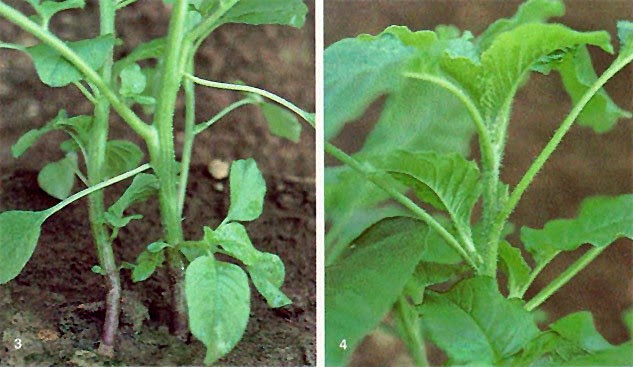
'Red root pigweed

A weed in full - pigweed donating a few seeds for the cause.


Useful Red Root Pigweed
When pigweed is young, green, and full of moisture, I pull it and place the plant under mulch. The gurus say, "Add nitrogen to wood mulch," so I add fresh greens.

Weeds can also be placed on top of mulch, to add to the biomass. Some weeds will sneak through the mulch and others will plant themselves on top. Dandelions are fond of that approach, and some other plant has placed seedlings on every bit of mulch I own.

The best way to distinguished a good plant from a weed is to wait and see its flower and fruit. I was ready to pull Cow Vetch before it bloomed. Once it showed off its color and climbing ability, I took in a flower to match and identify it. Like many scorned weeds, Cow Vetch has good qualities for the wild area, where I want masses of greenery to screen the alley scenery, a task blessed by Mrs. Ichabod - mandated after we pruned the trees so well and opened up the view.

Blogger Nathan Bickel asked about vines and his plans for building a trellis. That made me think of using a trellis screen for the area where the fence is so open for viewing and so full of barking dogs who warn their owners I am in my own yard.

Cow Vetch has typical legume flowers,
like its nearby cousin - the edible pod pea.

Thursday, March 5, 2015

Reverse Engineer the Bird Feeding and the So-Called Pests Go Away.
Perfect Show Shoveling


Two weeks ago, grandson Alex and I stuffed four pounds of suet into various mesh bags. We had some leftovers, so we scattered those lumps around the yard.

The next day, starlings swooped into the yard to play tug-of-war with suet lumps and hang from the bags while feeding. More than 30 starlings were in the yard, day after day, rising to nearby trees to wait for additional food, such as sunflower seeds and the Big Cob of corn.

They played and washed in the bird baths, and other species came for the fun.

People grasp this with no trouble, so they should easily see how well this works with so-called pests when the scenario is changed.

Let's imagine a swarm of destructive insects has arrived, or eggs have hatched and hungry larvae are eating the crops. What we see as pests are food for:

  • birds, 
  • toads, 
  • parasitoid wasps, 
  • and spiders. 
Nothing can keep them from eating the fresh supply unless we kill the supply or poison everything with sprays and detergents.We want all those pest-eaters present, welcome, and happy in our yard, because they patrol night and day, as contrasted to the panicking gardener who runs to Lowe's, buys a box of XXX, and sprays down the plants.  

Individual statistics for each species beggar our imaginations. Each individual creature is good for thousands of creatures eaten in one season. So the real answer to garden invaders is to welcome them for the beneficial creatures they feed.

Yakety Yak

Keep all the papers - they're not trash
And that will save you so much cash.
If you don't mulch that garden floor
You ain't gonna pick no crops no more.
Yakety yak
(Don't talk back)
Just finish building compost piles
Let's see organics and some smiles.
Get all that good stuff from the curbs
Or you wont' grow so many herbs.
Yakety yak
(Don't talk back)
Just pick up the birdseed and the fat
And make a spider welcome mat.
And when you finish doin' that
Pull up a chair and have a chat.
Yakety yak
(Don't talk back)
Don't you give me no weary looks
This blogger's hip, he knows what cooks.
Just build some creature-friendly nooks
And buy those Sharon Lovejoy books.
Yakety yak
(Don't talk back)


Perfect Snow Shoveling
Our snow and sleet storm from yesterday ended this morning with sunshine, blue skies, and a girl pulling her baby sister on a sled.

Our helper came over to help shovel the three driveways - ours, the Gardeners, and the Wrights. We were working on the Wrights when another neighbor came by with his shovel. We discussed how difficult it was for the husband and wife to shovel, and we finished their driveway and cars in a few minutes.

Our helper then borrowed a shovel to do his neighbor's, who lost a leg to infection.


Tuesday, March 3, 2015

Snow Cover Gone - New Lovejoy Books Arrive

My First Bird Book
I have been reading gardening and nature books since 1981, when we moved to Midland and had access to every possible book in this area - for adults and children  - at the Grace Dow Library. Lately I was miffed that the selection at the Barnes and Noble store was long on marijuana growing and short on anything worthwhile. The previous exception was Teaming with Microbes.

Gardening books are not classified well at that store. The selection seems random so I look over the spines for something new and different. I often take a book to the coffee area and page through it, inwardly groaning at the gardening cliches and obvious duplication of ridiculous ideas. "Give this rose extra fertilizer." By all means, try your best to kill the rose and keep it from blooming.

My favorite forehead-slapper is "Scratch Epsom Salts into the soil." Epsom Salts instantly melt into water, so that is like scratching coconut oil into one's skin. In other words, the expert had no clue - Martha Stewart in this case. She reminds me of the Stuart kings, who left an indelible bad impression on England. Besides that, Epsom Salts are great for the feet but seldom useful for soil or plants.

Sharon Lovejoy's A Blessing of Toads is a good starter for gardeners.


My second big find in the last year was Sharon Lovejoy's  A Blessing of Toads. The book gets its title from Lipton's classic Exaltation of Larks, a book listing the names we have for groups of animals: a pride of lions, a parliament of owls, a murder of crows. I was already aiming for more toads per acre when I saw the book and realized this could be good. However, I had no idea that someone could pack so much knowledge into one book.

Lovejoy matches the density of information (useful knowledge per page) with Teaming with Microbes while keeping the language simple and the work fun.

So the birdbook arrived, which I ordered in haste. For children, hmm? I paged through it and noticed Lovejoy covers all aspects, with beautiful illustrations. She explains everything about birds in great detail and has the advantage of many years of observation. Her story of chickadees ridding a section of cabbage worms (as I recall) is illuminating. She can dig up statistics, but she has great stories to tell from her own experiences  in gardening and observing nature. This is the best combination - anecdotes plus hard facts.

Besides that, the book includes an excellent bird identification guide.

We used to have those guides around the house, first when I was a child and later when I wanted to know what was flying around in the backyard. I never found those editions useful, because they featured a picture and a map of where the birds were found. Lovejoy's section is far more interesting and useful for anyone.


Sharon Lovejoy's Trowel and Error is an encyclopedia of tips for the gardener.

Snow Cover Gone - For Now
March 1 was going to be the tipping point, when the weather warmed up in Springdale. Instead, we had snow falling Friday night, Saturday snow and sleet, Sunday ice slicker than Church Growth promises.

Last night was above freezing, so the snow cover is gone, and all the plants and mulch are newly moistened. The starlings and doves are busy working over the soil around the Jackson Bird Spa, and the starlings are splashing in their newly melted baths. In cold weather they leave tracks on top of the snow and ice-filled dishes, as if to say, "Why didn't you invest in a birdbath warmer for us."

Isaiah 55:10 For as the rain cometh down, and the snow from heaven, and returneth not thither, but watereth the earth, and maketh it bring forth and bud, that it may give seed to the sower, and bread to the eater:
11 So shall my word be that goeth forth out of my mouth: 
  • it shall not return unto me void, 
  • but it shall accomplish that which I please, 
  • and it shall prosper in the thing whereto I sent it. [bullets not in the original]

The snow is great for the South and especially needed in the West, where they count on snowmelt for agriculture reservoirs. If rain and snow have inevitable results. what about the Word? And yet people trust man's wisdom while marveling over the wonders of nature. They fail to see the connection between Creation, the Word, and the work of Christians.

For those who pay attention to the health of soil, plants, animals, and humans, snowmelt is an enormous boost to Creation in the spring, as designed by its Architect.

Below the surface of the soil, all the organic material above and within is feeding the bacteria, protozoa, and fungi. Just above the microbe level are the tiny springtails, that shred organic matter for decomposition by the microbes. The much larger slugs also shred, and the giant earthworms (by comparison) shred dead material while grazing on bacteria, sweetening the soil with calcium, and adding nitrogen for growth.

They all live on moisture, so they store moisture, locking it into the first 12 inches of soil. A quart of water will run through sand, but rich humus soil and clay will absorb the water. Even more will be absorbed by the billions of creatures in that root zone.

The bugs and earthworms peek out from snowmelt, and the birds pounce on them to feed their young. Spiders begin to spin their webs to trap the tiniest insects, and wasps use the larvae as warm, moist, moving nurseries for their eggs. The destructive larvae are also food for the wasp newborns as they hatch. Our helper said, "You have a wasp nest." I say, "Good." They make paper from the wood mulch and kill the pests. 
Ichneumon Wasps.
Admit it - you did not know they existed.

Ichneumons (“ ick-new-mons”) are mysterious and exotic wasps that are parasitic connoisseurs. Each specializes in one specific host (or a very few hosts). Ichneumons are delicately sculptured and patterned with almost infinite variety and subtlety. There are tens of thousands of species, and they are difficult to differentiate; males and females within a species often come in different shapes and sizes, dimensions of appendages, and colors (from yellow and brown to brilliant shiny metallic-blue with contrasting black and white patterns). The female possesses an ovipositor that projects out of her rear end. Depending on the species , the ovipositor can be so short as to be barely visible, or as long or longer than the wasp’s body itself. The ovipositor doubles as a stinger, but primarily it is a tool for injecting eggs into the body of her host.
Heinrich, Bernd (2008-12-24). The Snoring Bird (Kindle Locations 178-184). HarperCollins. Kindle Edition. 

Thursday, February 26, 2015

More Winter - So I Threw a Picnic for the Birds.
Gratitude Increases as the Temps Reach Single Digits

"Feed them and they will come."
St. Gregorius, Patron Saint of Arkansas Birds


We have had almost constant traffic at the feeders during this cold spell, especially since grandson Alex and I offered four pounds of suet to the birds. The first response was a frenzy of feeding with so many extra lumps and fragments of suet scattered outside the mesh bags - and several bags packed full.

We had tossed lumps and crumbles of suet in various places around the Jackson Bird Spa, instead of putting them in the front bags. The downy woodpecker obliged by moving his feeding from the front to the backyard. Today when I went outside, the starlings took to the air but settled in trees nearby to see what I had for them. Most of my trips in the backyard are to feed them, so we are conditioning each other.

I may pour some water in the baths, too, but they will freeze over fairly fast. Next year I will buy a birdbath warmer and smile if I never need it. That is why people rent storage space, so they can look for the birdbath warmer from Minnesota they did not need in Arizona.

I went to Walmart's new Supercenter today, since I follow the advice of union members and shop the locally owned stores. Walmart began a few miles away, and we know one of the major stockholders. The little store has grown a bit since she make popcorn for her dad in downtown Bentonville.

The new Springdale Walmart has a great bird feeding area in the gardening center, which was strangely quiet today. I found supersized metal suet baskets from Pennington, which are far better than overpriced mesh bags. The next meat market buy will include chunks of suet I can jam into the baskets and hang on the trees.

Walmart sells bags of field corn, far too expensive when squirrels eat one ear a day. Instead I bought a block of corn, all fuzed together with sunflower and some other seeds. As Sharon Lovejoy points out in A Blessing of Toads, a variety of seeds will bring a diversity of birds.

Corn has attracted blue jays time and again, so I am happy to have them. Lately I have seen crows stealthily eating. The crows seem to know the moment I spot them, and they leave. Like all the corvids, crows are famous bug eaters and fun to watch (when they allow it). One night we saw a mass of them swirling in the sky in New Ulm, Minnesota, looking for a place to roost. Here is a link about that habit.

I bought this block at Walmart today, about $6.00

Cracked corn is very popular with the birds.


Share the Lint Program
Nothing disappears faster than twine pieces and dryer lint in the spring. I am using my tiny suet baskets to hold both, so birds come near our window for nesting material.

There is a little more activity on the bird swing too, as they get used to the strange new device. Once they decide it is for their safety rather than a danger, the birds will use it more often.


String, twine, and lint are just what birds want in the spring.
I saw a robin tugging on string from my chicken wire,
determined to have it for her nest.


Thursday, February 19, 2015

Winter's Blast Felt in NW Arkansas.
Kind Words about Moles and Toads

The Wind in the Willows is a book I cannot give away.
This passage reminded me of why I started a blog about my hometown, Moline.


The Wind in the Willows, Kenneth Grahame, Chapter Five, Dulce Domum, Excerpts, Public Domain 

We others, who have long lost the more subtle of the physical senses, have not even proper terms to express an animal's inter-communications with his surroundings, living or otherwise, and have only the word `smell,' for instance, to include the whole range of delicate thrills which murmur in the nose of the animal night and day, summoning, warning? inciting, repelling. It was one of these mysterious fairy calls from out the void that suddenly reached Mole in the darkness, making him tingle through and through with its very familiar appeal, even while yet he could not clearly remember what it was. He stopped dead in his tracks, his nose searching hither and thither in its efforts to recapture the fine filament, the telegraphic current, that had so strongly moved him. A moment, and he had caught it again; and with it this time came recollection in fullest flood. 

Home! That was what they meant, those caressing appeals, those soft touches wafted through the air, those invisible little hands pulling and tugging, all one way! Why, it must be quite close by him at that moment, his old home that he had hurriedly forsaken and never sought again, that day when he first found the river! And now it was sending out its scouts and its messengers to capture him and bring him in. Since his escape on that bright morning he had hardly given it a thought, so absorbed had he been in his new life, in all its pleasures, its surprises, its fresh and captivating experiences. Now, with a rush of old memories, how clearly it stood up before him, in the darkness! Shabby indeed, and small and poorly furnished, and yet his, the home he had made for himself, the home he had been so happy to get back to after his day's work. 

[ GJ - But Ratty refused to take a detour! He was too busy.] 

Poor Mole stood alone in the road, his heart torn asunder, and a big sob gathering, gathering, somewhere low down inside him, to leap up to the surface presently, he knew, in passionate escape. But even under such a test as this his loyalty to his friend stood firm. Never for a moment did he dream of abandoning him. Meanwhile, the wafts from his old home pleaded, whispered, conjured, and finally claimed him imperiously. He dared not tarry longer within their magic circle. With a wrench that tore his very heartstrings he set his face down the road and followed submissively in the track of the Rat, while faint, thin little smells, still dogging his retreating nose, reproached him for his new friendship and his callous forgetfulness. 

The Mole subsided forlornly on a tree-stump and tried to control himself, for he felt it surely coming. The sob he had fought with so long refused to be beaten. Up and up, it forced its way to the air, and then another, and another, and others thick and fast; till poor Mole at last gave up the struggle, and cried freely and helplessly and openly, now that he knew it was all over and he had lost what he could hardly be said to have found. 

The Rat, astonished and dismayed at the violence of Mole's paroxysm of grief, did not dare to speak for a while. At last he said, very quietly and sympathetically, `What is it, old fellow? Whatever can be the matter? Tell us your trouble, and let me see what I can do.' 

Poor Mole found it difficult to get any words out between the upheavals of his chest that followed one upon another so quickly and held back speech and choked it as it came. `I know it's a -- shabby, dingy little place,' he sobbed forth at last, brokenly: `not like -- your cosy quarters -- or Toad's beautiful hall -- or Badger's great house -- but it was my own little home -- and I was fond of it -- and I went away and forgot all about it -- and then I smelt it suddenly -- on the road, when I called and you wouldn't listen, Rat -- and everything came back to me with a rush -- and I wanted it! -- O dear, O dear! -- and when you wouldn't turn back, Ratty -- and I had to leave it, though I was smelling it all the time -- I thought my heart would break. -- We might have just gone and had one look at it, Ratty -- only one look -- it was close by -- but you wouldn't turn back, Ratty, you wouldn't turn back! O dear, O dear!' 

Recollection brought fresh waves of sorrow, and sobs again took full charge of him, preventing further speech. 

The Rat stared straight in front of him, saying nothing, only patting Mole gently on the shoulder. After a time he muttered gloomily, `I see it all now! What a pig I have been! A pig -- that's me! Just a pig -- a plain pig!' 

Read this brilliant analysis of the author's life and his classic work.

***

GJ - The Wind in the Willows became part of our father/son vocabulary, especially when LI and his grandfather tipped their rowboat into the river. "Please, Ratty. I want to row - now!"

The animal characters are everlasting - in the book. The Disney version is a sad corruption, turning classic literature into a dumb cartoon.

Moles are rampant in our yards here. I have talked it over with Mr. Gardener many times. He has lived here decades and never saw anything like last year's run of moles. I have not tried to kill them or drive them away or trap them.

I sought comfort and wisdom in A Blessing of Toads, by Sharon Lovejoy, which is on its way to Norma Boeckler's home and gardens. Lovejoy has something good to say about every creature in the garden.

Lovejoy gave the mole a chapter. I doubt her remedies for keeping them away, but not her advice about their benefits. Moles feast on insects, slugs, and grubs in the soil. The disruptive tunnels, near the surface, are their feeding runs, which are often temporary. The permanent tunnels are another foot below, and their construction results in the famous molehills of soft earth piled on top. So moles get rid of pests but they also mix, aerate, and soften the soil. They are giant earthmovers in comparison with earthworms. Lovejoy - "On the Matter of Moles," A Blessing of Toads.

Wayne Lewis wrote about those who hate on the larger animals, squirrels, mice, groundhogs, rabbits, chipmunks, voles, moles, prairie dogs, gophers, snakes, lizards— all burrow and travel in the soil, mixing, moving, and depositing organic matter and providing pathways and reservoirs for water and air...

The role these larger animals play in a vegetable garden is very different from the role they play in other parts of the yard. But wherever they roam, their role is important and entirely underpinned by microarthropods and microorganisms, which far outnumber them in any soil food web. The dung of all reptiles, mammals, and birds serves as a food source for other members of the food web community, which recycles it into nutrients. They also carry microbes on and in their bodies and feet from one location to another, and at death their carcasses are decayed by soil life.

Lewis, Wayne;   Lowenfels, Jeff;  (2010-09-10). Teaming with Microbes: The Organic Gardener's Guide to the Soil Food Web, Revised Edition (Kindle Location 1503). Timber Press. Kindle Edition. 

Lovejoy did not admit to moles eating earthworms (a death penalty in ancient Egypt) but the soil food web concept means providing for the tiniest soil creatures so the larger ones can feed on them and recycle them. Earthworms simply multiply according to the moisture and organic matter given them, and they make good soil even better while supporting any creature that needs their high protein bodies, whether birds or moles or snakes.


You are probably wondering - why the strange title? Lovejoy played on the unusual names for groups of animals: a pride of lions, a murder of crows, a parliament of owls, an exaltation of larks, a charm of finches. She reject the official  "knot of toads," and offers hers - "a blessing of toads."

I covet toads and want more of them in my garden, so I am on the lookout for broken flower vases to serve as their shelters and homes. Toads are the number 1 enemy of slugs. Note that moles are eating them below ground while toads snag them above ground. Toads also eat enormous amounts of insect pests and feast on ants. Lovejoy, "A Blessing of Toads," A Blessing of Toads.

Compost - build it and they will come - up from the soil.
My Midland compost fed birds on top as they perched and waited for movement.
The wily blue jays loved to feast there.
Any deep pile of organic matter will compost, including leaves alone,
but most of us do some mixing of soil, leaves, and garden trash, plus weeds.

Wednesday, February 18, 2015

More Love, More Joy in Gardening - More Lovejoy.
Stop Hating on God's Creatures

Here is the first Sharon Lovejoy post.
Just as all the traditional denominations have departed from Creation and Christian doctrine, so have gardening and farming experts apostacized from natural principles in their fields. Most books advocate chemical solutions which are absurd from the perspective of soil health, plant production, and our own benefits.

How many want to feed Roundup, insecticide, and herbicides to our families? Few can afford the organic produce offered at stores, but anyone can grow them easily.

A major emphasis in Sharon Lovejoy's work is this theme - Stop hating on all those creatures: moles, crows, wasps, hornets, ragweed, dandelions, etc.

Her heavily researched commentary is backed by the facts,  gutting the chemical addictions of modern gardening and farming. Every single plant and animal has a profound effect on the rest, and relying on one or the other cure is bound to have a house-of-cards effect on the delicate balance of Creation.


Lovejoy's experiments and research have demonstrated that trashy methods work best. For example, weeds and native plants support the bee population, which pollenate the produce we want to enjoy. A harmless dandelion patch (a valuble herb with attractive flowers) benefits birds and bees alike.

My mother wondered why I did not clean up the sunflower stalks in New Ulm. I said, "Birds love them for perching all winter, and the roots slowly decay into the soil to feed the earthworms." Sure enough, when snow accumulated in our backyard, the birds rested on those stalks in their search for food and danger.

Gardening gossip is often wrong and short-sighted. Once alarmed by the sight of slugs, people start finding ways to kill slugs. But most of the slugs work under the soil and become part of the food cycle, feeding toads and smaller creatures. Slugs are almost pure moisture, so they are little storage tanks. Tear apart a diaper for the same effect? Slugs store moisture for free, and they are shredders, with rasping mouths that reduce organic material they find.

Lovejoy makes a great point that removing pests means taking food away from the pests' predators. So if the aphids are all picked off, what will the the ladybugs eat for dinner? The predators may be a bit delayed but they show up when the gardener avoids sprays, blowtorches, and other torture devices.

Cleaning up may remove ladybug eggs, destroying the chances they will hatch and eat thousands of pests. Likewise, the hornets' and wasps' nests are Orkin headquarters, borrowing a little space in order to prowl the garden and attack larvae. We had wasps come into the house in Bella Vista, the buggiest place we ever lived, but we were never stung. Likewise, bee stings are a rarity in the garden.

A little experience shows how true this is. When I was enchanted with ponds, I created my first one in New Ulm. As soon as it began to ferment, with algae growing in the sunlight, a dragonfly showed up, gracefully darting around to eat airborne insects. I did not have to order one, buy one, or summon one. The dragonfly obeyed its software, written by the Creator and came to the food.

Jean Valjean would sing, as a gardener

Give them peace
Give them hugs
They are young
They are only some bugs
You can take
You can give
Let them be

Let them live.
Le Miz

Tuesday, February 17, 2015

Sharon Lovejoy - A Blessing of Toads


http://www.amazon.com/Country-Living-Gardener-Blessing-Toads/dp/B0058M799A

Here is Sharon Lovejoy's website.

Lovejoy Resources.

I read many of the classic gardening books at Midland Public Library, in the adult and children's sections:

  • Plowman's Folly.
  • Six Cows and We're in Clover.
  • String Too Short To Be Saved.
  • Weeds - Guardians of the Soil.
  • Howard's An Agricultural Testament
  • Shewel-Cooper's Compost Gardening.
  • And all the Rodale Press books.
Many of these books overlap with reminisces about the past, and I find them all fun to read. I regret when I let one slip by, since they are often regional favorites and hard to find later.

Picking up this book at the Barnes and Noble made me certain to buy it later. I was hoping for a Kindle version, but the paperback is well designed and easy to read.

As I wrote before, most gardening books repeat the same old errors and have nothing useful to say, only ways to mislead people into working too hard and spending too much to interrupt the methods instilled and managed by the Creator.

Albert Howard came to India to teach them Western methods, but learned they often knew more than he did. However, he worked to establish composting and said  "the health of soil, plant, animal and man is one and indivisible." 


Lovejoy's first chapter is a work of art, so it is easy to see why she has made a career of her love of gardening. Sometimes people grow into their names, as my archeology teacher did - Lawrence Toombs - pronounced tombs.

She was going to clean up the garden for a visit from an important gardening expert. Instead, Lovejoy watched the birds harvest seeds from her mature plants. She eventually concluded that a seedy garden was good for the birds and everything else. Her advice on growing plants for seed is packed with real information rather than copy and paste truisms.

She loved going to her grandmother's garden each day and has the same reaction now - cannot wait to get into the garden. One plot of land, no matter how humble, can elicit the same joy as it develops. Mrs. Wright came over and said, "Your bulbs are coming up." Since I overplant everything, we are planning how to share flowers and vegetables as they develop. Altar flowers often go to her house and she takes them to a patient who is in hospice care. Today we received a thank you note from the family, about how much they enjoy the flowers. The latest were the Valentine's Day flowers on the altar.


Our garden now includes many families, through distributing roses, extra seed, and - this summer - vegetables. We collect newspapers and turn them into flowers.

Neighbors are learning how to garden more productively, spending less money while getting better results. The veteran is gong to prune my trees, and he is adopting Jackson Mulch for his rose beds. He admired my roses last summer, and I admired his crabgrass.

We had some patches of healthy, tall-growing crabgrass doing to seed, so I pointed out to our helper that crabgrass is a grain brought to America and harvested in the early days. We mulched on top of it later, and the straw bales are on it now. But I have no grudge against a certain amount of crabgrass in the right places. The birds which eat the small grains enjoy it, and people go to the store to buy similar grain to replace what they just destroyed with Roundup.