Showing posts with label Jungkuntz. Show all posts

Tuesday, March 20, 2012

Bivens - UOJ Jedi Knight, Fuller Alumnus

Frosty will gladly answer any questions,
then Boba Fett, in the back, will take you out!


AC V has left a new comment on your post ""LutherQuest - For Laughs"":

Confusion of Law and Gospel

or

Bivens' April 2012 FiCL gobbledygook on how to use the Keys.


In the April 2012 Forward in Christ (sssshhhhh: "A Lutheran Voice"), contributing editor Forrest Bivens, a professor at Wisconsin Lutheran Seminary says this in answer to the question:

"Should we forgive others for all the sins they may commit against us? If they show no remorse or repentence, are we still to offer forgivenes?"

In his answer, Bivens bends over backwards to keep UOJ front and center. His practical advice:

"Especially to those who have wronged us yet have given no evidence of contrition before God or reliance on Jesus as their sin-bearer, we may say:

'I fully and freely forgive you, sinner to sinner. I hold no grudge against you, seek no retaliation, and will keep no record of wrongs. I have no desire or need for this. My Lord Jesus is my ultimate Protector, and he will satisfy justice in the end. Vengeance is his to give, not mine.

'But please understand that this actually may mean very little for your long-term well-being. If and as long as you do not repent before God of your sin, you do not enjoy the forgiveness Christ earned for you. You forfeit personal benefit of his pardon. You have my forgiveness, given cheerfully in love. But just like me, a sinner like you, you need the personal enjoyment of Christ's forgiveness, which is also freely given. I am willing to do anything I can to help you enjoy this.'"


Biven concludes:

"Our responsibility is to forgive others fully, unconditionally. As we communicate this, let us also speak wisely as well as lovingly so that we will best serve our neighbor."

I have a simpler way, the words of Jesus himself: "If you forgive the sins of any, they are forgiven them; if you withhold forgiveness from any, it is withheld" (John 20:23).

---

AC V has left a new comment on your post "Bivens - UOJ Jedi Knight, Fuller Alumnus":

Let's back up a little. In the paragraphs preceding the advice on how we must "unconditionally" forgive the unrepentant, Bivens reluctantly says,

"You might also be thinking of our high privilege to forgive or not forgive sinners in administering 'the keys' in ways that reflect prior repentance or impenitence (see Matthew 18:15-20; John 20:21-23). This tells us much about how we are to communicate with fellow sinners as God's representatives on earth, (UOJ drum roll please) but nothing removes from us the sacred, personal obligation to forgive unconditionally."

He goes on to explain that "unconditionally" means we give forgiveness "especially to those who have wronged us yet have given no evidence of contrition before God or reliance on Jesus as their sin-bearer."

Wow, just, wow!

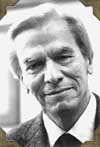
UOJ advocate Jungkuntz (Northwestern College) became chairman of the board
of the first Lutheran seminary to train open homosexuals.


***

GJ - I have to dab my eyes when I read such touching stories of forgiveness from WELS. They are tears of laughter, not wracking sobs of heart-felt relief. No sect is more nasty, vindictive, and unforgiving than WELS.

Bivens is another UOJ deceiver, bragging to his entire circuit that he went to Fuller Seminary, then wondering at Mequon where I got that story from.

Few people write as poorly about doctrine as Bivens. I hope he keeps this up and exposes the doctrinal depravity of WELS even more vigorously.

---

bruce-church (http://bruce-church.myopenid.com/) has left a new comment on your post "Bivens - UOJ Jedi Knight, Fuller Alumnus":

Frosty Biven's argument is illogical. First he says that we must forgive a brother unconditionally though he shows no sign of contrition, and then that brother enjoys our forgiveness, but then he says that God also forgives unconditionally, yet that person does NOT enjoy that forgiveness unless there is contrition and faith. Thus they dress up the very conditional forgiveness on God's part as though it were unconditioned by the presence of active faith reacting to law and gospel preaching.

By the way, since God supplies the faith ("with God belief is possible" - Matt 19:29; the Gospel is the power of God - 2 Tim 1:8), this doctrine taught by Orthodox "Old" Lutherans is not synergism as the later Pietistic Reformed Lutherans like CFW Walther charged.

Monday, May 23, 2011

Jungkuntz - On Everyone in the World Forgiven


Here is more background on Jungkuntz, one of the most influential of the LCMS liberals.

One could argue that Seminex began at Northwestern College, Watertown, due to the leadership of Jungkuntz and Gehrke, who both ended up in proto-ELCA.

Thursday, December 13, 2007

The Pre-LCMS Jungkuntz


Richard Jungkuntz, Northwestern College, WELS; Concordia Seminary, Springfield, LCMS;
LCMS Doctrinal Commission;
Pacific Lutheran University (ALC)


Mark Braun, Those Were Trying Years

Jungkuntz and Ralph Gehrke resigned their professorships at Northwestern College shortly after the 1961 convention. E. E. Kowalke, Centennial Story: Northwestern College 1865?1965 (Watertown, WI: Northwestern College, 1965), 270, reported that one of the two (not identifying which one) said simply, "I share the Missouri position." Jungkuntz accepted a call to Concordia Seminary, Springfield, Gehrke to Concordia College, River Forest, following the 1961 convention. Northwestern's Board of Control refused to grant them a peaceful release of their calls, citing their "public rejection of the Synod's position regarding the principles of church fellowship."

From Lawrence White:

The issue of woman suffrage cannot be viewed in isolation from other questions about the role of women in the church, ultimately including that of ordination to the pastoral office. In historical perspective, it is undeniably clear that for the liberal elites which controlled the Synod throughout the 1960's, the approval of woman suffrage in the church was only one step, albeit an important step, in the achievement of complete gender equality in the church. Dr. Richard Jungkuntz, the Executive Secretary of the CTCR in the late "60's" and one of the chief architects of approval for woman suffrage, most certainly held this view. Jungkuntz would later recall a discussion within the Commission with Dr. Martin Scharlemann, one of the St. Louis Seminary's leading New Testament Greek scholars, in this way:

"Just as the discussion was drawing to a close, Dr., Scharlemann observed, 'But if those positions that Jungkuntz has taken, and his arguments in support of them, if they are valid, that means women's ordination should be permitted.' And I said, "Well, you're the one who said it,' and I did not pursue it further because that would have led us down this other path and utterly derailed the suffrage question. My feeling (and that was a political choice) was that if we can get suffrage in, at least there's a foot in the door or a camel's nose under the tent."(47)

Had liberal dominance not been interrupted by the 1969 conservative coup, that process would almost certainly have culminated in approval of women's ordination at some point in the 1970's. Woman suffrage was deliberately intended to be " camel's nose under the tent" for the ordination of women, to use Dr. Jungkuntz's apt image. The only thing the liberals failed to anticipate was that by the time the camel's nose had slipped in, the tent would be under new management. The theological linkage between suffrage and ordination is reflected in the subsequent declaration of Seminex Faculty in favor of women's ordination. Throughout this period of transition the faculty of Concordia Seminary in St. Louis played a prominent role in shaping the Synod's theology. In 1974, following the removal of Seminary President John Tietjen, the majority of the faculty departed into self-styled "exile" to form "Christ Seminary - Seminex." A few years later, in 1979, these same professors issued a document on the role of women in the church entitled "For the Ordination of Women." Their appeal for women pastors included this very specific comment about the relationship between suffrage and ordination:

"If they (that is, 1 Corinthians 14:33b-36 and 1 Timothy 2:8-15) do apply to the ordination of women they should apply equally to the question of woman suffrage in the church, to the role of women as congregational officers and to any situation in which women would teach or exercise authority over men. There is nothing inherent in the pastoral office which would make it logical to restrict the application of these passages to it."(48)

Church historian Dr. James Weis, a professor at Concordia Theological Seminary in Springfield, had also suggested an unavoidable linkage between suffrage and ordination. In a 1970 article in the seminary's theological journal The Springfielder, Weis reviewed the development of the Synod's position on women in the church. He noted that the same convention which had approved woman suffrage had also called for "a study of the ministry of women in church and society; including any areas where prejudices because of sex may be in evidence." The seminary professor went on to note: "If this proposal is acted on, future conventions of the Synod will likely be faced with the task of considering the question of the ordination of women into the parish ministry." Dr. Weis concluded:

"It is without question that the position of the Synod and its leaders on the place of women in the church has changed a number of times during the first two-thirds of the twentieth century...The old restrictions on woman suffrage in the congregations and in the synod have now been lifted. It remains to be seen what decisions the Synod will arrive at in the future in the matter of the ordination of women into the parish ministry."(49)

47. Richard J. Jungkuntz, Ibid., p. 189.

48. The Faculty of Christ Seminary-Seminex, "For the Ordination of Women," St. Louis: n.p. 1979, p.5.

49. James Weis, "The Status of Women in the Missouri Synod in the Twentieth Century," The Springfielder, Volume XXXIII, No. 4 (March, 1970), pp. 40-41.


***

GJ - One reader remembered Jungkuntz only as a lightning rod in the LCMS. The pastor was unaware of Jungkuntz' role in the Wisconsin Synod. A study of those pastors who were trained by Jungkuntz and Gehrke at Northwestern College will reveal the apostate leaders of WELS and (to a degree) Seminex.

Jungkuntz and Gehrke were martyrs frequently mentioned and pictured in Missouri in Perspective, the tabloid published by the Seminex leaders.

Why are women performing pastoral acts in Missouri and WELS?
Short answer - Jungkuntz.

At the Purple Palace, Paul McCain went into denial-overdrive when I told him of the ELCA women vicars (Columbus, Ohio) baptizing and consecrating in LCMS congregation. I knew because I read the letters of the young women at the Trinity Seminary (ELCA) library in Columbus.

Saturday, December 1, 2007

Seminex:
Northwestern College and Radicalism in WELS


Richard Jungkuntz taught many future pastors of WELS at Northwestern College, Watertown, before moving to Concordia, Springfield, and finally to the ALC. Each time he was bumped up, from college instructor in Watertown, to seminary professor in Springfield, to Provost at Pacific Lutheran University, 1972. He was even acting president of PLU in 1974!

The Wisconsin sect is far more radical than most people realize. Trying to look more retro than the other synods, WELS has pursued a radical apostate streak for many decades.

Two packages brought that home to me. One was from a woman who was excommunicated for objecting to their new budgeting plan, many years ago. She thinks the plan preceded the LCA plan, which was similar in its manipulative schemes. Anyone can recognize today how abused the fudge-it figures are. One minute the sect is in receivership and needs to sell Michigan Lutheran Seminary for $1. The next day they are building a $7 million chapel at MLC (nee Dr. Martin Luther College), sending a new team of missionaries to Africa, and building a new student center in Madison, Wisconsin for $6 million or so.

The other package came from another state, another person (Grey Goose). That contained material for the congregational self-study, another man-centered Fuller-inspired stunt. The details are too tedious to list. Organizational navel-gazing is a sure sign of decline.

As I mentioned months ago, WELS was the birthplace of Seminex. My friend, a WELS pastor, tells me that Northwestern College reunions often have cars with Seminex stickers on them. When the break with Missouri came, a number of Northwestern graduates joined the Seminex faction.

Richard Jungkuntz, PhD, was teaching the historical-critical method (HCM) to the future WELS and LCMS pastors. No one knew this until the student submitted papers they wrote for Jungkuntz to another instructor, I believe at Mequon. The instructor raised holy heck and Jungkuntz was ousted. WELS pastors laugh, "They only found out by accident." That confirms the legend of WELS: sniffing out false doctrine everywhere but never seeing it under their own noses.

At some point another Watertown instructor left for supporting HCM. According to a favorite student of Jungkuntz, Richard egged on his partner in crime and left him hanging on a limb. Clever man, that Jungkuntz.

So the two apostate instructors influenced a number of classes of WELS pastors, whose bone-breaks and secret ritual humiliations united them by the time they were graduated from the Sausage Factory at Mequon. Those are the same classes in control of the Love Shack's machinery today. I can pick them out easily from my source (not a friend, but a CG fan) who got tears in his eyes over Jungkuntz being the best teacher he ever had. All I have to do is locate the Jungkuntz fan and look over the Mequon classes below him. That is where the Church Growth stars shine brightest.

Jungkuntz went on to become divisive at Concordia Seminary, Springfield, when Jack Preus was the president. According to legend, Jack supported the apostates and also the conservatives, depending on who was talking to him in his office. One famous Jack Preus quote: "Help me gut Jungkuntz." Nevertheless, Preus eventually finessed Missouri into a temporary return to basics. Preus' style was to ease people out of positions, which launched Jungkuntz into a higher orbit. It pays to apostacize, in the short run.

The introduction of the fraudulent historical-critical method of Biblical interpretation as the essential groundwork for Church Growth in WELS, Missouri, the Little Sect on the Prairie, and ELCA. HCM teaches that the Bible is just another book, to be eviscerated like Homer's Iliad, Marco Polo's Journals, and Moby Dick. The difference is that Melville argued for the Book of Jonah being accurate in Moby Dick, while the HCM professors made fun of the same book of the Bible. The difference is that Melville knew whales while the HCM gurus memorized lecture notes from skeptics. (Nonetheless, Jonah reveals God constantly at work in fulfilling His will, whale anatomy aside.)

The historical-critical method is sterile and fading away, but its damage will not pass away so quickly. The nexus with Church Growth is simple. HCM thinking was foundational for Fuller Seminary's repudiation of its former (albeit weak) inerrancy stance. Once pastors and theologians think of the Bible as another book, a pretty good book but still just a human creation, then every other error can pour in unabated.

The Jungkuntz classes from Northwestern College had no problem going to Fuller Seminary, where Church Growth started after inerrancy was repudiated. Church Growth is sociology and marketing, not neutral but anti-Christian in substance.


***

Read this from the New York Times

EDUCATION: LESSONS
Print
Single-Page

LEAD: Richard Jungkuntz flew across country this week to sit in conference with some of higher education's most powerful leaders. It is the last time this provost of a small Lutheran college will formally attend such a gathering. This spring, at the age of 70, he plans to end his 30-year career as an educator and retire to the tennis courts.

Richard Jungkuntz flew across country this week to sit in conference with some of higher education's most powerful leaders. It is the last time this provost of a small Lutheran college will formally attend such a gathering. This spring, at the age of 70, he plans to end his 30-year career as an educator and retire to the tennis courts.

Mr Jungkuntz is a self-described conservative, a minister and educator who holds, as he put it, ''old-fashioned ideas.'' In an age and at a conference where the expression of some of those ideas might be misconstrued as, say, sexist or otherwise offensive, the provost decided to ''hold my darn tongue.'' Often, hearing something that seemed nonsense to him, he would just slip out of the meeting rooms into the corridors for a smoke.

But at one point here at the 70th annual meeting of the American Council on Education, a gathering of presidents, chancellors and deans from academies across the country, Mr. Jungkuntz listened to a panel debate the difficulties of training teachers and he could no longer maintain his silence.

Psychometrics, budget shortfalls, poverty and social structure aside, the failure of American education, the argument goes, begins with the hand that puts the lesson on the blackboard. Thus, in a room full of college administrators, many from schools with teacher education programs, the subject was bound to raise professional passions.

Robert Corrigan, Chancellor of the University of Massachusetts at Boston, said, ''We still see teachers as if they were members of a blue-collar profession. They have no control of the classroom, the curriculum or their working conditions. They are treated like people in a factory milieu.''

A dean from San Antonio complained that his State Legislature changed teacher certification requirements so often, that professors of pedagogy could not figure out where they were ''supposed to go or how to get there.''

Another insisted that the problem was ''content versus process.'' That is, too much emphasis on the methods of teaching and not enough on what teachers were supposed to be learning.

A third voice suggested that bad teachers, in all likelihood, were once bad students, so the solution was to attract bright people to the profession. To lure such candidates, Joan Straumanis, dean of the faculty at Rollins College in Winter Park, Fla., had in mind ''a huge Federal loan program'' in which the brightest students in the country would be guaranteed low-cost loans if they they became teachers.

There also was talk of ''turfism,'' institutional ''musical chairs,'' ''flawed paradigms'' and, in the words of one administrator, ''that wonderful piece of heresy that there is indeed a relationship between the way students learn and the way faculty teach.''

It was about this time that Mr. Jungkuntz, from Pacific Lutheran University in Tacoma, Wash., raised his hand, cleared his throat and asked for the floor.

''We haven't taken a historical look at the problem,'' he began. ''Let me put it this way: What would you say was the quality of elementary and secondary schooling in the first quarter of our century and before that? I think it was an age in which the quality was superior. What were the incentives to going into teaching in those days? Lousy. Salaries were worse than the worst salaries are now. But what was the communities' preception of the teaching profession? Relatively high.

''My father in 1921 was addressed as professor by people. He was a grade-school teacher and a good one and he was regarded highly, at the same level as the clergy in town and perhaps somewhat higher than the mayor.''

The place was Jefferson, Wis., and the classroom was in a three-room Lutheran school, where teachers went heavy on the basics, the classics and homework. The provost knew that for a fact. He, after all, had been one of his father's students.

***
Books by Jungkuntz:

The gospel of baptism by Richard Jungkuntz (Unknown Binding - 1986)
12 Used & new from $9.85
Other Editions: Unknown Binding

2.
El Evangelio del Bautismo / The Gospel of Baptism by Richard Jungkuntz (Paperback - Sep 2001)
2 Used & new from $4.88

3.
A project in Biblical hermeneutics by Richard Jungkuntz (Unknown Binding - 1969)
5 Used & new from $7.00

4.
Christian approval of Epicureanism by Richard Jungkuntz (Unknown Binding - 1962)

Currently unavailable

5.
The analogy of faith: A historical study by Richard Jungkuntz (Unknown Binding - 1963)