Saturday, January 4, 2020

Will LCMS-WELS Make the Same Deal?

 "We had no idea it was that kind of a video we were plagiarizing, scene by scene, while stealing a protected song. But we forgive Ichabod for slandering us. (pout)"

There’s broad support for a new plan to allow traditional marriage proponents to leave the UMC with $25 million in funding.
 

Factions in the United Methodist Church (UMC) have reached an initial settlement around its intractable division over LGBT marriage and ordination—offering $25 million to a group of conservative congregations who want to break away and form a new denomination.


The rest of the article can be read here.

***

 I wrote about Liberalism in 1991. WELS did not want to publish it, but it quickly went into three printings.

Twenty-Four Hours of Saturday Evening Post , Fireplace, Hot Cocoa with Marshmellows Enjoyment

Proof - Cat selfies should be banned.


The last 24 hours - how have they been?

I wrote about the oncology visit, which went as well as the diabetics visit. I left out our futile efforts to find the new diabetics location, on narrow roads, ravine bordered, that I truly loathe. We found it, so I said, "Fifty years of marriage and wandering around lost." Christina agreed by laughing a long time, too long.

I attend medical visits, which means I am up to date on everything and offer some observations. The medical people like that a lot. Although I do nothing beyond that - and driving - I find those days exhausting.

In the last 24 hours, I have had some great email exchanges with people. From yesterday to today I have worked on some publishing plans and the new class on Bunyan's Pilgrim's Progress.

The part I like best is having a friendly exchange with readers. They are 99% friendly. Every so often there appears a snark from a pastor, but that goes down as a compliment. A bunch of us - perhaps small in numbers but energetic - think the old writings are worth sharing with the woke, digital, and leisurely younger generations. I enjoy taking their tools, like memes, and using them to invoke the hymns of the past, the writings of the truly great, and the deeds of noble warriors and martyrs.


Three things get me going in the morning - walking with Sassy, coffee, and emails from friends and strangers. I was delighted to find the new poster boy for Objective Justification editing Christian News. I call them OJ Stormtroopers because - following the first Star Wars movie - they shoot like crazy and never hit a target. But, because they keep offering the same half-chewed pablum each time, I get another chance to refute it.

 "This parish is peaceful once again, DP."

Calvinist Phil Hale (Ft. Wayne) Enthroned as Christian News Editor.
Justification by Faith is "Satanic," According to Hale

Calvinist-Pietist Trifecta - Hale, Knapp, Calvin


"The LCMS, for the most part, has stuck with the orthodox language of Walther—that the entire world of sinners was justified in Christ when He rose from the dead. Since the days of the Wauwautosa seminary in early 1900’s, however, there has been a habit of leaving off “in Christ,” and changing “world”, to specific people or particular individuals."
Phil Hale, CN, January 6, 2020 - in an article with no Scriptural references at all.


"It is satanic that people like Gregory Jackson and Paul Rydecki have used misleading and complicating rational arguments, incorrect biblical interpretation, and misleading historical evidence to make this such a difficult issue to grasp today. They attack and obscure Scripture, rather than clarify it, though. (This is why they hate and refuse to deal directly with 2 Cor. 5:19, since it is so clear and helpful on this issue.) In the same way, the 1979 Kokomo theses were uncarefully drawn up to make light of and mock objective justification, not to defend it or help bring about a right understanding." 
p. 6, 11-04-2019 CN.

[ GJ - Like all OJists, Hale lies about the most basic facts. The first three Kokomo Statements came directly from WELS' JP Meyer's Ministers of Christ. The last one was included by WELS Pastor Papenfuss. The two families were kicked out of WELS for denying the four statements, an action affirmed by A. Panning when appealed. WELS-LCMS-ELS-CLC affirm Kokomo and then deceive people who see the statements correctly as blasphemy. I visited Kokomo, talked to both families, and received xerox copies of the WELS letters.]


Simple history - Walther taught Halle OJ, but Missouri and WELS did not. Missouri and WELS - officially and in print - taught Justification by Faith in the beginning.

The Walther-Pieper sycophants elevated both Pietists (Walther and Pieper) to status above and beyond the Scriptures and Confessions. Now this incestuous swamp of idolaters quote the endless  post-1930 publications of their own gang as proof of OJ. Scriptures alone? - no! - OJ alone is their slogan.

Check out the WELS Holy of Holies - their Essay Files. They have 60+ essays promoting OJ, wrongly labeling The Chief Article by sect gurus Zarling and Bivens.


2020 Justification by Faith Count
In the new issue, Justification by Faith - 0 times.
In the same issue - Objective Justification - 8 times.
Means of Grace, efficacy and efficacious - 0 times.


 Like garlic, Calvinism retains a certain odor. When faux-Lutherans spout their OJ verities, the garlic of Calvin hangs in the air - Justification by Faith is an odious phrase for them (but not for Paul or Luther). 2. The efficacy of the Word is never mentioned. 3. The Means of Grace - silence - but still that Geneva aroma lingers tellingly.

From Another Layman - About Lenski and the Blog


Dear Pastor Jackson...
First of all, I want to thank you again for introducing me to Lenski's wonderful New Testament commentaries back about three years ago.  I gradually found all  of them for sale on the internet and began reading them.  I am now about 40 pages into the last  one left for me to read: Revelation.  I have found all of Lenski's works to be so revealing and they have helped clarify the wonderful words of Scripture that my parents introduced me to as a child over 80 years ago and that I have treasured ever since.  My faith has been deepened and my understandings widened in ways that I could never have imagined when I began reading Lenski's works.  They will be a treasured resource for the rest of my life.  What a blessing! [GJ - I use Lenski for every sermon.]

I have a question for you: have you ever  read Lenski's "little book", Kings and Priests? [GJ - We are searching for it.]  He has mentioned it any number of times in the commentaries.  I have tried for quite awhile to find it online since it is long out of print.  The response has always been "Out of print--not available".  I wonder if you have ever read it or come across anyone who has and who may have a copy.  I would wonder also if Alex Satin might think that this would be a volume that would warrant reprinting  (I gather that you have some contact with him). [GJ - He is a member.] Anyway, I thought that I would ask you seeing as I have had absolutely no luck in finding it anywhere.

Again, thank you for all of your "Watchman" duties that you have so faithfully been involved in.

***

GJ - It is very encouraging to receive messages like this.


Friday, January 3, 2020

Oncologist Comes into Appointment with Anniversary Notice

 Posted in the local paper

Today we went to the Highland Oncology Group and met with Dr. Steven Rosenfeld. He walked into the room, hunched over his phone, like a teenage. He then showed us the screen, a scan of the newspaper announcement - above - that he said he would wait to see. We had a great conversation about history and what they did in the 19th century without digital toys.

One year ago, the tests showed Christina at stage 4 cancer, with a node growing on her back - very painful. Dr. Rosenfeld started the treatment at once, just before Christmas - 10 days in a row of radiation - astonished the lab - and hip shots plus pills to suppress new growth. He started immediately with both. Since then the definitive blood tests have all been great, including today's.

We also visited the diabetics specialist this week, to make sure the blood sugars on the Libre were good. She said, "You will probably be the only patient this week with such good results. You did not go too low or too low." The Libre sticks in the arm and gives constant results.

Thank you for your prayers. Christina has gained strength and health all year. This year wee upgraded all our doctors except Dr. Rosenfeld and Melanie Sutton, the diabetic specialist.

 From Norma A. Boeckler

Essential Books for Lutherans


Lutheran Librarian print books are found here.

Lutheran Library ebooks are found here.

A large collection of free Lutheran books and sources can be found on this Ichabod the Glory link.

Luther's Sermons, Lenker Edition, can be navigated here on Ichabod the Glory.


The links for live and saved Ustream worship services and educational programs are found here.

Every time you click on a link, an angel plays "A Mighty Fortress" on the harp.


Someone asked me for a list of best books to read in theology. This is what comes to mind.

Luther's Sermons, Lenker edition, for regular reading, one per week at the least.

Luther's Galatians Lectures. The editors of the Book of Concord recommended it. Those OJists who have not studied it should be "deprived of food, driven out of town, baited with dogs, and pelted with manure." (Luther, Large Catechism)

Luther's Large Catechism. There is no evidence that anyone in the Synodical Conference has read this, let alone studied it.

Melanchthon's Apology of the Augsburg Confession. The section elaborating Justification by Faith is an example of clarity and Biblical eloquence.

Chemnitz' Examination of Council of Trent. For those who want to become theologians, this is perfect for content and for learning his method.

Augustine is rather difficult, but a good introduction to his work is his Confessions. The City of God is more of an encyclopedia, but worth having and looking into.

John Bunyan's The Pilgrim's Progress should be read, heard, studied, enjoyed. He loved Luther's Galatians, so I would put him above the entire Synodical Conference in doctrinal discernment.


Henry Eyster Jacobs, A Summary of the Christian Faith. He teaches Biblical, Lutheran doctrine with clarity and genuine Biblical references.


Krauth, The Conservative Reformation. His barbs against false teachers are almost equal to Luther's.

Theodore Schmauk,The Confessional Principle. He was the last, lost voice of the Muhlenberg tradition (General Synod, General Council) - teaching against compromise with the Calvinists.


Matthias Loy's Doctrine of Justification is a clearly written treatment of the subject.


The Error of Modern Missouri is an excellent, but lengthy treatment of Walther's effort to inject even more Calvinism into the Synodical Conference.


Lenski's Commentaries are so good, ELCA will not let them go. WELS always says, "Lenski is not good on Justification," which means - "He teaches Justification by Faith, which we attack and abhor at every opportunity."

Thursday, January 2, 2020

So I Googled "Lutheran Library" - And Who Was First and Best?

This is Alec Satin's weighted blanket. He has gathered over 150 Lutheran/Christian ebooks for free, and many are making their way into print at low, non-profit prices. Our little group has published 11 volumes of Luther's Sermons as free PDFs, two collections of Luther's sermon quotations free, and Kindles at 99 cents for all books (except larger ones - $2.99).


The Lutheran Library Publishing Ministry. Non-profit publisher of Christian books. Ebooks provided without cost or fees. All hand-picked for a new generation ...
Latest Books · ‎Novels · ‎Recent Posts · ‎Tags
You've visited this page many times. Last visit: 1/2/20
Jan 18, 2019 - The new site should make it easier for you to find and access excellent Christian reading material from the Lutheran Library. Even if you are not ...


 People pay princely prices for CPH books to support the royal salaries at CPH - figures no longer easy to obtain.

Lutheran Library without Luther's Sermons or Much of Luther at All! But Walther, Mmmm mmmm Walther! Big Buck$ for These Books. Start at $250 for Basics.
Since the days of the Reformation, certain key books have been a part of the life of Lutherans: the Bible...


The books in The Essential Lutheran Library will serve to give shape and definition to the faith and life of every Lutheran Christian. Included in this special ...

 Why did McCain's Cyberbrethren blog disappear? Plagiarism? So why is he shearing the sheep and fleecing the shepherds at CPH?

A Lutheran Layman Describes the Great Affinity between the Calvinist Revivalists and Fuller. George Gerberding, The Way of Salvation in the Lutheran Church -
Thanks to the Lutheran Librarian, Alec Satin!

 The free ebook, The Way of Salvation, is found here at the Lutheran Library Publishing Ministry. 
It may be in print soon. 


Lutheran Layman:
In The Way of Salvation in the Lutheran Church, George Gerberding gives a great example of what happens with those who do not believe in the Efficacy of the Word, The Office of the Keys, and The Means of Grace. Revivals were sweeping across 19th century America. In its wake, it left the ashes in such area as the "Burnt Over District" of upstate New York. The pastors in the General Council often had to pick up the pieces in their mission work. The following is an excerpt from chapter 23 called Revivals:

"We object to the modern revival system, because it rests on an entire misconception of the coming and work of the Holy Spirit. The idea seems to be that the Holy Spirit is not effectively present in the regular and ordinary services of the sanctuary, that since the day of Pentecost He has come and worked with power during every revival and then departed to be absent until the next.

 George Gerberding wrote about building congregations and was known for accomplishing genuine growth based on Biblical doctrine. Who would have guessed that he did not need gourmet coffee, no-talent rock groups, and marketing studies? Doth ye wish to measure Werning's and Ron Roth's fame? - look around at the destruction.


This is directly contrary to the teaching of the Divine Word. When Jesus was about to leave His disciples, He said, John 14:16: “I will pray the Father, and He will give you another Comforter, that He may abide with you forever, even the Spirit of truth.” From these words, and others spoken by our Saviour, two things are plain: That the Comforter came as the visible Christ’s substitute, and that He came to abide. The system also undervalues the divinely ordained means of grace. Little if any renewing grace is expected from the sacrament of Christian baptism. Few if any conversions are expected from the regular and ordinary preaching of the Word. Little if any spiritual nourishment is expected from the sacrament of the Lord’s Supper. Because the regular Church ordinances are thus undervalued, they are largely fruitless. Few conversions are expected during the ten or eleven months of regular church services. It naturally follows that the unconverted will shake off all serious thoughts under the regular church services, under the plea that they will give this matter attention when the next revival comes around. And even the work of sanctification for the saints is largely crowded into the few weeks of revival. It is doubtless for this reason that we find so much levity and irreverence in many so called revival churches. Because the Holy Spirit is not supposed to be effectively present in the Word and Sacraments, there is nothing inspiring and uplifting in these things. A careful observer can not fail to notice that in churches which believe in grace through the means of grace, there is an atmosphere of deeper solemnity and more earnest devotion than in such revival churches. Another objection to the modern revival system is the utter indifference to doctrine that generally goes hand in hand with its methods and practices. To “contend earnestly for the faith once delivered to the saints” seems to be altogether out of place at a modern revival. The popular sentiment is: it makes no difference what a person believes, or to what church he belongs, or indeed, whether he belongs to any, if only he is converted, if only his heart is right! Hence we find but small provision, if any, for doctrinal instruction in the revival system. Those who are expected to be gathered in and brought to Christ, are left in ignorance of the great doctrines of sin and salvation. 

They have the most imperfect conception of God’s Way of Salvation. And yet they are expected to enter upon that way and walk in it! The first and great object of the revivalist seems to be to work directly on the emotional nature of his hearers. And when the feelings are aroused, when the excitement is up, the hearers are urged to come forward, stand up, to follow the saw-dust trail, etc. Now there is no true religion without feeling, no true piety without heartfelt sorrow for sin, longings for union and fellowship with God, together with a childlike trust and love to Him. But when Paul was sent to convert the Gentiles, he was directed first of all “to open their eyes,” that is; to instruct them, and then to “turn them from darkness to light.” The revivalist, however, makes a short cut and goes at once to the feelings, contrary to the Scriptures and to the laws of the mind. Therefore the revivalist not only permits, but encourages the ignorant and inexperienced to assist in exhorting and helping such as are inquiring after life and salvation. But, “can the blind lead the blind? Will they not both fall in the ditch?” Better let these novices sit at the feet of Christ! We may also mention the proselyting spirit that so often accompanies this system. How with all its protestations of charity, brotherly love, and union, it often runs out into the meanest spirit of casting aspersions on others and stealing from their churches. We might speak of the divided churches that often result. As Dr. Krauth once forcible said: “They are united to pieces, and revived to death.” No wonder, that in sections of our country where this system has held sway, worldliness and skepticism abound. These places have been aptly called “burnt districts.” It seems next to impossible to make lasting impressions for good on such communities."


In Christ,


First Part - The Life of John Bunyan - The Pilgrim's Progress
Wednesday, 7 PM, January 8th

 Bunyan understood the Slough of Despond. The fun part comes from the names of those who left Christian and went back.

 Bunyan loved Luther's Galatians, unlike the great and wise leaders of Lutherdom today. They teach against Luther's great book.

Biography of John Bunyan

The origin of The Pilgrim’s Progress defies logic. We would expect the greatest of English classics, after the King James Bible, to come from someone with an excellent bloodline, education, and scholarly surroundings. He was born in Bedfordshire, England, in humble circumstances, around 1628. His father was a tinker, someone who repaired and fashioned metal objects. His parents were very poor, but they sent John to a free school, to improve his lot in life, but he was an inattentive student.
His early behavior was legendary, but for the wrong reasons:
John’s ungodliness was as advanced as it was offensive. Few could equal him in cursing, swearing, lying, and blaspheming. He was the ringleader of the village immoralities – a great sin-breeder, infecting all the youth of the neighborhood with all manner of youthful vanities. He cared nothing for Holy Scripture, preferring a ballad or the local news.[1]

He was already a soldier when he was 16 years old. Most likely he fought for the King, which is ironic. The restoration of the monarchy led to his later imprisonments. Meanwhile, he was tortured by his wanton behavior and feelings of doom. Friends suggested marriage and he wed. We do not know the young woman’s name, but she brought two books with her – The Practice of Piety, by Lewis Bayly and Arthur Dent’s The Plain Man’s Pathway to Heaven. She helped him learn to read again, but he remained fixed between some adherence and his bad habits. This continued for some time.
Bunyan came across a copy of Luther’s commentary on the book of Galatians. It was the most well-suited thing imaginable for Bunyan at this time, for Luther was a man who had similar passion and emotional contrasts. No other book was ever so precious to him, except the Word of God. Bunyan’s turmoil continued, and it is told in Grace Abounding.[2]
During this time Bunyan lost his first wife and also moved gradually into serving as a church deacon, then pastor in 1657. His church was Nonconformist, which meant they were independent of the Church of England.
Bunyan’s change from his old days was so complete that people gave credit to God’s powerful grace in this conversion, which was aided by his first wife’s Christian faith, his learning to read Christian books, and attendance in worship. Even so, he suffered great turmoil during this transition.

Second Part, Restoration and Imprisonment


[1] Bunyan, John. Grace Abounding to the Chief of Sinners (Updated, Illustrated): A Brief Account of God’s Exceeding Mercy through Christ to His Poor Servant, John Bunyan . Aneko Press. Kindle Edition.

[2] Bunyan, John. Grace Abounding to the Chief of Sinners (Updated, Illustrated): A Brief Account of God’s Exceeding Mercy through Christ to His Poor Servant, John Bunyan . Aneko Press. Kindle Edition. Luther’s Galatians Lectures (also called Commentary) is recommended by the Formula of Concord for additional study of Justification by Faith.


 LCMS seminary graduates say, "Really? Let's join Rome"

Starting January 8th - Wednesday, 7 PM Central

 This is a pivotal stop in the journey. Bunyan studied Justification by Faith in Luther's Galatians.


 The work has two parts. We will cover Part 1, about Christian. 


The Pilgrim’s Progress as an Allegory

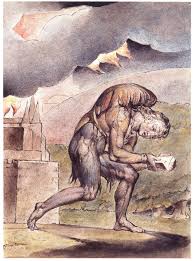
 The burden on his back - his sins.
He is studying the Bible to find his way.


We use figures of speech in our normal conversation, but seldom think about their use. Some come from the Bible, where the best known ones are called parables. Luke 15 is an example of parables used to introduce one of the most significant parables.
Luke 15:1-7 is the Parable of the Lost Sheep.
Luke 15:8-10 is the Parable of the Lost Coin.
Luke 15:11 begins the Parable of the Prodigal Son, illustrating the Old Testament custom of moving from the lesser (the sheep and the coin) to the greater – the Prodigal Son. The two introductory stories get us accustomed to the feelings of loss and recovery. The story of the impetuous son, the forgiving father, and the self-righteous brother teaches us the nature of our gracious heavenly Father. Concrete images and associated emotions embed the Biblical lesson.

We are heirs of Greek and Latin literature as well. We use these figures daily:
·        I almost died – Exaggeration or hyperbole.
·        The salad was like twigs and pine cones – simile.
·        He is a dog – metaphor.
·        That was no small task – litotes, a double negative used for a positive, considered an understatement for effect.
·        He gave the wrong reason for the wrong evidence to the wrong person – anaphora, repetition of a phrase for emphasis.
Many more figures could be listed.

The allegory is the grandest tool of our language. An entire book can be an allegory. Used poorly, the result is odd or tedious. The Marriage of Mercury to Philology by Jupiter belongs in a special class – unread, unloved, and largely unknown, except among Medieval scholars. The Lord of the Rings can be seen as an extensive allegory, especially because J. R. R. Tolkien was a Roman Catholic. Likewise, the movie E. T. suggests similar themes, the script written by a Roman Catholic. Some allegories are quite obvious in their intent:
1.      Animal Farm, by George Orwell
2.      The Chronicles of Narnia, by C. S. Lewis – children see Aslan as Jesus, but adults miss that entirely.
3.      Plato’s Allegory of the Cave
4.      The Faerie Queen – by Spencer
5.      Herman Melville Moby Dick
6.      St. Paul – the armor of God – Ephesians 6

The Pilgrim’s Progress is an allegory, which might be described as a parable with fictional characters. This means we should read The Pilgrim’s Progress slowly and considers its lessons. This work is not a novel, but a way to explain essential lessons from the Bible. The wealth of the book comes from its details. The author explored the challenges and temptations of Christian, the allegorical hero, on his way from the City of Destruction to the Celestial City. The names and mishaps are often humorous and always instructive.