Monday, November 22, 2010

Notre Dame Football Scandal Cover-Up:
Sounds Familiar To WELS, LCMS, ELS, ELCA

http://www.renewamerica.com/columns/abbott/101122

November 22, 2010

Is another Notre Dame scandal brewing?

By Matt C. Abbott

A female student who attended St. Mary's College committed suicide after she was allegedly sexually attacked by one of Notre Dame's football players — and the university has seemingly swept it under the rug — according to a Nov. 21 story in the Chicago Tribune.

Click here to read the story.

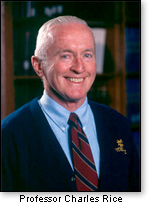
Noted Catholic scholar Charles E. Rice, professor emeritus at Notre Dame Law School, has issued the following statement (slightly edited) in response to the Tribune story and the scandalous actions of Notre Dame's president, Father John Jenkins, in recent times:

    Notre Dame is obliged to report any serious accusation of sexual assault, or other on-campus crime, to the county police and prosecutor. We await further revelation of facts as to whether this obligation was fulfilled in this newly-disclosed case of Elizabeth Seeberg. One gets the impression, however, that little confidence can be reposed in the Notre Dame administration to fulfill its obligation of simple candor in prosecutorial matters. Consider, for example, the continuing prosecution of the ND88, the pro-life protestors who, on the complaint of Notre Dame, were arrested at the graduation events of 2009 at which President Obama received Notre Dame's highest honor. The criminal prosecution of those ND88 continues because Notre Dame refuses to request that it be discontinued. Father John Jenkins, Notre Dame's president, claims that Notre Dame cannot ask the prosecutor to dismiss the charges because the university treats all demonstrators equally. William Dempsey, president of the Sycamore Trust, demonstrated in extensive correspondence with Father Jenkins and Dennis Brown, his spokesperson, in February and March 2010, that Notre Dame had declined to prosecute gay-rights and anti-ROTC demonstrators as recently as 2007 and there were no contrary examples up to the time of the Obama commencement. Despite the careful and irrefutable demonstration to Father Jenkins by Mr. Dempsey of the non-prosecution of those gay-rights and anti-ROTC demonstrators, Father Jenkins later restated forcefully on April 30, 2010, that 'the [u]niversity cannot have one set of rules for causes we oppose, and another more lenient set of rules for causes we support. We have one consistent set of rules for demonstrations on campus — no matter what the cause.' That statement is untrue. And, unless he has the excuse of delusion, Father Jenkins had to know it was untrue. If we are dealing with a knowingly and unequivocally false statement by Notre Dame's president on a subject seriously affecting Notre Dame, that is an extremely grave matter for which resignation or dismissal is the only remedy. Notre Dame, in reliance on the patently false claim that it treats all demonstrators equally, continues to subject the ND88 to legal prosecution and serious costs that it never imposed on politically correct gay-rights and anti-ROTC demonstrators. There was a day when a Notre Dame administrator's word could be taken to the bank. But that was 'back in the day.' This is, today, a university governed by academic ruling class 'wannabes' who have made political correctness, in dominant respects, the official religion of Notre Dame. So: Pray for Elizabeth Seeberg and her family, as well as her alleged assailant, as we ought to pray for Declan Sullivan, another victim of university fault, and for his family. Pray for the ND88, who deserve the respect — rather than the prosecution — of the university. Pray for Notre Dame and its administrators. And, while you're at it, pray for our country.
---


A 19-year-old Northbrook woman died of an apparent suicide nine days after telling University of Notre Dame police that she had been sexually attacked by a football player in a dorm room, the Tribune has learned.

Elizabeth "Lizzy" Seeberg, a freshman at neighboring St. Mary's College who had battled depression, apparently overdosed on prescription medication in her own room during the third week of classes in September. The player, meanwhile, has remained on the field.

More than two months later, Notre Dame refuses to publicly acknowledge the case, and what actions university officials have taken to investigate her allegation remain largely unknown.

Campus authorities did not tell the St. Joseph County Police Department investigating Seeberg's death about her report of a sexual attack, county officials said. Nor did they refer the case to the county's special victims unit, which was established to handle sex offenses, according to prosecutors.

WELS Homosexual Videos Are OK, But Ordination Is a Problem

The history of the Lutheran church in America is long and tangled. Starting before the American Revolution, Lutheran immigrants brought their faith to these shores and sought out other Lutherans to form synods and associations of pastors and congregations. From the start, however, there was never a single Lutheran church body in America. Germans, Swedes, and Norwegians sought out others who shared their language or place of origin in Europe. Other groupings were shaped by the theology and practices they brought with them. There were Lutheran pietists, Old Lutherans, True Lutherans, and Lutherans who had kept the name but little else. As the years passed, there were mergers and splits, fellowship relationships declared and terminated.

A diagram illustrating the history of the various Lutheran bodies in the United States over the years contains dozens of alphabet-soup names, merging and diverging lines, and numerous explanatory footnotes. It nearly makes your head spin just looking at it.

Last August, a new Lutheran church body was added to the list. Responding to the decision of the Evangelical Lutheran Church in America (ELCA) to permit practicing homosexuals to serve as pastors, a significant number of ELCA congregations voted to leave their church body and establish a new Lutheran denomination called the North American Lutheran Church (NALC). The NALC views itself as being in the "center" of American Lutheranism. It retains, however, most of the beliefs and practices of the ELCA, except for ordaining homosexual pastors.


***


GJ - But WELS is the ONLY college in the ELCA, LCMS, ELS, etc with a homosexual video - not to mention a special Facebook page promoting "Party in the MLC."


---


Martin Luther College's proud contribution to gay videos can be found on various homosexual websites around the planet.

bruce-church (https://bruce-church.myopenid.com/) has left a new comment on your post "The history of the Lutheran church in America is l...":

Concerning the attraction of Byzantium and Rome to those who (would) go native and semi-pope and pope, it's interesting that one gay priest said that the smells and bells, gold leaf and colorful vestments enthralled him since childhood and during his career. Perhaps that's an unexplored reason that some people go high church, or wear colorful and gaudy vestments, and even transition out of Protestantism to Orthodoxy and Catholicism:

Interview With Gay Theologian David Berger: 'A Large Proportion of Catholic Clerics and Trainee Priests Are Homosexual', 22 Nov 2010

http://www.spiegel.de/international/world/0,1518,730520-2,00.html

excerpts: ...the church never lost its attraction for me. The Tridentine Mass was like a gateway drug for me. When I was 17, I was with the Pius Brothers in Lower Bavaria. What I saw there was a fascinatingly aesthetic baroque dream of leaf gold and Brussels Bobbin lace. I couldn't get away from it. It only became clear to me later what I had got involved with, and the dream turned more and more into a nightmare.

...Through my enthusiasm for the traditional mass and for conservative theology

Berger: Many gays are attracted by the clear hierarchies of the male world of Catholic rituals. Among clerics I discovered extremely effeminate behavior of the sort I knew well from certain gay scenes. People give each other women's names and attach very high importance to clerical robes in all colors. Just think of the nicknames Bishop Walter Mixa (who recently stepped down amid accusations of violence and financial irregularities) and his housemaster friend gave each other: "Hasi," or "bunny," and "Monsi," short for monsignore.

Berger: I hope that the church will at last confront the issue of homophobia. It must recognize that a large proportion of the Catholic clerics and trainee priests in Europe and the United States are homosexual.

Ichabod; The Glory has Departed…But The Show Must Go on. « Acidri's Blog®

Ichabod; The Glory has Departed…But The Show Must Go on. « Acidri's Blog®

***

GJ - The Calvinists get it, but the "conservative" Lutherans do not.

How ya gonna keep 'em down on the farm
After they've seen Fuller?
How ya gonna keep 'em away from Driscoll
Jazzin around and paintin' the town
How ya gonna keep 'em away from harm, that's a mystery
They'll never want to see a B O C
And who the deuce can parleyvous Lenski?
How ya gonna keep 'em down on the farm
After they've seen Fuller?

Quotations from Ichabod: the Glory has Departed « The New Anti-Jacobin


Grr-r-r-r-r-r.
Baaaaah.


Quotations from Ichabod: the Glory has Departed « The New Anti-Jacobin: "Quotations from Ichabod: the Glory has Departed
From Pastor Gregory Jackson’s Web Journal, Ichabod : the glory has departed:

A Pastor Smites Wolves

“It is not enough that we preach correctly, which the hireling can also do; but we must watch over the sheep, that the wolves, false teachers, may not break in, and we must contend for the sheep against the wolves, with the Word of God, even to the sacrifice of our lives. Such are good shepherds, of whom few are found.”

~~Martin Luther, Sermons of Martin Luther, 8 vols., ed., John Nicholas Lenker, Grand Rapids: Baker Book House, 1983, III, p. 34. Second Sunday after Easter. John 10:11-16.

Spineless Conservative Pastors Are Wolves

“For nothing can feed or give life to the soul, which is not the doctrine of Christ. Although the hireling does not himself slay and destroy, he does not restrain the wolf. Therefore, because you neither point out nor teach this shepherd, you shall not and ought not to be heard, but you shall be shunned as a wolf.”

~~Martin Luther, Sermons of Martin Luther, 8 vols., ed., John Nicholas Lenker, Grand Rapids: Baker Book House, 1983, III, p. 58f. Second Sunday after Easter. John 10:11-16."

False Teachers and the Colored Filter

“They [the false teachers] fared like a man who looks through a colored glass. Put before such a man whatever color you please, he sees no other color than that of the glass. The fault is not that the right color is not put before him but that his glass is colored differently, as the word of Isaiah 6:9 puts it: You will see, he says, and yet you will not see it.”

~~Martin Luther, What Luther Says, An Anthology, 3 vols.,
ed., Ewald Plass, St. Louis: Concordia Publishing House, 1959, II, p. 644. Isaiah 6:9.

Adiaphora and Confessional Crisis

“We believe, teach, and confess that at a time of confession, as when enemies of the Word of God desire to suppress the pure doctrine of the holy Gospel, the entire community of God, yes, every individual Christian, and especially the ministers of the Word as the leaders of the community of God are obligated to confess openly, not only by words but also through their deeds and actions, the true doctrine and all that pertains to it, according to the Word of God. In such a case we should not yield to adversaries even in matters of indifference, nor should we tolerate the imposition of such ceremonies on us by adversaries in order to undermine the genuine worship of God and to introduce and confirm their idolatry by force or chicanery. It is written, ‘For freedom Christ has set us free; stand fast therefore, and do not submit again to a yoke of slavery.’ (Galatians 5:1).”

~~Formula of Concord, Solid Declaration, Article X, 10-11, The Book of Concord, ed. Theodore G. Tappert, Philadelphia: Fortress Press, 1983, p. 612. Galatians 5:1.

Luther and Fellowship

“Dr. Luther, who understood the true intention of the Augsburg Confession better than any one else, remained by it steadfastly and defended it constantly until he died. Shortly before his death, in his last confession, he repeated his faith in this article with great fervor and wrote as follows: ‘I reckon them all as belonging together (that is, as Sacramentarians and enthusiasts), for that is what they are who will not believe that the Lord’s bread in the Supper is his true, natural body, which the godless or Judas receive orally as well as St Peter and all the saints. Whoever, I say, will not believe this, will please let me alone and expect no fellowship from me. This is final.” [WA 54:155, 156]

~~Formula of Concord, Epitome, Article VII, Lord’s Supper, 33, The Book of Concord, ed. Theodore G. Tappert, Philadelphia: Fortress Press, 1959, p. 575.

Spoiling the Egyptian Garbage

“Is it possible that one who has such models as Luther, Walther, Stoeckhardt, Lochner, Sieck, C. C. Schmidt, and Wessel, etc., etc., should leave these rich pastures to feed upon such garbage heaps as those from whom I have quoted?”

~~Martin S. Sommer, Concordia Pulpit for 1932, St. Louis:
Concordia Publishing House, 1931, p. viii.

“It is the purpose of this volume to aid in displacing books of Reformed preachers. We would encourage the cultivation of distinctly Lutheran preaching. Therefore, we now appeal to our brethren always to consult Luther when preparing to preach. Quo propior Luthero, eo melior theologus! Let us who are called Lutheran preachers be sure that in every one of our sermons we preach God’s Word and Luther’s doctrine pure. It is that preaching which God demands of us, 1 Peter 4:11. It was that preaching which conquered the Roman Goliath, Revelation 12:11. By that preaching we shall truly build the walls of Zion, not with hay, straw, and stubble, but with such stones as all the powers of hell shall never overthrow, Luke 21:15.”

~~Martin S. Sommer, Concordia Pulpit for 1932, St. Louis:
Concordia Publishing House, 1931, p. ix.

Proper Use of Love

“In like manner we will also do to our princes and priests; when they attack our manner of life, we should suffer it and show love for hatred, good for evil; but when they attack our doctrine, God’s honor is attacked, then love and patience should cease and we should not keep silent, but also say: I honor my Father, and you dishonor me; yet I do not inquire whether you dishonor me, for I do not seek my own honor.”

~~Martin Luther, Sermons of Martin Luther, 8 vols., ed.,
John Nicholas Lenker, Grand Rapids: Baker Book House, 1983.

Sunday, November 21, 2010

The Gospel in the Means of Grace

The Feeding of the 5,000, by Norma Boeckler, answers a basic question about Holy Communion.


The Means of Grace are central for historic Christianity. The Instruments of Grace were perverted in the Middle Ages, but no one denied them or turned them into ordinances (empty symbols to be obeyed, as a witness to others) until the 16th century.

To baptize babies and commune the faithful, for 16 centuries, is quite an argument against the Zwinglians - who are so admired by the Church and Changers in WELS, the UsFirst zanies in the LCMS.

If someone's concept of justification is wrong, the Means of Grace will mean little or confuse people instead of providing hope and comfort.

The Means of Grace are properly described as the Visible Word. The Means convey Christ and His grace to us, the Holy Spirit at work in the Word. As Luther observed, not only do we meet Christ but Christ also meets us through the Means of Grace. We are changed by this meeting with the King of Kings.

If people claim they are already forgiven, without faith, what is the purpose of the Means of Grace? No wonder the first move of the Changers is to get rid of Holy Communion, to hide it away, lest the anti-Sacrament Zwinglians be offended. Instead of reaching out with the Gospel, as the Changers claim, these sniveling cowards of the cloth hide it away. Their glittering vices are so much more appealing and entertaining than the Means of Grace.

Oh my, infant baptism is so time consuming during a service. Why bother people with something so ordinary. The Changers move it off-stage, the original meaning of obscene in Greek, when murders and other unsavory things were moved away from the drama. Or they do Happy Idiot baptisms, where the baby is paraded around for the ooze and aahs of the congregation.

As Kurt Marquart protested, Christians are missing out in their own miracle services. The Sacraments are miracles. The Word consecrates ordinary elements so that the faithful receive the Body and Blood of Christ with the bread and wine. Holy Baptism converts a baby with the Gospel Word.

How can Christ give His body and blood to so many people over the centuries? Human wisdom stumbles at this great mystery, revealed by the Holy Spirit. Then it stumbles at the Two Natures of Christ. Next the Trinity. And soon the Bible is just a handy book for coaching people in how to be successful in life.

For those who believe in the Word, the Feeding of the 5,000 illustrates how the divine and efficacious power of the Word can consecrate and multiply beyond all human comprehension.

6. Human reason, though it ponder,
Cannot fathom this great wonder
That Christ's body e'er remaineth
Though it countless souls sustaineth,
And that He His blood is giving
With the wine we are receiving.
These great mysteries unsounded
Are by God alone expounded.

Hymn #305
The Lutheran Hymnal
Text: Rev. 19: 8
Author: Johann Franck, 1649
Translated by: Catherine Winkworth, 1858, alt.
Titled: "Schmuecke dich, o liebe Seele"
Composer: Johann Crueger, 1649
Tune: "Schmuecke dich"

Twenty-Fourth Sunday after Trinity

Jesus heals the ruler's daughter.


The Twenty-Fourth Sunday after Trinity


Pastor Gregory L. Jackson


The Hymn #  281     The Savior Calls               1:29
The Confession of Sins
The Absolution
The Introit p. 16
The Gloria Patri
The Kyrie p. 17
The Gloria in Excelsis
The Salutation and Collect p. 19
The Epistle and Gradual       
The Gospel              
Glory be to Thee, O Lord!
Praise be to Thee, O Christ!
The Nicene Creed             p. 22
The Sermon Hymn # 531            Come ye Disconsolate            1:15

 Faith and Miracles

The Communion Hymn #   157            There Is a Fountain            1:58
The Preface p. 24
The Sanctus p. 26
The Lord's Prayer p. 27
The Words of Institution
The Agnus Dei p. 28
The Nunc Dimittis p. 29
The Benediction p. 31
The Hymn #  511     Jesus Shall Reign                1:80
            [Hymn numbers verified by Arthur Anderson, CPA]

KJV Colossians 1:9 For this cause we also, since the day we heard it, do not cease to pray for you, and to desire that ye might be filled with the knowledge of his will in all wisdom and spiritual understanding; 10 That ye might walk worthy of the Lord unto all pleasing, being fruitful in every good work, and increasing in the knowledge of God; 11 Strengthened with all might, according to his glorious power, unto all patience and longsuffering with joyfulness; 12 Giving thanks unto the Father, which hath made us meet to be partakers of the inheritance of the saints in light: 13 Who hath delivered us from the power of darkness, and hath translated us into the kingdom of his dear Son: 14 In whom we have redemption through his blood, even the forgiveness of sins:

KJV Matthew 9:18 While he spake these things unto them, behold, there came a certain ruler, and worshipped him, saying, My daughter is even now dead: but come and lay thy hand upon her, and she shall live. 19 And Jesus arose, and followed him, and so did his disciples. 20 And, behold, a woman, which was diseased with an issue of blood twelve years, came behind him, and touched the hem of his garment: 21 For she said within herself, If I may but touch his garment, I shall be whole. 22 But Jesus turned him about, and when he saw her, he said, Daughter, be of good comfort; thy faith hath made thee whole. And the woman was made whole from that hour. 23 And when Jesus came into the ruler's house, and saw the minstrels and the people making a noise, 24 He said unto them, Give place: for the maid is not dead, but sleepeth. And they laughed him to scorn. 25 But when the people were put forth, he went in, and took her by the hand, and the maid arose. 26 And the fame hereof went abroad into all that land.

Twenty-Fourth Sunday After Trinity

O almighty and everlasting God, who by Thy Son hast promised us forgiveness of our sins and deliverance from eternal death: We pray that by Thy Holy Spirit Thou wilt daily increase our faith in Thy grace through Christ, and establish us in the certain hope that we shall not die, but peacefully sleep, and be raised again on the last day to eternal life and salvation; through our Lord, Jesus Christ, Thy Son, who liveth and reigneth with Thee and the Holy Ghost, one true God, world without end. Amen.

 Faith and Miracles


Many people believed in Christ because of His teaching and His miracles. When the Christian faith was being established, Jesus and the apostles performed miracles with teaching God’s Word. Each one supported the other.

Because people trusted in Christ’s power and mercy, they were drawn to Him and asked Him to help them in their distress.


The two miracles presented show a feature that can be found in the Gospels. A story begins, is interrupted by a second story, then concludes. The stories relate to each other, as shown in this lesson.

In the first miracle, a ruler of the synagogue asked Jesus in faith to heal his daughter, who was already dead. The position of this man tells us a lot about the spread of Christianity in the early decades after His resurrection.

The ruler of the synagogue was a man of influence, so his faith in Christ certainly spread to others, especially because of this miracle. The next stage, as Jesus predicted in John, was having all Christians thrown out of the synagogues. That was the cross the early Jewish Christians had to bear. They were overjoyed at being witnesses to Christ, since each congregation began around a conversion or a miracle. They loved to tell their fellow Jews about it at the synagogue, which meant the fulfillment of everything they heard all their lives in the Law and Prophets. Their reward was being thrown out of the synagogue and cut off from friends and family.

Jesus began to follow the ruler to visit the daughter. As I have mentioned, each miracle has a slightly different point, so it was important for Jesus to be present this time, because it gave even more force to the miracle.

Along the way is the central miracle in this doublet. A woman with a flow of blood has faith in Jesus that He will heal her. Crowds followed and surrounded Him, and the disciples doubtless formed a ring around Him, to some extent. Simply asking Him for a miracle was daunting.

The flow of blood meant that the woman was ritually unclean for the last 12 years. That alone was a burden, but so was the trial of going to doctors and never getting better. Time and expense had meant nothing, so she was desperate.

Because of her great trust in Christ, she believed that touching His garment was enough to heal her.

Matthew 9:21 For she said within herself, If I may but touch his garment, I shall be whole.

She trusted in His power and mercy. Jesus, omniscient, knew this as she approached, and even before. She utterly trusted in Him and touched His robe. He gave her the blessings she trusted would come from Him. She was healed at that moment and knew it.

Most people have probably had the experience of being given the right medicine and knowing at once that it was working. The woman might have crept away in the crowd, but Jesus called out to her, “Daughter. Be comforted, for your faith has made you whole again.” And she was healed (made whole) from that hour.

“Made whole” could also be translated “saved.” Your faith has saved you. And she was saved from that hour. In this context, the emphasis upon healing is preferred, but the two meanings are closely related.

She was forgiven her sins and given the blessing of good health again. All her friends and relatives, plus her doctors, knew of her misery for the last 12 years. Every single one had the chance to hear that Jesus healed her, that she believed in Him.

No doubt this miracle was the subject of discussion as the crowd moved toward the home of the synagogue leader. We can see why faith receives a double-emphasis in this doublet (or triptych – a central picture illustrated on each side with pictures related to the main one).

When they arrived at the house, the funeral proceedings had already started. Lenski explained the noise and commotion, since the family was prominent -

---

Lenski:
Matthew at once takes us to the house where the Jewish mourning is in full blast. Judging from the indications of time in this chapter, it must have been toward dusk, and the child would be buried the next morning. Matthew alone mentions the hired “flute players”; beside them would be found the hired wailing women with hair streaming, beating their breasts and filling the air with loud moans and bursts of sobs. The prominence of the family would call for a goodly number of these hired mourners. Besides there would be present many friends of this important family. The whole house was thus full of noise. Paid mourners were professionals at the business, and the custom of having them in houses of mourning and at funerals dates far back, even beyond the times of Jeremiah (9:17), and is found among Jews and pagans alike. Naturally, Jesus would order these people out and hush them; a deed such as he was about to do called for the decency and the dignity of silence.
24) The word with which Jesus put out the noisy crowd has sometimes been misunderstood as though it implied that the girl had merely lapsed into a coma and appeared to be dead while still holding to life. “Did not die” is taken to deny the death, and “sleepeth” is understood to refer to sleep. But the people who were ordered out of the room knew better; from their loud wailing they turned to scornful laughter at this word of Jesus, sie lachten ihn aus.
[1]Lenski, R. C. H.: The Interpretation of St. Matthew's Gospel. Minneapolis, MN. : Augsburg Publishing House, 1961, S. 375

---

The large group of mourners and musicians were ordered out. They laughed at Jesus for saying the girl was not dead, because they knew better from experience. This alone is a good lesson for us all. We may have all the facts and have many decades of experience, but God is not limited by anything we know. The facts and our wisdom go out the window when the efficacious Word of God changes the picture.

And do we imagine that the world goes on, based on natural principles alone, without God’s intervention? People should not expect the tinkling of bells with every miracle and a golden glow around certain heads (It’s a Wonderful Life, Going My Way, The Bells of St. Mary’s). God is constantly ordering the world around us. If not, we would quickly run it into the ground, even with massive recycling efforts.

Secular government and the Christian church provide outward manifestations of God’s order, but He works constantly through His Word and His angels to guide and protect us. Anyone with children should believe in angels, because God clearly preserves them from an infinite number of accidents and follies. Our friend had his little girl wander out into heavy traffic. She was not scared, she said, “Because the cars all swerved around me.” Her logic was irrefutable. How can a child fear a car when it swerves so adroitly?

KJV Matthew 9:25 But when the people were put forth, he went in, and took her by the hand, and the maid arose.

He made this miracle private, but it soon became public. He took the little girl by the hand and she arose, alive and healthy again.

--

Lenski:
Here we again have marked abbreviation. Nothing is said about the five witnesses who were admitted to the death chamber, the word spoken to the girl, the resulting amazement, and other details found in Mark and in Luke. Lenski, R. C. H.: The Interpretation of St. Matthew's Gospel. Minneapolis, MN. : Augsburg Publishing House, 1961, S. 376
--

KJV Matthew 9:26 And the fame hereof went abroad into all that land.

This miracle is told in the first three Gospels, with the details varying somewhat. In collusion, the same story is told verbatim. When people lie, they contradict each other. In the synoptics, the details vary without contradiction. To get a measure of this difficulty, multiply this story by all the others in two, three, or four Gospels. And yet, they remain in agreement with each other.

Specialists in evidence have never been able to refute the truth of the Gospels. The best anyone can do is to say, “I do not believe this or that…” Indeed, they do not believe. Their eyes are blinded by their own obstinacy, and the more they reject it, the blinder they become.

In this case, the dead girl did not have faith, which illustrates two points in God’s Word. The first is her father’s faith. He asked on her behalf, in faith, and his prayer was answered. Prayer is the fruit of faith in Christ. There can be no prayer until one believes, and that faith is planted in our hearts by the Word of the Gospel.

Secondly, this healing shows that God’s Word acts upon all those who are dead to sin and makes them alive in Him. God does not meet the individual half-way. God does not make a deal with a person, that He will do something and the mortal will complete the transaction or do his part.

God acts upon the person with His Word. In this case, Jesus spoke to the young girl, and His effective Word raised her from the dead, without her will or consent or decision.

Thus all faithful teachers and preachers trust that the Gospel Word will act upon people with His divine power, not needing human gimmicks or adornment. Wherever the Gospel is preached, faith is begun and renewed, sins are forgiven, prodigal sons return, the spiritually dead are raised, and eternal life springs up.

Quotations

Chrysostom:  "If those who touched the hem of His garment were properly healed, how much more shall we be strengthened if we have Him in us whole?  He will quiet in us the savage law of our members, He will quench the perturbations of the mind, drive out all sicknesses, raise us up from every fall, and, when the power of the enemy has been overcome, He will incite us to true piety and indeed will transform us into His own image."             Martin Chemnitz, Examination of the Council of Trent, trans., Fred Kramer, St. Louis:  Concordia Publishing House, 1986, II,  p. 234.     
            
"The body of Christ is to the sick a medicine, to pilgrims a way; it strengthens the weak, delights the strong, heals weariness, preserves health. Through it man becomes more gentle under reproof, more patient under labor, more ardent for love, wiser for caution, more ready to obey, more devoted to giving of thanks."            Martin Chemnitz, Examination of the Council of Trent, trans., Fred Kramer, St. Louis:  Concordia Publishing House, 1986, II,  p. 234.      
          
[Ignatius calls the Eucharist] "a medicine of immortality, an antidote, that we may not die but live in God through Jesus Christ, a cleansing remedy through warding off and driving out evils." Martin Chemnitz, Examination of the Council of Trent, trans., Fred Kramer, St. Louis:  Concordia Publishing House, 1986, II,  p. 234.
Fox Valley Mega-School


rlschultz has left a new comment on your post "Plan focuses on regional Lutheran elementary schoo...":

This ill-fated potential construction project is a variation of masonry evangelism. This also could be stated as the Field of Dreams model - if you build it, they will come. In a simpler time, I was on the General Board of an ALHS. One time at a meeting, the principal was asked how they obtained their prediction for future class sizes. His reply was to simply look at the combined total number at each grade level for all of the schools in the HS federation. Then, calculate 80% of that. This calculation was fairly accurate, based upon its historical success. That was in a simpler time, when congregations and schools were there to serve the members, first and foremost.

Since then, the WELS has become missional. They are reaching out to the community. Like any growth model that does not rely upon past efforts, the results can be varied and unpredictable.
"take a look at the kids they have to work with" This comment is spot on. When the above mentioned ALHS brought on a development director, their aim was to purposely reach out to non-federation families. When I found out about the starry-eyed outreach methods, I said to my beloved wife, "there goes the quality control program". I guess that it would be unloving to say that children from blended families do not deserve better than government school education.

I thought that I would never say this. But, I wonder if the congregation sponsored school, in its present form, is an idea whose day has come and gone.

Please take note where this proposed amalgamation is to take place. It is in the armpit of the WELS, the Fox Valley region. Pardon my crassness, but this armpit could use a little deodorant. It sure has been stinkin' lately.

---

GJ - Labels can be description or deceptive. The "missional" or outreach label can be a smokescreen for local employment agency. Since the school has such noble aims--dabbing my eyes for effect--the congregations have to donate extra money for doing the Lord's work.

In another region, a congregation's alleged parochial school is limited to pre-school and kindergarten, with 90% of the toddlers from non-members. Therefore it is not a school and not parochial, even though the congregation heavily subsidizes it. The outfit is a Day-Care Employment Agency for the Right People. Money is transferred from the parents and congregation to those who get to work for the Day-Care.

Since the news story involves Fox Valley, one can expect the Changers to get involved in raising money for huge fees, crowing about their success, and getting even more involved in the congregation's finances.

Now that a Confessional Lutheran is SP of WELS, a Gordon Conwell DMin can run a WELS seminary with founding Church and Change on his resume. Who is that? Witte, another fox from Fox Valley.

Who is the enabler? SP Mark Schroeder.

---

rlschultz has left a new comment on your post "Fox Valley Mega-School":

Criticizing institutional day care is akin to stepping on the third rail in today's culture. When I first heard that some WELS congregations had full time day care, I got that queasy feeling associated with such risky endeavors. As expected, the first argument that I heard for it was its potential as a mission arm for the congregation. Do not forget, MLC is going to be offering a pre-school/day-care track, besides the the pastor and teacher tracks.

The employment aspect of this exemplifies the in-grouping that is so rampant in the WELS. At my previous WELS congregation, a pastor's wife was called to a full time position as the day care director, when it was opened.

There are many legal and logistical concerns with operating a day care facility. In a typical K-8 LES, the school mostly has to comply with local ordinances which are limited to the physical property. They may also be some loose state guidelines for the teachers and the curriculum.

This is not the case with day care. We found this out many years ago when my wife was investigating what was involved to do licensed, in-home day care. Here is a dirty little secret. There is an underground economy centered around unlicensed, in-home day care. It involves providers who are willing to accept cash, "off the books", and parents who will not deduct the expense from their income taxes. It is all quasi-legal, as the laws about this are somewhat nebulous.

Now, bring the institutional day care center into the scene. Their hours and fee structure are very rigid. They appeal to families with two full time incomes, who get to deduct part of the cost from their income taxes. Here is an ethical question. Like the Latte Lutheran churches which operate coffee shops, is it proper for a congregation to run a heavily subsidized day care center that competes with others like it?

In a consumer oriented society, dual income parents shop for day care, like anything else that they purchase. Can we expect "mission creep" (pun intended) that users of a church operated day care will somehow become members after merely purchasing what they deem to be the best value in surrogate care for their child? I surmise that the best argument offered would be that with God, all things are possible.

Saturday, November 20, 2010

200,000 Page Reads since June, 2010:
These Are the Most Popular in the Previous 30 Days

Jul 31, 2010, 3 comments
 - 448 Pageviews


Sep 23, 2010 -
 446 Pageviews


Nov 30, 2007, 5 comments
 - 398 Pageviews


Oct 17, 2010, 28 comments
 - 238 Pageviews


Nov 2, 2010, 5 comments
 - 179 Pageviews


Dec 1, 2009, 4 comments -
155 Pageviews


Oct 29, 2010
140 Pageviews


Nov 1, 2010, 5 comments -
119 Pageviews


Nov 1, 2010
 - 114 Pageviews


Apr 5, 2010, 6 comments -
 89 Pageviews


Plan focuses on regional Lutheran elementary school for three existing church schools: Trinity Lutheran in Kaukauna, St. John's in Wrightstown and St. Paul's and St. Mark in Green Bay | postcrescent.com | Appleton Post Crescent

Plan focuses on regional Lutheran elementary school for three existing church schools: Trinity Lutheran in Kaukauna, St. John's in Wrightstown and St. Paul's and St. Mark in Green Bay | postcrescent.com | Appleton Post Crescent


Comment from LutherQuest (sic) - "Notice that all three are feeders for Fox Valley Lutheran High School. Fox Valley has been hurting for students as a result of the decline and closure of local elementary schools from the surrounding region. This decline is unescapable (sic), since baptism figures from while back tend to make each succeeding class size smaller than the previous. Fox Valley has made up for the loss in part by attracting foreign students, about 50-60 at any given time. Although they don't have a dormatory (sic), they've used the congregational support networks to find enough host families to take them in."

GREEN BAY — Several local Wisconsin Evangelical Lutheran Synod congregations may close their elementary schools to open a regional building.

The churches — Trinity Lutheran in Kaukauna, St. John's in Wrightstown, St. Paul's in Green Bay and St. Mark in De Pere— have met with members to discuss the possibility of closing their church schools to open one that would serve pre-kindergarten to grade 8.

Additional information


If the plan gets the go-ahead, Bock expects fundraising to take about a year with another year or so for engineering and construction. A new school could be open for the 2013-14 school year, he said, and the other schools would close.

"We want it to come across as a positive thing," said St. Mark Principal Jeremy Bock. "We can combine our resources to create a better school."

Combining resources could allow the school to hire a special education teacher or start music programs or programming for gifted and talented students, he said.
"Church schools are just too small to do some of those things, but that's what parents are looking for," Bock said.

The new regional school would sit on an independent campus and would not be tied to any congregation, nor would it be limited to just Wisconsin Synod, or WELS, families. Busing would be available.

A planning committee has pinpointed five potential sites: one along U.S. 41 and Brown County S, one along 41 near the Wrightstown exit, and three on a southern stretch of Lawrence Drive.

About a year ago, a group of pastors, teachers, laypeople and representatives of the Fox Valley Lutheran federation began meeting to discuss new ways to provide Christian education, Bock said. Fox Valley Lutheran High School in Appleton serves as the WELS secondary school for elementary schools in the Fox Valley and Green Bay areas.

"We're really looking for a new way to provide Christian education," Bock said.


Patti Zarling writes for the Green Bay Press-Gazette.


Read more: http://www.postcrescent.com/article/20101025/APC0903/310250130/Plan-focuses-on-regional-Lutheran-elementary-school-for-three-existing-church-schools-Trinity-Lutheran-in-Kaukauna-St-John-s-in-Wrightstown-and-St-Paul-s-and-St-Mark-in-Green-Bay#ixzz15scwKVJc

Biblical Concepts in the Lutheran Confessions Guard Against Doctrinal Error

Norma Boeckler's art can be viewed here.


First of all, the Lutheran Confessions begin with the Three Ecumenical Creeds, showing that the doctrine confessed in the Book of Concord is the historic Christian faith, not the opinions of a sect or cult. The Book of Concord is our treasure of God's wisdom, always relevant for Christians today, especially in these days of confusion and apostasy.

The Two Natures of Christ - Chemnitz wrote a masterpiece on this topic. The fundamental error of Calvin is his rationalistic confusion about the Two Natures. By teaching that the "finite cannot contain the Infinite," Calvin taught against the Real Presence in Holy Communion and also against the Two Natures. This rationalism erodes the doctrine of Calvin and turns it into Unitarianism.

Justification by Faith. By adding works as a requirement for salvation, the Church of Rome overturned the Gospel and turned Christ into Moses, Moses into the Savior, as Luther wrote. This semi-Pelagian heresy fuels all the errors of Romanism and creeps into Protestant theology as well. Sects often demand faith plus some work of the Law, violating justification by faith alone, apart from the works of the Law.

Efficacy of the Word versus Enthusiasm. God gave us certainty by binding His Holy Spirit exclusively to the Word. Faithfulness to God's Word is success, so no God-pleasing result can come from abandoning faithfulness to Him. Increasing the impression of success by apostasy is shameful, damaging to the ministers and their laity victims, deadly to all. In contrast, the humblest and poorest congregation is doing God's will and will bear the Fruits of the Spirit from doctrinal fidelity alone. We are not to judge results, as if we can order God around, but we must judge doctrine and practice.

The Means of Grace and Prayer. Because God has bound Himself to His Word, His Grace comes to us only through the Means of Grace - the invisible Word of teaching and preaching, the visible Word of the Sacraments. Those who want God-pleasing results in abundance only need to sow the Gospel seed in abundance. With the Internet today, this is easily (but rarely) done. The Sacraments are the best form of the Gospel for the uninitiated because they can be taught about God's will in binding His Gospel of grace to visible Means. Those who are ashamed of the Sacraments and hide them from Sunday worship are really confessing that they are ashamed of the Gospel of Christ, distrusting His efficacious Word, and substituting man's gimmicks for God's wisdom.

Prayer is the fruit of salvation, not the cause of salvation. When people are confused about the Means of Grace, they imagine they can pray Jesus into their hearts instead of realizing that Christ enters through the Gospel. They fear they must qualify with the right kind and correct fervency of prayer or they will not be forgiven. Instead, they should have the comfort of God's grace based upon the objective truth of Christ's atoning death and His resurrection from the dead.

We condemn. To continue in God's doctrine, revealed in the inerrant Scriptures, we must also condemn false doctrine whenever and wherever found. The Confessions contain many examples of false doctrine condemned in no uncertain terms. If we cannot discern false doctrine and reject it with clarity and conviction, we cannot maintain sound doctrine. Even a lowly maggot can distinguish between diseased flesh and healthy flesh. Believers should be just as discerning about doctrine, because this means life and death for souls.

Seventh Day Adventists Agree with WELS Kokomo
And LCMS Brief Statement:
Same Biblical Passages Misconstrued

"Study your dog notes, son, and stay away from those irrelevant old books, like the Book of Concord."


Brett Meyer has left a new comment on your post "Of Justification | The Lutheran Church - Missouri ...":

Not only do all Lutheran Synods confess the same false gospel of Universal Objective Justification but they are not alone.

The Seventh-Day Adventists also confess this same Universal Objective Justification
http://www.adventistbiblicalresearch.org/documents/Universal%20Justification.htm

---

Analysis of the Doctrine of
Universal "Legal" Justification


Larry J. Kane
Introduction

According to the 1888 Message Study Committee ("1888 MSC"), the 1888 message reveals many "fresh, beautiful truths . . . that are not usually understood today."[1] One such "truth" is the concept that Christ's death at the cross accomplished a legal or objective justification which is universally and unconditionally applied to all men.[2] This doctrine is said to derive from the observations that Christ has borne the sins of "all men" and has died the second death for "every man." It is viewed as the basis for the present life enjoyed by all men. This legal justification, also referred to as a corporate justification, is distinguished by its proponents from justification by faith, or "experiential" justification, and should not be taken to imply universal salvation wherein all men would be saved, some even against their will. The especial merit of such universal legal justification, as seen by the spokesmen for the 1888 MSC, is that it provides foundational proof and an earnest of the loving initiative taken by God to bring about man's salvation. When the full import of God's initiative on man's behalf is recognized, it is believed to be pivotal in galvanizing the sinner's complete devotion to, and saving faith in, Christ.

I. Examination of Key Scriptural Texts

A number of scriptural passages are cited as authority for the doctrine of universal or corporate legal justification.[3] This essay first summarizes an analysis of the pivotal scriptures and whether they support this tenet of the 1888 MSC. Later sections explore ancillary issues implicated by a universal or corporate legal justification, including the dimensions of justification by faith and the extent of God's initiative for the salvation of men.

Romans 3:23, 24
One of the cardinal rules of hermeneutics is that a scripture must be understood within the overall context in which it is found if the writer's intent is to be accurately discerned. The necessity of this principle lies in the fact that it is not usually possible to include all essential components of a proposition within one or two sentences. Often, several sentences or more are necessary to fully express the concept at issue. Moreover, more complex scriptural themes usually have many facets, not all of which are addressed within the immediate context of a statement on the matter. Thus, the more reliable approach for reaching a complete understanding of a particular proposition is to review all relevant statements from scripture which bear upon the issue.

These interpretative principles must be violated if Romans 3:23-24 is to be read as supportive or a universal justification, albeit only a "legal" justification. If one were to isolate these two verses from their surroundings, one might think the two could be linked directly so as to construe them to say that "since all have sinned, all are justified freely." This is apparently the view of the 1888 MSC.[4]

However, the immediate context of verses 23 and 24 is a passage extending from Romans 3:20-31 expounding upon the theme of righteousness by faith. The broader milieu spans back to the beginning of chapter 2 wherein Paul, in comparing Jews and Gentiles in relation to God and His judgment, concludes that both are in the same predicament. God, being "no respecter of persons,"[5] judges both by the same standard: by whether their deeds are righteous or unrighteous. Such being the case, the problem is succinctly stated in verses 10 and 23: "There is none righteous, no, not one." "For all have sinned."[6] Thus, Paul rightly observes in Romans 3:20 that no person (no "flesh") shall be justified before God by the deeds of the law. All have sinned and, consequently, are already condemned under the law.

It is at this point, beginning with verse 22, that Paul introduces his insightful summary of the plan of salvation: There is a righteousness of God arising from a source other than the keeping of the law, "even the righteousness of God which is by faith of Jesus Christ unto all and upon all them that believe." This "righteousness by faith" is the direct, logical antecedent of the phrase "being justified freely by his grace" of verse 24. This justification, freely available through faith in Christ, stands in bold contrast to the unavailability of justification through observance of the law.

The mechanism by which the justification of verse 24 is freely provided is explained in the latter part of that verse and the following verse. It is the operation of grace through the redemption in Christ Jesus, which is achieved by the sacrifice of His life as a propitiation. Significantly, this propitiation is stated to be effective for the sinner only through faith in His blood (vs. 25). It is the sacrificial death of the sinless Christ, as guilty man's substitute, which fully satisfies the penalty of the law and thus demonstrates God's righteousness and justice in remitting the sins of the believer and justifying him (vss. 25, 26).

From this we see that verses 23 and 24 of Romans 3 are not closely linked in parallelism such that the justification of verse 24 would be freely given, implied, to the "all" who have been found to be sinful in verse 23, as is advocated by the 1888 MSC. Instead, verse 23 is obviously a continuation of the last phrase of verse 22 and the combined passage is seen to be a parenthetical statement to emphasize that the "all" of verse 22 to whom righteousness is made available through their belief in Christ encompasses both Jew and Gentile, "for there is no difference, for all"-both Jew and Gentile-"have sinned."

This parenthetical remark harkens back to Romans 3:9-18 wherein Paul emphatically states that the Jews possess no moral superiority over the Gentiles for they all are under sin, none are righteous. Because all men, of all races and creeds, have sinned under God's law, there is no one who can be justified by the deeds of the law (vs. 20).

Consequently, Paul wishes to leave no doubt that "the righteousness of God without the law . . . which is by faith of Jesus Christ unto all . . . them that believe" is equally relevant and essential to all men of all persuasions, Jew and Greek, free and bond, man and woman. Thus, the parenthetical sentence is added to accentuate the universal need. Verse 24 returns to the theme of verses 21 and 22: the righteousness (or justification) of God which is made available by faith in and through Christ.[7]

Dr. E. J. Waggoner, one of the principal articulators of the original 1888 message, is quite lucid on the interrelationship between verse 24 and verses 21-22. He comments extensively on Romans 3 in his seminal work, Christ and His Righteousness.<[8] On page 61 of this work, Waggoner declares: "The scripture that we have just been considering (Rom. 3:24-26) is but another statement of verses 21, 22. . . ."[9]

Since Romans 3:21-22 unmistakably describe righteousness (justification) by faith, we have Waggoner's unequivocal conclusion that one is "justified freely" (vs. 24) by faith alone. Nowhere in his discussion does Waggoner propose that the justification of verse 24 is different from the justification elsewhere described in verses 22-26. In fact, as mentioned below, his conclusion is quite the opposite: There is only one justification, that of faith (and, we must say, that which embraces both objective and subjective aspects).

Throughout the entire passage in Romans 3:21-31, Paul repeatedly identifies the key qualification to justification: that it is "by faith" in the redeeming Christ. (See verse 22, "which is by faith of Jesus Christ unto all . . . them that believe"; verse 25, "propitiation through faith in his [Christ's] blood"; verse 26, "that he [God] might be just, and the justifier of him which believeth in Jesus"; verse 28, "we conclude that a man is justified by faith"; verse 30, "one God, . . . shall justify the circumcision by faith, and uncircumcision through faith.") Clearly, in the face of this consistent theme, there are no grounds on which to contend that the justification of verse 24 has a basis other than faith.

Any assertion that the justification described in Romans 3:24 is a universal "legal" justification, imputed without condition of faith, is manifestly at odds with Dr. Waggoner's understanding. As described above, Waggoner observes that Romans 3:24-26 is "but another statement of verses 21, 22." Thus, the justification freely provided by God's grace is the "righteousness of God which is by faith of Jesus Christ unto all and upon all them that believe." Commenting elsewhere on Romans 3, Waggoner further emphasizes this point in his declaration that the justification of verse 24 means "to be clothed within and without with the righteousness of God," that is, to encompass both the imputed and imparted righteousness of God, to include both objective and subjective justification.[10] Moreover, the verses cited by Waggoner to explain how justification is given "freely" unquestionably convey the conditionality of that provision. The gift, free through it may wonderfully be, still must be accepted by the recipient. He must respond to Christ's invitation of Revelation 22:17, "'Whosoever will, let him take the water of life freely.' That is, let him take it as a gift."

Romans 5:12-18
It is this passage, and specifically verse 18, that is relied upon most heavily by the 1888 MSC in support of the doctrine of a universal "legal" justification. Here again, the interpretation advocated by the 1888 MSC is not consistent with application of sound hermeneutic principles, including the understanding of a verse within its larger context.

Verse 18 reads as follows:

Therefore as by the offense of one judgment came upon all men to condemnation; even so by the righteousness of one the free gift came upon all men unto justification of life.

This verse is construed by the 1888 MSC as teaching a universal legal justification on two grounds. For one, the structure of the verse is viewed as a perfect parallel: The judgment which came upon all men by Adam's sin is matched by the free gift which came upon all men unto justification of life through Christ's righteousness. As there is no exception with the former, so there can be no exception with the latter.[11] Second, that the gift unto justification is free is viewed by Waggoner as "evidence that there is no exception to its application.[12]

In beginning an analysis of Romans 5, one first must recognize that it is a continuation of the theme introduced in the third chapter, that is, righteousness by faith. As discussed above concerning Romans 3:23-24, the only justification presented in the third chapter is that which is accessed by faith in Christ and His sacrificial death. So begins the fifth chapter: "Therefore, being justified by faith, we have peace with God through our Lord Jesus Christ."