|
| Norma Boeckler |
CHRISTMAS DAY.
This sermon appears in the Erl. Ed. 10:133; W. 11:162; St. L. 11:118.
TEXT:
Luke 2:1-14. Now it came to pass in those days, there went out a decree from Caesar Augustus, that all the world should be enrolled. This was the first enrolment made when Quirinius was governor of Syria. And all went to enroll themselves, every one to his own city. And Joseph also went up from Galilee, out of the city of Nazareth, into Judea, to the city of David, which is called Bethlehem, because he was of the house and family of David; to enroll himself with Mary, who was betrothed to him, being great with child. And it came to pass, while they were there, the days were full, lied that she should be delivered. And she brought forth her firstborn son; and she wrapped him in swaddling clothes, and laid him in a manger, because there was no room for them in the inn.
And there were shepherds in the same country abiding in the field, and keeping watch by night over their flock. And an angel of the Lord stood by them, and the glory of the Lord shone round about them; and they were sore afraid. And the angel said unto them, Be not afraid; for behold, I bring you good tidings of great joy which shall be to all the people: for there is born to you this day in the city of David a Savior, who is Christ the Lord. And this is the sign unto you: Ye shall find a babe wrapped in swaddling clothes, and lying in a manger. And suddenly there was with the angel a multitude of the heavenly host praising God, and saying, Glory to God in the highest, and on earth peace among men in whom he is well pleased.
 |
| Norma Boeckler |
CONTENTS:
OF THE BIRTH OF JESUS, AND OF THE ANGEL SONG OF PRAISE AT HIS BIRTH.
I. THE BIRTH OF JESUS.
I. The Birth of Jesus is Treated According To History.
1. How what Haggai the Prophet wrote was fulfilled in his birth.
2. The most important circumstances of this birth. a. The time when this birth took place. 2-4.
* In what way the Gospel of Christ’s birth brings forth the right fruit. b. His mother as a poor despised and miserable person. 6-8. c. The place where this birth took place. 8-10.
3. The birth itself. a. As a pitiful birth. 11-12. b. Whether this birth took place in prayer and with great joy. c. Whether this birth took place like other births. 13-15. d. How this birth was holy, chaste, and full of wonders. 16-17. e. How high and honored this birth was in heaven. 18-20.
4. The history of the birth of Jesus is full of spirit and life. 21-23.
II. The Birth of Jesus Treated According to its Spiritual Meaning; and A. As To Faith.
1. The things whose spiritual interpretation is set forth. 24-25.
2. The spiritual interpretation itself. 26-27f.
** Concerning good works. 28-32. Two things in which a Christian should exercise himself. 33.
B. As To The Gospel.
1. The nature of the fact whose spiritual meaning is set forth. 34-35.
2. The spiritual meaning in itself, which consists in the following: a. That angels made known Christ’s birth. b. That Christ’s birth took place at midnight. c. That the light shined around the shepherds. d. That Jesus was born in Judea and in Jerusalem. 39-41. e. That the angel said, “I bring you good tidings of great joy,” “evangelizo.” 42-44.
C. As To The Signs.
1. The spiritual meaning of the swaddling clothes. 45.49.
2. The spiritual meaning of the manger.
* Christ wrapped in swaddling clothes signify faith in the Old Testament. 51-52.
D. As To The Messengers that Proclaimed Jesus’ Birth. 54-55.
E. As To The Shepherds, To Whom The Birth Of Jesus Was Proclaimed. 56-57.
* Admonition to love your neighbor. 58-60.
II. THE ANGEL’ S SONG AND PRAISE.
I. How these things are set forth in this song of praise.
A. These three things in general. 61.
B. These three things in detail.
1. God’s glory. a. This glory belongs to no one but God. b. How God is robbed of this glory in Adam. c. Christ restored this glory.
2. Peace. a. The connection of peace with the glory of God. b. This peace is a mark of true Christians. c. The foundation of this peace.
3. Good Will. a. Why the angels added this. 68-69. b. What is to be understood by this good will. 68-70. c. The need of this good will.
* He who will be agreeable to every one, must let every one be agreeable to himself. 71.
II. How we may learn from this song of praise, what kind of creatures the angels are; namely:
1. They are full of light and fire for the glory of God.
2. They are full of love to man.
* Of the birth of Christ a. Where it is described in the clearest manner. b. How it was proclaimed by patriarch and prophet. c. How it is pictured forth in many figures of the Old Testament. d. How and why we should hold firmly to it.
* The conclusion of the exposition of this Gospel. 78.
I. THE BIRTH OF JESUS.
THE STORY OF JESUS’ BIRTH.
1. It is written in Haggai 2:6-7, that God says: “I will shake the heavens; and the precious things of all nations shall come.” This is fulfilled today, for the heavens were shaken, that is, the angels in the heavens sang praises to God. And the earth was shaken, that is, the people on the earth were agitated; one journeying to this city, another to that throughout the whole land, as the Gospel tells us. It was not a violent, bloody uprising, but rather a peaceable one awakened by God who is the God of peace.
It is not to be understood that all countries upon earth were so agitated; but only those under Roman rule, which did not comprise half of the whole earth. However, no land was agitated as was the land of Judea, which had been divided among the tribes of Israel, although at this time the land was inhabited mostly by the race of Judah, as the ten tribes led captive into Assyria never returned.
2. This taxing, enrollment, or census, says Luke, was the first; but in the Gospel according to Matthew 17:24, and at other places we read that it was continued from time to time, that they even demanded tribute of Christ, and tempted him with the tribute money, Matthew 22:17. On the day of his suffering they also testified against him, that he forbade to give tribute to Caesar. The Jews did not like to pay tribute, and unwillingly submitted to the taxing, maintaining that they were God’s people and free from Caesar. They had great disputes as to whether they were obliged to pay the tribute, but they could not help themselves and were compelled to submit. For this reason they would have been pleased to draw Jesus into the discussion and bring him under the Roman jurisdiction. This taxing was therefore nothing else but a common decree throughout the whole empire that every individual should annually pay a penny, and the officers who collected the tribute were called publicans, who in German are improperly interpreted notorious sinners.
3. Observe how exact the Evangelist is in his statement that the birth of Christ occurred in the time of Caesar Augustus, and when Quirinius was governor of Syria, of which the land of Judea was a part, just as Austria is a part of the German land. This being the very first taxing, it appears that this tribute was never before paid until just at the time when Christ was to be born. By this Jesus shows that his kingdom was not to be of an earthly character nor to exercise worldly power and lordship, but that he, together with his parents, is subject to the powers that be. Since he comes at the time of the very first enrollment, he leaves no doubt with respect to this, for had he desired to leave it in doubt, he might have willed to be born under another enrollment, so that it might have been said it just happened so, without any divine intent.
4. And had he not willed to be submissive, he might have been born before there was any enrollment decreed. Since now all the works of Jesus are precious teachings, this circumstance can not be interpreted otherwise than that he by divine counsel and purpose will not exercise any worldly authority; but will be subject to it. This then is the first rebuke to the pope’s government and every thing of that character, that harmonizes with the kingdom of Christ as night does with day.
5. This Gospel is so clear that it requires very little explanation, but it should be well considered and taken deeply to heart; and no one will receive more benefit from it than those who, with a calm, quiet heart, banish everything else from their mind, and diligently look into it. It is just as the sun which is reflected in calm water and gives out vigorous warmth. but which can not be so readily seen nor can it give out such warmth in water that is in roaring and rapid motion.
Therefore, if you would be enlightened and warmed, if you would see the wonders of divine grace and have your heart aglow and enlightened, devout and joyful, go where you can silently meditate and lay hold of this picture deep in your heart, and you will see miracle upon miracle. But to give the common person a start and a motive to contemplate it, we will illustrate it in part, and afterwards enter into it more deeply.
6. First, behold how very ordinary and common things are t,; us that transpire on earth, and yet how high they are regarded in heaven. On earth it occurs in this wise: Here is a poor young woman, Mary of Nazareth, not highly esteemed, but of the humblest citizens of the village. No one is conscious of the great wonder she bears, she is silent, keeps her own counsel, and regards herself as the lowliest in the town. She starts out with her husband Joseph; very likely they had no servant, and he had to do the work of master and servant, and she that of mistress and maid, They were therefore obliged to leave their home unoccupied, or commend it to the care of others.
7. Now they evidently owned an ass, upon which Mary rode, although the Gospel does not mention it, and it is possible that she went on foot with Joseph. Imagine how she was despised at the inns and stopping places on the way, although worthy to ride in state in a chariot of gold.
There were, no doubt, many wives and daughters of prominent men at that time, who lived in fine apartments and great splendor, while the mother of God takes a journey in mid-winter under most trying circumstances. What distinctions there are in the world! It was more than a day’s journey from Nazareth in Galilee to Bethlehem in the land of Judea. They had to journey either by or through Jerusalem, for Bethlehem is south of Jerusalem while Nazareth is north.
8. The Evangelist shows how, when they arrived at Bethlehem, they were the most insignificant and despised, so that they had to make way for others until they were obliged to take refuge in a stable, to share with the cattle, lodging, table, bed chamber and bed, while many a wicked man sat at the head in the hotels and was honored as lord. No one noticed or was conscious of what God was doing in that stable. He lets the large houses and costly apartments remain empty, lets their inhabitants eat, drink and be merry; but this comfort and treasure are hidden from them. O what a dark night this was for Bethlehem, that was not conscious of that glorious light!
See how God shows that he utterly disregards what the world is, has or desires; and furthermore, that the world shows how little it knows or notices what God is, has and does.
9. See, this is the first picture with which Christ puts the world to shame and exposes all it does and knows. It shows that the world’s greatest wisdom is foolishness, her best actions are wrong and her greatest treasures are misfortunes. What had Bethlehem when it did not have Christ? What have they now who at that time had enough? What do Joseph and Mary lack now, although at that time they had no room to sleep comfortably?
10. Some have commented on the word “diversormm”, as if it meant an open archway, through which every body could pass, where some asses stood, and that Mary could not get to a lodging place. This is not right.
The Evangelist desires to show that Joseph and Mary had to occupy a stable, because there was no room for her in the inn, in the place where the pilgrim guests generally lodged. All the guests were cared for in the inn or caravansary, with room, food and bed, except these poor people who had to creep into a stable where it was customary to house cattle.
This word “diversorium”, which by Luke is called “katalyma” means nothing else than a place for guests, which is proved by the words of Christ, Luke 22:11, where he sent the disciples to prepare the supper, “Go and say unto the master of the house, The Teacher saith unto thee, Where is the guest chamber, where I shall eat the passover with my disciples?” So also here Joseph and Mary had no room in the katalyma, the inn, but only in the stable belonging to the innkeeper, who would not have been worthy to give shelter to such a guest. They had neither money nor influence to secure a room in the inn, hence they were obliged to lodge in a stable. O world, how stupid! O man, how blind thou art!
11. But the birth itself is still more pitiful. There was no one to take pity on this young wife who was for the first time to give birth to a child; no one to take to heart her condition that she, a stranger, did not have the least thing a mother needs in a birth-night. There she is without any preparation, without either light or fire, alone in the darkness, without any one offering her service as is customary for women to do at such times. Every thing is in commotion in the inn, there is a swarming of guests from all parts of the country, no one thinks of this poor woman. It is also possible that she did not expect the event so soon, else she would probably have remained at Nazareth.
12. Just imagine what kind of swaddling clothes they were in which she wrapped the child. Possibly her veil or some article of her clothing she could spare. But that she should have wrapped him in Joseph’s trousers, which are exhibited at Aix-la-Chapelle, appears entirely too false and frivolous. It is a fable, the like of which there are more in the world. Is it not strange that the birth of Christ occurs in cold winter, in a strange land, and in such a poor and despicable manner?
13. Some argue as to how this birth took place, as if Jesus was born while Mary was praying and rejoicing, without any pain, and before she was conscious of it. While I do not altogether discard that pious supposition, it was evidently invented for the sake of simple minded people. But we must abide by the Gospel, that he was born of the virgin Mary. There is no deception here, for the Word clearly states that it was an actual birth.
14. It is well known what is meant by giving birth. Mary’s experience was not different from that of other women, so that the birth of Christ was a real natural birth, Mary being his natural mother and he being her natural son. Therefore her body performed its functions of giving birth, which naturally belonged to it, except that she brought forth without sin, without shame, without pain and without injury, just as she had conceived without sin. The curse of Eve did not come on her, where God said: “In pain thou shalt bring forth children,” Genesis 3:16; otherwise it was with her in every particular as with every woman who gives birth to a child.
15. Grace does not interfere with nature and her work, but rather improves and promotes it. Likewise Mary, without doubt, also nourished the child with milk from her breast and not with strange milk, or in a manner different from that which nature provided, as we sing: ubere de coelo pleno, from her breast being filled by heaven, without injury or impurity. I mention this that we may be grounded in the faith and know that Jesus was a natural man in every respect Just as we, the only difference being in his relation to sin and grace, he being without a sinful nature. In him and in his mother nature was pure in all the members and in all the operations of those members. No body or member of woman ever performed its natural function without sin, except that of this virgin; here for once God bestowed special honor upon nature and its operations. It is a great comfort to us that Jesus took upon himself our nature and flesh. Therefore we are not to take away from him or his mother any thing that is not in conflict with grace, for the text clearly says that she brought him forth, and the angels said, unto you he is born.
16. How could God have shown his goodness in a more sublime manner than by humbling himself to partake of flesh and blood, that he did not even disdain the natural privacy but honors nature most highly in that part where in Adam and Eve it was most miserably brought to shame? so that henceforth even that can be regarded godly, honest and pure, which in all men is the most ungodly, shameful and impure. These are real miracles of God, for in no way could he have given us stronger, more forcible and purer pictures of chastity than in this birth. When we look at this birth, and reflect upon how the sublime Majesty moves with great earnestness and inexpressable love and goodness upon the flesh and blood of this virgin, we see how here all evil lust and every evil thought is banished.
17. No woman can inspire such pure thoughts in a man as this virgin; nor can any man inspire such pure thought in a woman as this child. If in reflecting on this birth we recognize the work of God that is embodied in it, only chastity and purity spring from it.
18. But what happens in heaven concerning this birth? As much as it is despised on earth, so much and a thousand times more is it honored in heaven. If an angel from heaven came and praised you and your work, would you not regard it of greater value than all the praise and honor the world could give you, and for which you would be willing to bear the greatest humility and reproach? What exalted honor is that when all the angels in heaven can not restrain themselves from breaking out in rejoicing, so that even poor shepherds in the fields hear them preach, praise God, sing and pour out their joy without measure? Were not all joy and honor realized at Bethlehem, yes, all joy and honor experienced by all the kings and nobles on earth, to be regarded as only dross and abomination, of which no one likes to think, when compared with the joy and glory here displayed?
19. Behold how very richly God honors those who are despised of men, and that very gladly. Here you see that his eyes look into the depths of humility, as is written, “He sitteth above the cherubim” and looketh into the depths. Nor could the angels find princes or vallient men to whom to communicate the good news; but only unlearned laymen, the most humble people upon earth. Could they not have addressed the high-priests, who it was supposed knew so much concerning God and the angels? No, God chose poor shepherds, who, though they were of low esteem in the sight of men, were in heaven regarded as worthy of such great grace and honor.
20. See how utterly God overthrows that which is lofty! And yet we rage and rant for nothing but this empty honor, as we had no honor to seek in heaven; we continually step out of God’s sight, so that he may not see us in the depths, into which he alone looks.
21. This has been considered sufficiently for plain people. Every one should ponder it further for himself. If every word is properly grasped, it is as fire that sets the heart aglow, as God says in Jeremiah 23:29, “Is not my Word like fire?” And as we see, it is the purpose of the divine Word, to teach us to know God and his work, and to see that this life is nothing. For as he does not live according to this life and does not have possessions nor temporal honor and power, he does not regard these and says nothing concerning them, but teaches only the contrary. He works in opposition to these temporal things, looks with favor upon that from which the world turns, teaches that from which it flees and takes up that which it discards.
22. And although we are not willing to tolerate such acts of God and do not want to receive blessing, honor and life in this way, yet it must remain so. God does not change his purpose, nor does he teach or act differently than he purposed. We must adapt ourselves to him, he will not adapt himself to us. Moreover, he who will not regard his word, nor the manner in which he works to bring comfort to men, has assuredly no good evidence of being saved. In what more lovely manner could he have shown his grace to the humble and despised of earth, than through this birth in poverty, over which the angels rejoice, and make it known to no one but to the poor shepherds?
23. Let us now look at the mysteries set before us in this history. In all the mysteries here two things are especially set forth, the Gospel and faith, that is, what is to be preached and what is to be believed, who are to be the preachers, and who are to be the believers. This we will now consider.
 |
| Norma Boeckler |
II. THE BIRTH OF JESUS CONSIDERED IN IT’S SPIRITUAL MEANING.
A. THE TEACHING CONCERNING FAITH.
24. Faith is first, and it is right that we recognize it as the most important in every word of God. It is of no value only to believe that this history is true as it is written; for all sinners, even those condemned believe that. The Scripture, God’s Word, does not teach concerning faith, that it is a natural work, without grace. The right and gracious faith which God demands is, that you firmly believe that Christ is born for you, and that this birth took place for your welfare. The Gospel teaches that Christ was born, and that he did and suffered everything in our behalf, as is here declared by the angel: “Behold, I bring you good tidings of great joy which shall be to all the people; for there is born to you this day a Savior, who is Christ the Lord.” In these words you clearly see that he is born for us.
25. He does not simply say, Christ is born, but to you he is born, neither does he say, I bring glad tidings, but to you I bring glad tidings of great joy. Furthermore, this joy was not to remain in Christ, but it shall be to all the people. This faith no condemned or wicked man has, nor can he have it; for the right ground of salvation which unites Christ and the believeing heart is that they have all things in common. But what have they?
26. Christ has a pure, innocent, and holy birth. Man has an unclean, sinful, condemned birth; as David says, Psalm 51:5, “Behold I was brought forth in iniquity; and in sin did my mother conceive me.” Nothing can help this unholy birth except the pure birth of Christ. But Christ’s birth can not be distributed in a material sense neither would that avail any thing; it is therefore imparted spiritually, through the Word, as the angel says, it is given to all who firmly believe so that no harm will come to them because of their impure birth. This it the way and manner in which we are to be cleansed from the miserable birth we have from Adam. For this purpose Christ willed to be born, that through him we might be born again, as he says John 3:3, that it takes place through faith; as also St. James says in James 1:18: “Of his own will he brought us forth by the word of truth, that we should be a kind of first-fruits of his creatures.”
27. We see here how Christ, as it were, takes our birth from us and absorbs it in his birth, and grants us his, that in it we might become pure and holy, as if it were our own, so that every Christian may rejoice and glory in Christ’s birth as much as if he had himself been born of Mary as was Christ. Whoever does not believe this, or doubts, is no Christian.
28. O, this is the great joy of which the angel speaks. This is the comfort and exceeding goodness of God that, if a man believes this, he can boast of the treasure that Mary is his rightful mother, Christ his brother, and God his father. For these things actually occured and are true, but we must believe. This is the principal thing and the principal treasure in every Gospel, before any doctrine of good works can be taken out of it. Christ must above all things become our own and we become his, before we can do good works.
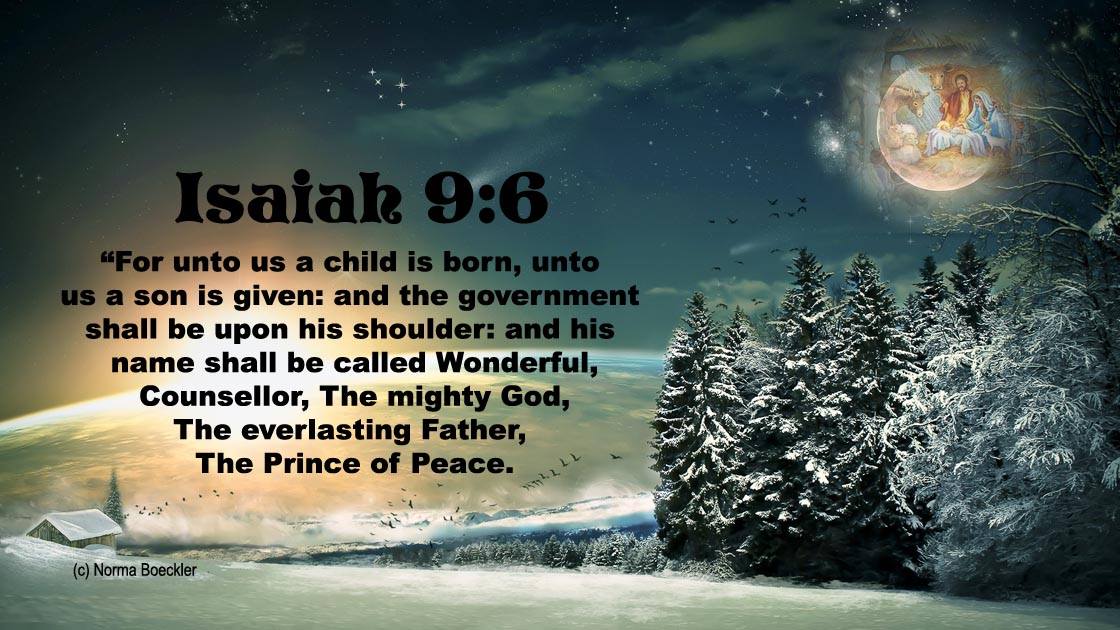
But this can not occur except through the faith that teaches us rightly to understand the Gospel and properly to lay hold of it. This is the only way in which Christ can be rightly known so that the conscience is satisfied and made to rejoice. Out of this grow love and praise to God who in Christ has bestowed upon us such unspeakable gifts. This gives courage to do or leave undone, and living or dying, to suffer every thing that is well pleasing to God. This is what is meant by Isaiah 9:6, “Unto us a child is born, unto us a son is given,” to us, to us, to us is born, and to us is given this child.
29. Therefore see to it that you do not find pleasure in the Gospel only as a history, for that is only transcient; neither regard it only as an example, for it is of no value without faith; but see to it that you make this birth your own and that Christ be born in you. This will be the case if you believe, then you will repose in the lap of the virgin Mary and be her dear child. But you must exercise this faith and pray while you live, you cannot establish it too firmly. This is our foundation and inheritance, upon which good works must be built.
30. If Christ has now thus become your own, and you have by such faith been cleansed through him and have received your inheritance without any personal merit, but alone through the love of God who gives to you as your own the treasure and work of his Son; it follows that you will do good works by doing to your neighbor as Christ has done to you. Here good works are their own teacher. What are the good works of Christ? Is it not true that they are good because they have been done for your benefit, for God’s sake, who commanded him to do the works in your behalf? In this then Christ was obedient to the Father, in that he loved and served us.
31. Therefore since you have received enough and become rich, you have no other commandment to serve Christ and render obedience to him, than so to direct your works that they may be of benefit to your neighbor, just as the works of Christ are of benefit and use to you. For the reason Jesus said at the Last Supper: “This is my commandment that ye love one another; even as I have loved you.” John 18:34. Here it is seen that he loved us and did every thing for our benefit, in order that we may do the same, not to him, for he needs it not, but to our neighbor; this is his commandment, and this is our obedience. Therefore it is through faith that Christ becomes our own, and his love is the cause that we are his. He loves, we believe, thus both are united into one. Again, our neighbor believes and expects our love, we are therefore to love him also in return and not let him long for it in vain. One is the same as the other; as Christ helps us so we in return help our neighbor, and all have enough.
32. Observe now from this how far those have gone out of the way who have united good works with stone, wood, clothing, eating and drinking.
Of what benefit is it to your neighbor if you build a church entirely out of gold? Of what benefit to him is the frequent ringing of great church bells?
Of what benefit to him is the glitter and the ceremonies in the churches, the priests’ gowns, the sanctuary, the silver pictures and vessels? Of what benefit to him are the many candles and much incense. Of what benefit to him is the much chanting and mumbling, the singing of vigils and masses?
Do you think that God will permit himself to be paid with the sound of bells, the smoke of candles, the glitter of gold and such fancies? He has commanded none of these, but if you see your neighbor going astray, sinning, or suffering in body or soul, you are to leave every thing else and at once help him in every way in your power and if you can do no more, help him with words of comfort and prayer. Thus has Christ done to you and given you an example for you to follow.
33. These are the two things in which a Christian is to exercise himself, the one that he draws Christ into himself, and that by faith he makes him his own, appropriates to himself the treasures of Christ and confidently builds upon them; the other that he condescends to his neighbor and lets him share in that which he has received, even as he shares in the treasures of Christ. He who does not exercise himself in these two things will receive no benefit even if he should fast unto death, suffer torture or even give his body to be burned, and were able to do all miracles, as St. Paul teaches, Corinthians 18ff.
B. THE SPIRITUAL MEANING OF THE DOCTRINE OF THIS GOSPEL.
34. The other mystery, or spiritual teaching, is, that in the churches the Gospel only should be preached and nothing more. Now it is evident that the Gospel teaches nothing but the foregoing two things, Christ and his example and two kinds of good works, the one belonging to Christ by which we are saved through faith, the other belonging to us by which our neighbor receives help. Whosoever therefore teaches any thing different from the Gospel leads people astray; and whosoever does not teach the Gospel in these two parts, leads people all the more astray and is worse than the former who teaches without the Gospel, because he abuses and corrupts God’s Word, as St. Paul complains concerning some. Corinthians 2:17.
35. Now it is clear that nature could not have discovered such a doctrine, nor could all the ingenuity, reason and wisdom of the world have thought it out. Who would be able to discover by means of his own efforts, that faith in Christ makes us one with Christ and gives us for our own all that is Christ’s? Who would be able to discover that no works are of any value except those intended to benefit our neighbor? Nature teaches no more than that which is wrought by the law. Therefore it falls back upon its own work, so that this one thinks he fulfills the commandment by founding some institution or order, that one by fasting, this one by the kind of clothes he wears, that one by going on pilgrimages; this one in this manner, that one in that manner; and yet all their works are worthless, for no one is helped by them. Such is the case at the present time in which the whole world is blinded and is going astray through the doctrines and works of men, so that faith and love along with the Gospel have perished.
36. Therefore the Gospel properly apprehended, is a supernatural sermon and light which makes known Christ only. This is pointed out first of all by the fact that it was not a man that made it known to others, but that an angel came down from heaven and made known to the shepherds the birth of Jesus, while no human being knew any thing about it.
37. In the second place it is pointed out by the fact that Christ was born at midnight, by which he indicates that all the world is in darkness as to its future and that Christ can not be known by mere reason, but that knowledge concerning him must be revealed from heaven.
38. In the third place, it is shown by the light that shined around the shepherds, which teaches that here there must be an entirely different light than that of human reason. Moreover, when St. Luke says, Gloria Dei, the glory of God, shone around them, he calls that light a brightness, or the glory of God. Why does he say that? In order to call attention to the mystery and reveal the character of the Gospel. For while the Gospel is a heavenly light that teaches nothing more than Christ, in whom God’s grace is given to us and all human merit is entirely cast aside, it exalts only the glory of God, so that henceforth no one may be able to boast of his own power; but must give God the glory, that it is of his love and goodness alone that we are saved through Christ.
See, the divine honor, the divine glory, is the light in the Gospel, which shines around us from heaven through the apostles and their followers who preach the Gospel. The angel here was in the place of all the preachers of the Gospel, and the shepherds in the place of all the hearers, as we shall see. For this reason the Gospel can tolerate no other teaching besides its own; for the teaching of men is earthly light and human glory; it exalt the honor and praise of men, and makes souls to glory in their own works; while the Gospel glories in Christ, in God’s grace and goodness, and teaches us to boast of and confide in Christ.
39. In the fourth place this is represented by the name Judea and Bethlehem, where Christ chose to be born. Judea is interpreted, confession or thanksgiving; as when we confess, praise and thank God, acknowledging that all we possess are his gifts. One who so confesses and praises is called Judaeus. Such a king of the Jews is Christ, as the expression is: “Jesus Nazarenus Rex Judaeorum,” Jesus the Nazarene, the king of the Jews, of those confessing God. By this is shown that no teaching whatever can make such a confession except the Gospel, which teaches Christ.
40. Beth means house; Lehem means bread, Bethlehem, a house of bread.
The city had that name because it was situated in a good, fruitful country, rich in grain; so that it was the granery for the neighboring towns, or as we would call it, a fertile country. In olden times the name of the city was Ephrata, which means fruitful. Both names imply that the city was in a fruitful and rich land. By this is represented that without the Gospel this earth is a wilderness and there is no confession of God nor thanksgiving.
41. Moreover where Christ and the Gospel are there is the fruitful Bethlehem and the thankful Judea. There every one has enough in Christ, and overflows with thanksgiving for the divine grace. But while men are thankful for human teachings, they can not satisfy, but leave a barren land and deadly hunger. No heart can ever be satisfied unless it hears Christ rightly proclaimed in the Gospel. In this a man comes to Bethlehem and finds him, he also comes to and remains in Judea and thanks his God eternally; here he is satisfied, here God receives his praise and confession, while outside of the Gospel there is nothing but thanklessness and starvation.
42. But the angel shows most clearly that nothing is to be preached in Christendom except the Gospel, he takes upon himself the office of a preacher of the Gospel. He does not say, I preach to you, but “glad tidings I bring to you”. I am an Evangelist and my word is an evangel, good news.
The meaning of the word Gospel is, a good, joyful message, that is preached in the New Testament. Of what does the Gospel testify? Listen! the angel says: “I bring you glad tidings of great joy”, my Gospel speaks of great joy. Where is it? Hear again: “For there is born to you this day in the city of David a Savior, who is Christ the Lord”.
43. Behold here what the Gospel is, namely, a joyful sermon concerning Christ, our Savior. Whoever preaches him rightly, preaches the Gospel of pure joy. How is it possible for man to hear of greater joy than that Christ has given to him as his own? He does not only say Christ is born, but he makes his birth our own by saying, to you a Savior.
44. Therefore the Gospel does not only teach the history concerning Christ; but it enables all who believe it to receive it as their own, which is the way the Gospel operates, as has just been set forth. Of what benefit would it be to me if Christ had been born a thousand times, and it would daily be sung into my ears in a most lovely manner, if I were never to hear that he was born for me and was to be my very own? If the voice gives forth this pleasant sound, even if it be in homely phrase, my heart listens with joy for it is a lovely sound which penetrates the soul. If now there were any thing else to be preached, the evangelical angel and the angelic evangelist would certainly have touched upon it.
 |
| Norma Boeckler |
C. THE SPIRITUAL MEANING OF THE SIGNS, THE ANGEL AND THE SHEPHERDS.
45. The angel says further: “And this is the sign unto you; Ye shall find the babe wrapped in swaddling clothes, and lying in a manger.” The clothes are nothing else than the holy Scriptures, in which the Christian truth lies wrapped, in which the faith is described. For the Old Testament contains nothing else than Christ as he is preached in the Gospel. Therefore we see how the apostles appeal to the testimony of the Scriptures and with them prove every thing that is to be preached and believed concerning Christ.
Thus St. Paul says, Romans 3:21, That the faith of Christ through which we become righteous is witnessed by the law and the prophets. And Christ himself, after his resurrection, opened to them the Scriptures, which speak of him. Luke 24:27.
When he was transfigured on the mount, Matthew 17:3, Moses and Elijah stood by him; that means, the law and the prophets as his two witnesses, which are signs pointing to him. Therefore the angel says, the sign by which he is recognized is the swaddling clothes, for there is no other testimony on earth concerning Christian truth than the holy Scriptures.
46. According to this Christ’s seamless coat which was not divided and which during his sufferings was gambled off and given away, John 19:23-24, represents the New Testament. It indicates that the pope, the Antichrist, would not deny the Gospel, but would shut it up violently and play with it by means of false interpretation, until Christ is no longer to be found in it. Then the four soldiers who crucified the Lord are figures of all the bishops and teachers in the four quarters of the earth, who violently suppress the Gospel and destroy Christ and his faith by means of their human teachings, as the pope with his Papists has long since done.
47. From this we see that the law and the prophets can not be rightly preached and known unless we see Christ wrapped up in them. It is true that Christ does not seem to be in them, nor do the Jews find him there.
They appear to be insignificant and unimportant clothes, simple words, which seem to speak of unimportant external matters, the import of which is not recognized; but the New Testament, the Gospel, must open it, throw its light upon it and reveal it, as has been said.
48. First of all then the Gospel must be heard, and the appearance and the voice of the angel must be believed. Had the shepherds not heard from the angel that Christ lay there, they might have seen him ten thousand times without ever knowing that the child was Christ. Accordingly St. Paul says, 2 Corinthians 3:16, that the law remains dark and covered up for the Jews until they are converted to Christ.
Christ must first be heard in the Gospel, then it will be seen how beautiful and lovely the whole Old Testament is in harmony with him, so that a man can not help giving himself in submission to faith and be enabled to recognize the truth of what Christ says in John 5:46, “For if ye believed Moses, ye would believe me, for he wrote of me”.
49. Therefore let us beware of all teaching that does not set forth Christ.
What more would you know? What more do you need, if indeed you know Christ, as above set forth, if you walk by faith in God, and by love to your neighbor, doing to your fellow man as Christ has done to you. This is indeed the whole Scripture in its briefest form, that no more words or books are necessary, but only life and action.
50. He lies in the manger. Notice here that nothing but Christ is to be preached throughout the whole world. What is the manger but the congregations of Christians in the churches to hear the preaching? We are the beasts before this manger; and Christ is laid before us upon whom we are to feed our souls. Whosoever goes to hear the preaching, goes to this manger; but it must be the preaching of Christ. Not all mangers have Christ neither do all sermons teach the true faith. There was but one manger in Bethlehem in which this treasure lay, and besides it was an empty and despised manger in which there was no fodder.
Therefore the preaching of the Gospel is divorced from all other things, it has and teaches nothing besides Christ; should any thing else be taught, then it is no more the manger of Christ, but the manger of war horses full of temporal things and of fodder for the body.
51. But in order to show that Christ in swaddling clothes represents the faith in the Old Testaments, we will here give several examples. We read in Matthew 8:4, when Christ cleansed the leper, that he said to him: “Go, show thyself to the priest, and offer the gift that Moses commanded, for a testimony unto them.” Here you perceive that the law of Moses was given to the Jews for a testimony, or sign, as the angel also here says, namely, that such law represents something different from itself. What? Christ is the priest, all men are spiritual lepers because of unbelief; but when we come to faith in him he touches us with his hand, gives and lays upon us his merit and we become clean and whole without any merit on our part whatever.
We are therefore to show our gratitude to him and acknowledge that we have not become pious by our own works, but through his grace, then our course will be right before God. In addition we are to offer our gifts, that is, give of our own to help our fellow man, to do good to him as Christ has done to us. Thus Christ is served and an offering is brought to the rightful priest, for it is done for his sake, in order to love and praise him.
Do you here see how, figuratively speaking, Christ and the faith are wrapped up in the plain Scriptures? It is here made evident how Moses in the law gave only testimony and an interpretation of Christ. The whole Old Testament should be understood in this manner, and should be taken to be the swaddling clothes as a sign pointing out and making Christ known.
52. Again, it was commanded that the Sabbath should be strictly observed and no work should be done, which shows that not our works but Christ’s works should dwell in us; for it is written that we are not saved by our works but by the works of Christ. Now these works of Christ are twofold, as shown before. On the one hand, those that Christ has done personally without us, which are the most important and in which we believe. The others, those he performs in us, in our love to our neighbor. The first may be called the evening works and the second the morning works, so that evening and morning make one day, as it is written in Genesis 1:5, for the Scriptures begin the day in the evening and end in the morning, that is, the evening with the night is the first half, the morning with the day is the second half of the whole natural day. Now as the first half is dark and the second half is light, so the first works of Christ are concealed in our faith, but the others, the works of love, are to appear, to be openly shown toward our fellow man. Here then you see how the whole Sabbath is observed and hallowed.
53. Do you see how beautifully Christ lies in these swaddling clothes? How beautifully the Old Testament reveals the faith and love of Christ and of his Christians? Now, swaddling clothes are as a rule of two kinds, the outside of coarse woolen cloth, the inner of linen. The outer or coarse woolen cloth represents the testimony of the law, but the linnen are the words of the prophets. As Isaiah says in 7:14, “Behold, a virgin shall conceive, and bear a son, and shall call his name Immanuel”, and similar passages which would not be understood of Christ, had the Gospel not revealed it and shown that Christ is in them.
54. Here then we have these two, the faith and the Gospel, that these and nothing else are to be preached throughout Christendom. Let us now see who are to be the preachers and who the learners. The preachers are to be angels, that is, God’s messengers, who are to lead a heavenly life, are to be constantly engaged with God’s Word that they under no circumstances preach the doctrine of men. It is a most incongruous thing to be God’s messenger and not to further God’s message. Angelus means a messenger, and Luke calls him God’s messenger (Angelus Domini). The message also is of more importance than the messenger’s life. If he leads a wicked life he only injures himself, but if he brings a false message in the place of God’s message, he leads astray and injures every one that hears him, and causes idolatry among the people in that they accept lies for the truth, honor men instead of God, and pray to the devil instead of to God.
55. There is no more terrible plague, misfortune or cause for distress upon earth than a preacher who does not preach God’s Word; of whom, alas, the world today is full; and yet they think they are pious and do good when indeed their whole work is nothing but murdering souls, blaspheming God and setting up idolatry, so that it would be much better for them if they were robbers, murderers, and the worst scoundrels, for then they would know that they are doing wickedly. But now they go along under spiritual names and show, as priest, bishop, pope, and are at the same time ravening wolves in sheeps’ clothing, and it would be well if no one ever heard their preaching.
56. The learners are shepherds, poor people out in the fields. Here Jesus does what he says, Matthew 11:5, “And the poor have good tidings preached to them”, and Matthew 5:3, “Blessed are the poor in spirit; for their’s is the kingdom of heaven”. Here are no learned, no rich, no mighty ones, for such people do not as a rule accept the Gospel. The Gospel is a heavenly treasure, which will not tolerate any other treasure, and will not agree with any earthly guest in the heart. Therefore whoever loves the one must let go the other, as Christ says, Matthew 6:24: “You can not serve God and mammon.”
This is shown by the shepherds in that they were in the field, under the canopy of heaven, and not in houses, showing that they do not hold fast and cling to temporal things; and besides they are in the fields by night, despised by and unknown to the world which sleeps in the night, and by day delights so to walk that it may be noticed; but the poor shepherds go about their work at night. They represent all the lowly who live on earth, often despised and unnoticed but dwell only under the protection of heaven; they eagerly desire the Gospel.
57. That there were shepherds, means that no one is to hear the Gospel for himself alone, but every one is to tell it to others who are not acquainted with it. For he who believes for himself has enough and should endeavor to bring others to such faith and knowledge, so that one may be a shepherd of the other, to wait upon and lead him into the pasture of the Gospel in this world, during the night time of this earthly life. At first the shepherds were sore afraid because of the angel; for human nature is shocked when it first hears in the Gospel that all our works are nothing and are condemned before God, for it does not easily give up its prejudices and presumptions.
58. Now let every one examine himself in the light of the Gospel and see how far he is from Christ, what is the character of his faith and love. There are many who are enkindled with dreamy devotion, when they hear of such poverty of Christ, are almost angry with the citizens of Bethlehem, denounce their blindness and ingratitude, and think, if they had been there, they would have shown the Lord and his mother a more becoming service, and would not have permitted them to be treated so miserably. But they do not look by their side to see how many of their fellow men need their help, and which they let go on in their misery unaided. Who is there upon earth that has no poor, miserable, sick, erring ones, or sinful people around him?
Why does he not exercise his love to those? Why does he not do to them as Christ has done to him?
59. It is altogether false to think that you have done much for Christ, if you do nothing for those needy ones. Had you been at Bethlehem you would have paid as little attention to Christ as they did; but since is now made known who Christ is, you profess to serve him. Should he come now and lay himself in a manger, and would send you word that it was he, of whom you now know so much, you might do something for him, but you would not have done it before. Had it been positively made known to the rich man in the Gospel, to what high position Lazarus would be exalted, and he would have been convinced of the fact, he would not have left him lie and perish as he did.
60. Therefore, if your neighbor were now what he shall be in the future, and lay before you, you would surely give him attention. But now, since it is not so, you beat the air and do not recognize the Lord in your neighbor, you do taut do to him as he has done to you. Therefore God permits you to be blinded, and deceived by the pope and false preachers, so that you squander on wood, stone, paper, and wax that with which you might help your fellow man.
III. EXPLANATION OF THE ANGELS’ SONG OF PRAISE.
61. Finally we must also treat of the angels’ song, which we use daily in our service: Gloria in excelcis Deo. There are three things to be considered in this song, the, glory to God, the peace to the earth, and the good will to mankind. The good will might be understood as the divine good will God has toward men through Christ. But we will admit it to mean the good will which is granted unto men through this birth, as it is set forth in the words thus, “en anthropis eudokia, hominibus beneplacitum.”
62. The first is the glory to God. Thus we should also begin, so that in all things the praise and glory be given to God as the one who does, gives and possesses all things, that no one ascribe any thing to himself or claim any merit for himself. For the glory belongs to no one but to God alone, it does not permit of being made common by being shared by any person.
63. Adam stole the glory through the evil spirit and appropriated it to himself, so that all men with him have come into disgrace, which evil is so deeply rooted in all mankind that there is no vice in them as great as vanity.
Every one is well pleased with himself and no one wants to be nothing, and they desire nothing, which spirit of vanity is the cause of all distress, strife and war upon earth.
64. Christ has again brought back the glory to God, in that he has taught us how all we have or can do is nothing but wrath and displeasure before God, so that we may not be boastful and selfsatisfied, but rather be filled with fear and shame, so that in this manner our glory and self-satisfaction may be crushed, and we be glad to be rid of it, in order that we may be found and preserved in Christ.
65. The second is the peace on earth. For just as strife must exist where God’s glory is not found, as Solomon says, Proverbs 13:10, “By pride cometh only contention;” so also, where God’s glory is there must be peace. Why should they quarrel when they know that nothing is their own, but that all they are, have and can desire is from God; they leave everything in his hands and are content that they have such a gracious God. He knows that all he may have, is nothing before God, he does not seek his own honor, but thinks of him who is something before God, namely Christ.
66. From this it follows that where there are true Christians, there is no strife, contention, or discord; as Isaiah says in Isaiah 2:4, “And they shall beat their swords into plowshears, and their spears into pruning hooks; nation shall not lift up sword against nation, neither shall they learn war any more!”
67. Therefore our Lord Christ is called a king of peace, and is represented by king Solomon, whose name implies, rich in peace, that inwardly he may give us peace in our conscience toward God through faith; and outwardly, that we may exercise love to our fellow men, so that through him there may be everywhere peace on earth.
68. The third is good will toward men. By good will is not meant the will that does good works, but the good will and peace of heart, which is equally submissive in every thing that may betide, be it good or evil. The angels knew very well that the peace, of which they sang, does not extend farther than to the Christians who truly believe, such have certainly peace among themselves. But the world and the devil have no reproof, they do not permit them to have peace but persecute them to death; as Christ says, John 16:33, “In me ye may have peace. In the world ye have tribulation.”
69. Hence it was not enough for the angels to sing peace on earth, they added to it the good will toward men, that they take pleasure in all that God does, regard all God’s dealing with them as wise and good, and praise and thank him for it. They do not murmur, but willingly submit to God’s will. Moreover since they know that God, whom they have received by faith in Christ as a gracious Father, can do all things, they exult and rejoice even under persecution as St. Paul says, Romans 5:3, “We also rejoice in our tribulations.” They regard all that happens to them as for the best, out of the abundant satisfaction they have in Christ.
70. Behold, it is such a good will, pleasure, good opinion in all things whether good or evil, that the angels wish to express in their song; for where there is no good will, peace will not long exist. The unbelieving put the worst construction on every thing, always magnify the evil and double every mishap. Therefore God’s dealings with them does not please them, they would have it different, and that which is written in Psalm 18:25-26 is fulfilled: “With the merciful thou wilt show thyself merciful, with the perfect man thou wilt show thyself perfect; with the pure thou wilt show thyself pure”, that is, whoever has such pleasure in all things which thou doest, in him thou, and all thine, will also have pleasure,” and with the perverse thou wilt show thyself froward, that is, as thou and all thou doest, does not please him, so he is not well pleasing to thee and all that are thine.
71. Concerning the good will St. Paul says: 1 Corinthians 10:33, “Even as I also please all men in all things.” How does he do that? If you are content and satisfied with every thing, you will in turn please every body. It is a short rule: If you will please no one, be pleased with no one; if you will please every one, be pleased with every one; in so far, however, that you do not violate God’s Word, for in that case all pleasing and displeasing ceases. But what may be omitted without doing violence to God’s Word, may be omitted, that you may please every one and at the same time be faithful to God, then you have this good will of which the angels sing.
72. From this song we may learn what kind of creatures the angels are.
Don’t consider what the great masters of art dream about them, here they are all painted in such a manner that their heart and their own thoughts may be recognized. In the first place, in that they joyfully sing, ascribing the glory to God, they show how full of his light and fire they are, not praising themselves, but recognizing that all things belong to God alone, so that with great earnestness they ascribe the glory to him to whom it belongs.
Therefore if you would think of a humble, pure, obedient and joyful heart, praising God, think of the angels. This is their first step, that by which they serve God.
73. The second is their love to us as has been shown. Here you see what great and gracious friends we have in them, that they favor us no less than themselves; rejoice in our welfare quite as much as they do in their own, so much so that in this song they give us a most comforting inducement to regard them as the best of friends. In this way you rightly understand the angels, not according to their being, which the masters of art attempt fearlessly to portray, but according to their inner heart, spirit and sense, that though I know not what they are, I know what their chief desire and constant work is; by this you look into their heart. This is enough concerning this Gospel. What is meant by Mary, Joseph, Nazareth will be explained in Luke 1.
THE ARMOR OF THIS GOSPEL.
74. In this Gospel is the foundation of the article of our faith when we say: “I believe in Jesus Christ, born of the virgin Mary.” Although the same article is founded on different passages of Scripture, yet on none so clearly as on this one. St. Mark says no more than that Christ has a mother, the same is also the case with St. John, neither saying any thing of his birth. St.
Matthew says he is born of Mary in Bethlehem, but lets it remain at that, without gloriously proclaiming the virginity of Mary, as we will hear in due time. But Luke describes it clearly and diligently.
75. In olden times it was also proclaimed by patriarchs and prophets; as when God says to Abraham, Genesis 22:17: “And in thy seed shall all the nations of the earth be blessed.” Again he says to David, Psalm 89:4, and <19D211> Psalm 132:11: “Jehovah hath sworn unto David in truth; he will not return from it; of the fruit of thy body will I set upon thy throne.”
But those are obscure words compared with the Gospel.
76. Again it is also represented in many figures, as in the rod of Aaron which budded in a supernatural manner, although a dry piece of wood, Numbers 7:5. So also Mary, exempt from all natural generation, brought forth, in a supernatural manner, really and truly a natural son, just as the rod bore natural almonds, and still remained a natural rod. Again by Gideon’s fleece, Judges 6:37, which was wet by the dew of heaven, while the land around it remained dry, and many like figures which it is not necessary to enumerate. Nor do these figures conflict with faith, they rather adorn it; for it must at first be firmly believed before I can believe that the figure serves to illustrate it.
77. There is a great deal in this article, of which, in time of temptation, we would not be deprived, for the evil spirit attacks nothing so severely as our faith. Therefore it is of the greatest importance for us to know where in God’s Word this faith is set forth, and in time of temptation point to that, for the evil spirit can not stand against God’s Word.
78. There are also many ethical teachings in the Gospel, as for example, meekness, patience, poverty and the like; but these are touched upon enough and are not points of controversy, for they are fruits of faith and good works.
 |
| Norma Boeckler |